
REVIEW · EVEREST BASE CAMP TREKS
Gokyo to Everest Base Camp Trek
The long way to Everest is the rewarding way. This 17-day circuit adds the turquoise Gokyo Lakes and demanding Cho La Pass to the classic Everest Base Camp route, giving you more mountain scenery and a quieter stretch before the big finish. I like the Gokyo Ri sunrise climb for its wide views of Everest, Cho Oyu, and Makalu, and I like the strong logistical support from Ace the Himalaya, including airport transfers, Lukla flights, guides, porters, permits, meals, and mountain gear. The main catch is clear: this is a serious high-altitude trek, not a gentle walking holiday.
You should also allow for changing mountain conditions. Guides such as Nima, Raj Kumar, Ramesh, Lakpa Sherpa, and Ganesh have been praised for putting safety first and adjusting plans when snow, storms, or flight problems interfere. Cho La Pass at 5,300 meters is the hardest section, and basic lodging at Thangnak can test your patience as well as your legs.
In This Review
- Key points to know before booking
- Why the Gokyo route is worth the extra days
- Kathmandu arrival and the flight to Lukla
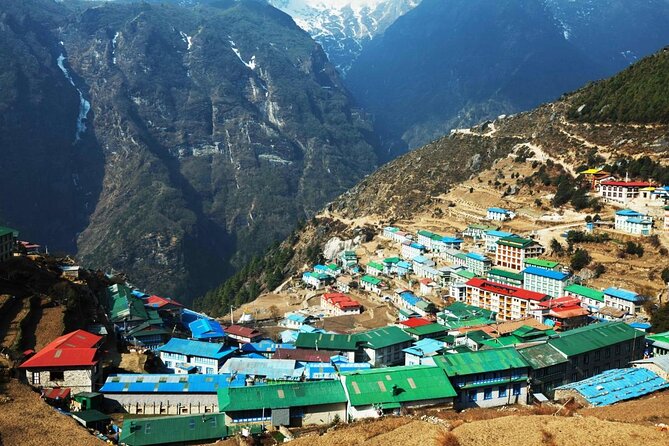
- Namche Bazaar gives you time to adjust
- Phortse, Machhermo, and the approach to Gokyo
- Gokyo Ri brings the first great summit view
- Cho La Pass is the day that defines the trek
- Everest Base Camp is a hard-earned destination
- Kala Patthar offers the best Everest viewpoint
- The return through Tengboche and Namche
- What the $2,200 package really covers
- Guide support and changes in mountain weather
- Who should book this Everest circuit?
- Should you book the Gokyo to Everest Base Camp trek?
- FAQ
- How long is the Gokyo to Everest Base Camp trek?
- What altitude does Cho La Pass reach?
- Is accommodation included?
- Are meals included?
- Are flights between Kathmandu and Lukla included?
- Do I need travel insurance?
Key points to know before booking
- Gokyo Lakes add a quieter side of Everest: You reach Gokyo before joining the Base Camp route, with time for Gokyo Ri and the Ngozumpa Glacier.
- Cho La is the physical crux: The pre-dawn crossing reaches 5,300 meters and can be affected by snow and poor weather.
- The package covers a lot: Lukla airfare, permits, meals on the trail, airport transfers, a guide, porter support, sleeping bag, down jacket, and lodging are included.
- You get two major viewpoints: Gokyo Ri reaches 5,483 meters, while Kala Patthar climbs to 5,555 meters for a close view toward Everest.
- The group is capped at 15 people: That is large enough for company but still manageable on a mountain trail.
- Build in physical and weather flexibility: You need moderate fitness, travel insurance with high-altitude rescue, and patience if flights or trails change.
Why the Gokyo route is worth the extra days
The standard Everest Base Camp trek is famous for good reason, but the Gokyo to Everest Base Camp route gives you a fuller picture of the Khumbu. You first follow the Dudh Koshi River toward Gokyo, then cross Cho La and join the Base Camp trail near Lobuche.
That detour matters. You see high lakes, glacier country, Sherpa villages, and two excellent viewpoints before reaching Everest Base Camp. You also spend more time at altitude, so the extra scenery comes with a real physical cost.
At $2,200 per person, the price is not small. Yet the package covers the expensive and awkward parts of a Himalayan trek: airport pickup, two Kathmandu hotel nights, domestic flights, trekking permits, a licensed English-speaking guide, one porter for every two clients, trail meals, accommodation, and a down jacket and sleeping bag.
You still pay for international flights, your Nepal visa, Kathmandu meals, drinks, personal equipment, insurance, and tips. The biggest item not to skip is insurance that covers emergency high-altitude rescue and evacuation. On a route with a 5,300-meter pass and changing mountain weather, that is practical protection, not paperwork.
More Everest Base Camp treks:
- Everest Base Camp Trek – 14 Days
★ 5.0 · 1,499 reviews - Everest Base Camp Trekking
★ 5.0 · 485 reviews - Everest Base Camp Trekking – 13 Day
★ 5.0 · 365 reviews
Kathmandu arrival and the flight to Lukla
Your trip starts at Tribhuvan International Airport, where an Ace the Himalaya representative meets you and transfers you to your starting hotel. The first day is deliberately easy. It gives you time to arrive, settle in, and handle last-minute preparation before the mountain section.
Day two brings the famous 35-minute flight from Kathmandu to Tenzing and Hillary Airport in Lukla, at 2,804 meters. The flight is short, scenic, and important because Lukla is the gateway for the trek.
From Lukla, you walk to Phakding. This first trail day is long in the schedule, listed at about 16 hours, though the precise walking time can vary with flight timing and trail conditions. Your guide briefs you after arrival, and the group starts learning the rhythm of mountain walking: steady pace, small steps, and enough rest to keep going.
Lukla and Phakding are also among the places where attached toilets are included in the accommodation package. That detail is worth noting because facilities become more basic farther from the main villages.
Namche Bazaar gives you time to adjust
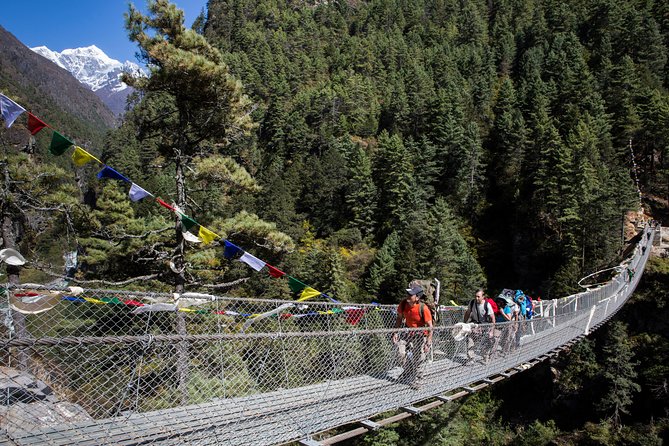
The route follows the Dudh Koshi, crossing suspension bridges decorated with prayer flags before entering Sagarmatha National Park. The trail then climbs toward Namche Bazaar, the main trading town of the Everest region.
Namche is more than a stop for a bed. You spend a full acclimatization day here, with a short hike to a museum displaying Sherpa customs and culture. The purpose is to let your body adjust to thinner air before the route climbs higher.
I like this pause because it makes the itinerary safer and more humane. You are not simply collecting destinations. You are giving yourself time to adapt.
The walking days are long in the published schedule, sometimes listed at 15 to 19 hours. Those figures appear to combine the full day or operating window rather than pure walking time, so you should ask Ace the Himalaya for typical daily walking hours before departure. The route itself is physically demanding, and the schedule is not designed for a casual pace.
Phortse, Machhermo, and the approach to Gokyo
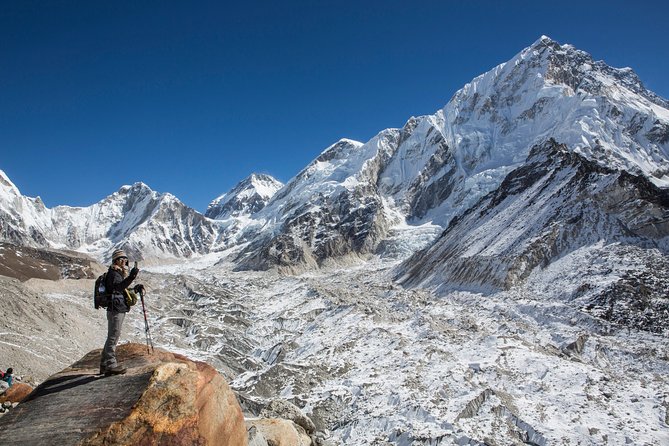
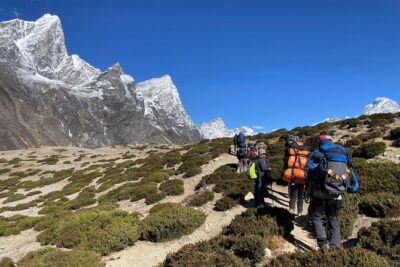
After Namche, the trail climbs through rhododendron forest toward Phortse. Juniper and large conifers appear higher up, and in spring the area can feel especially fresh and open.
The route then reaches Machhermo, where you climb a ridge for views down toward Kengtega and up toward Cho Oyu. The path drops to a river before climbing again toward the terminal moraine of the Ngozumpa Glacier.
This is where the route begins to feel properly high and remote. You are no longer simply walking from village to village. Glacial terrain and big mountain views become part of the day.
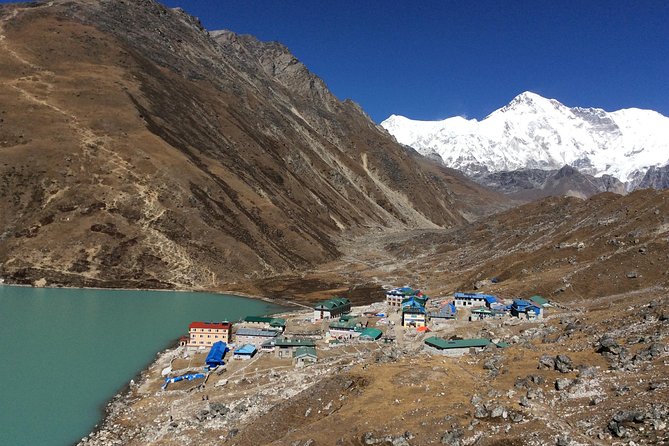
On day seven, you arrive at Gokyo at 4,790 meters. You stay two nights, which gives the route room for a sightseeing and hiking day rather than rushing straight onward. Gokyo is one of the strongest parts of the trek because it breaks up the familiar Everest route and places you beside the high lakes.
The package includes seasonal fruit and filtered trail water using a Katadyn Pocket Water Filter. That helps reduce the need to buy bottled water along the way, though you still need to carry a reusable bottle or hydration system.
More walking in the hills of Kathmandu:
- Nagarkot Sunrise View and Day Hiking from Kathmandu
★ 5.0 · 471 reviews - Annapurna Circuit Trek with Tilicho Lake
★ 5.0 · 368 reviews - Everest Base Camp Trek -14 Days
★ 5.0 · 321 reviews - Annapurna base camp trek 5 Days
★ 5.0 · 252 reviews
Gokyo Ri brings the first great summit view
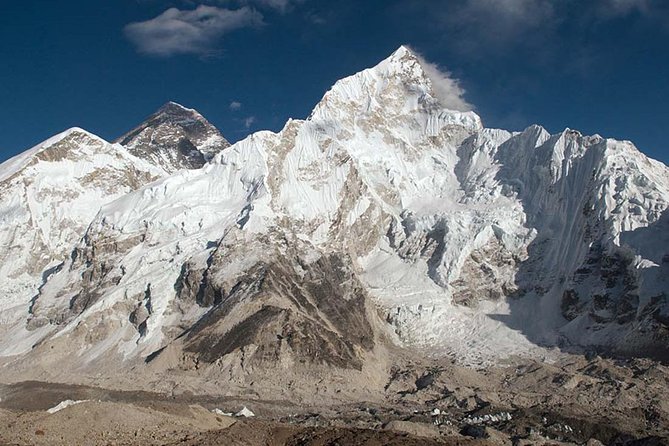
Day eight starts early with the steep climb to Gokyo Ri, at 5,483 meters. This is not a technical summit, but the altitude makes every step count. The reward is a broad view over the Gokyo Valley, with Cho Oyu, Everest, and Makalu among the major peaks visible from the top.
I would treat Gokyo Ri as a major goal, not an optional filler walk. It gives you a different angle on the Himalayas before the trek turns east toward Everest Base Camp.
The schedule lists only 30 minutes for the Gokyo Ri stop, which likely refers to time at the viewpoint rather than the full climb. You should confirm the expected ascent and descent time with the operator, since the climb is described as steep and begins early.
After Gokyo, you walk to Thangnak, also called Dragnag in some route descriptions. The accommodation here is very basic and dormitory-based because of the remote setting. This is a good night to expect function over comfort. You are there to rest before Cho La, not to enjoy hotel amenities.
Cho La Pass is the day that defines the trek
You start around 4:00 or 5:00 in the morning to reach Cho La by roughly 9:00 or 10:00, before conditions tend to worsen later in the day. The pass rises to about 5,300 meters, and snow can make the crossing much harder.
This is the point where the circuit earns its adventurous reputation. It is a demanding high-altitude crossing, and your guide’s judgment matters. Nima, in particular, has been praised for making careful decisions during heavy snow and poor weather, while other guides have adjusted timing and plans when conditions changed.
Do not view an altered plan as a failure. On this route, safety may mean waiting, changing the order of a walk, or using a helicopter if weather prevents a normal flight or trail crossing. One account describes choosing a helicopter because of severe weather conditions. That possibility is worth discussing with the operator before you set out, especially because extra transport may not be included in the advertised package.
After the pass, the route reaches Lobuche. The following day is shorter and easier, with about four hours of trekking. That recovery day is well placed after Cho La and gives you time to prepare for Everest Base Camp.
Everest Base Camp is a hard-earned destination
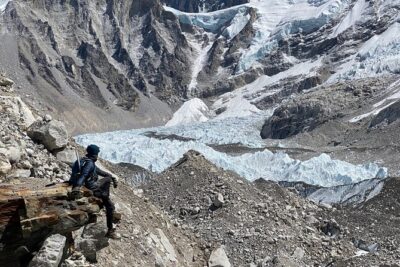
The walk from Lobuche to Everest Base Camp follows the Khumbu Glacier and climbs to 5,365 meters. The route is described as a big and difficult day walk, and you should expect uneven glacial terrain and thin air to slow you down.
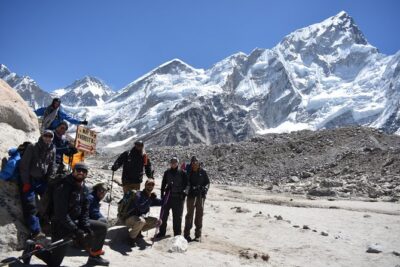
Everest Base Camp is the emotional high point for many people. You reach the closest point to Mount Everest available without mountaineering equipment, though the view of the summit itself can be limited from Base Camp. During spring, you may see a mountaineering camp in operation, adding a sense of purpose to the otherwise stark setting.
The day is not only about taking a photograph. It is about having enough energy to walk back after reaching the marker. Your guide and porter support are especially valuable here. The porter system provides one porter for every two clients, rather than one porter per person, so pack with restraint and confirm the weight limit before departure.
Kala Patthar offers the best Everest viewpoint
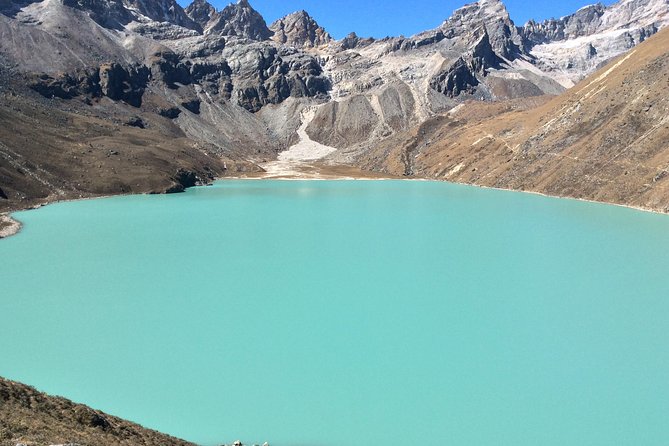
The next morning brings Kala Patthar, at 5,555 meters. It is described as one of the hardest but most rewarding days, with a steep climb to a small peak and a major mountain panorama from the top.
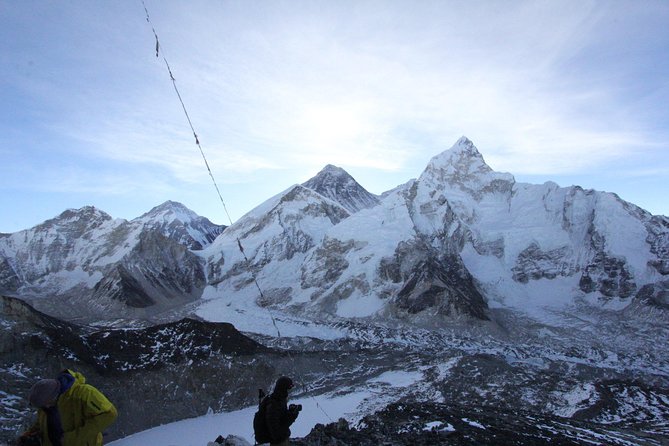
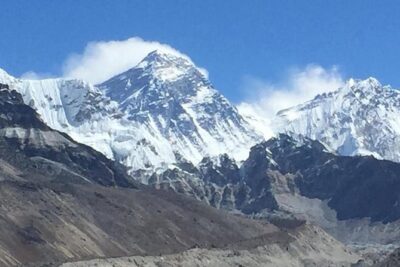
If your main aim is a close, dramatic view toward Everest, Kala Patthar may be the trek’s best viewpoint. It complements Gokyo Ri rather than replacing it. Gokyo Ri shows you the wider high mountain setting, while Kala Patthar brings you closer to the Everest group.
At this altitude, the climb can feel surprisingly slow. Keep your pace steady and listen to your guide. The summit is not the place to race other people. It is the place to reach safely, take in the view, and descend before fatigue becomes a problem.
The return through Tengboche and Namche
After Base Camp and Kala Patthar, the route turns downhill through Pangboche and Tengboche before returning to Namche Bazaar. Tengboche is an important Buddhist center, and the trek offers the chance to see monasteries located at remarkably high elevations.
The descent changes the feel of the trip. You still have long days, but the air becomes easier and the sense of returning to ordinary life grows stronger. One night in Namche provides a welcome break before the final walk to Lukla.
Day 15 is the last trekking day. You return to Lukla and have a free afternoon to reflect, rest, or spend time with the group. That pause is useful because the journey is not finished until the flight out, and mountain weather can affect domestic air travel.
On day 16, you take the 35-minute scenic flight back to Kathmandu, where a transfer returns you to the starting hotel. The final day includes transport to Tribhuvan International Airport for your departure.
What the $2,200 package really covers
The price makes the most sense if you value organized support. You are not only paying for a walking route. You are paying for planning, permits, airport handling, domestic flights, accommodation, food, and staff coordination in a remote region.
Included items are:
- Airport transfers
- Two nights in a three-star Kathmandu hotel
- Fourteen nights in twin-share guest houses
- A licensed English-speaking guide
- One porter for every two clients
- Trekking permits and government charges
- Kathmandu to Lukla and return airfare
- Breakfast each day, plus 14 lunches and 14 dinners
- Filtered trail water and seasonal fruit
- A down jacket, sleeping bag, duffel bag, and sun hat
The guest houses in Lukla, Phakding, and Namche have attached toilets, but you should expect simpler accommodation elsewhere. Thangnak is specifically dormitory-based and basic.
The package does not cover lunch or dinner in Kathmandu, alcoholic or soft drinks, personal trekking equipment, tips, international airfare, Nepal entry visa, or travel insurance. Tipping is expected, so include it in your budget rather than treating it as a surprise at the end.
Guide support and changes in mountain weather
A good guide is central to this route. The strongest praise has gone to guides who stay calm, explain choices, and adjust the schedule when the mountains refuse to cooperate.
Nima has been singled out for a safety-first approach during heavy snow. Raj Kumar has been praised for kindness and for changing plans as trail conditions shifted. Ramesh and porter Biroj were described as a strong team, while Lakpa Sherpa was noted for patience and for trying to accommodate reasonable requests. Ganesh and porter Sonam managed a five-day period of snowstorms, blizzards, and heavy rain.
These details give you a useful standard. You should expect your guide to discuss weather, altitude, timing, and route choices openly. You should also accept that a fixed 17-day plan may need adjustments.
The group maximum is 15 people. That is small enough for a guide to keep track of the group, but large enough that walking speeds may vary. Ask how the group handles different fitness levels and what happens if one person needs a slower pace or an altered plan.
Who should book this Everest circuit?
I would recommend this trek to fit hikers who want more than the standard Base Camp route and who are willing to trade comfort for scenery. It suits you if Gokyo Lakes, high passes, Sherpa culture, monasteries, and two major viewpoints sound as appealing as the Base Camp sign itself.
It is not a good match if you want a relaxed holiday, dislike dormitory accommodation, or need a firm schedule with no weather-related changes. The operator asks for moderate physical fitness, but the combination of long days, altitudes above 5,000 meters, and Cho La makes this more demanding than that phrase may suggest.
Book at least with careful preparation. Bring suitable personal trekking equipment, arrange high-altitude rescue insurance, and ask for current information about Lukla flights, expected walking hours, porter limits, and Cho La conditions.
The cancellation policy allows a full refund if you cancel at least six full days before the start time. A cancellation two to six days ahead receives a 50 percent refund, while cancellation less than two full days before departure is nonrefundable. If poor weather cancels the experience, you are offered another date or a full refund.
Should you book the Gokyo to Everest Base Camp trek?
Book it if you want the Everest region with an extra layer of challenge and scenery. Gokyo Ri, the Ngozumpa Glacier, Cho La, Kala Patthar, and Base Camp make this a fuller Himalayan journey than a direct out-and-back route.
Skip it if you want a simple first trek, dislike early starts, or cannot accept basic lodging and weather changes. At $2,200, the value is strongest for you if you would otherwise need to arrange flights, permits, staff, meals, and gear separately.
The 100 percent recommendation rate and five-star rating across 113 submitted ratings point to very strong satisfaction, especially with the guides and organization. Still, the mountains set the rules. Go prepared, leave room for delays, and choose this circuit for the complete experience, not just the final photograph at Everest Base Camp.
FAQ
How long is the Gokyo to Everest Base Camp trek?
The trek lasts approximately 17 days, including arrival and departure transfers, Kathmandu hotel stays, the Lukla flights, and the return to Kathmandu.
What altitude does Cho La Pass reach?
Cho La Pass reaches about 5,300 meters. The crossing starts very early, usually around 4:00 or 5:00 in the morning, to reach the pass before later weather conditions become less favorable.
Is accommodation included?
Yes. The package includes two nights in a twin-share or double room at a three-star hotel in Kathmandu and 14 nights in twin-sharing guest houses during the trek. Accommodation at Thangnak is very basic and dormitory-based.
Are meals included?
Breakfast is included for all 16 applicable days, along with 14 lunches and 14 dinners during the trek. Lunch and dinner in Kathmandu are not included, and alcoholic, hot, and cold drinks are extra.
Are flights between Kathmandu and Lukla included?
Yes. The 35-minute flights between Kathmandu and Lukla are included in the package, along with airport transfers in Kathmandu and at the start and end of the trip.
Do I need travel insurance?
Yes. You need travel insurance that covers emergency high-altitude rescue and evacuation. Insurance is not included in the tour price.
New in the Kathmandu listings
- Traditional Momo Making Class★ 5.0 · 10 reviews
- Kathmandu: Ancient City Kirtipur & Pharping Monastery Tour★ 5.0 · 2 reviews
- Kathmandu to Pokhara Premium sofa bus ticket★ 4.0 · 17 reviews
- Women Empowerment Project(Nepali cooking class & jewelry workshop★ 5.0 · 15 reviews
- Yoga Experience Day Trip with Private Transfer From Kathmandu★ 4.0 · 2 reviews
- 7-Day Langtang Valley Trek from Kathmandu★ 5.0 · 1 review
- Kathmandu 2 Nights 3 Days Chitwan Jungle Safari Tour★ 5.0 · 9 reviews
- Wildlife Adventure in Chitwan Nepal★ 4.0 · 4 reviews
Everest Base Camp Treks, compared.
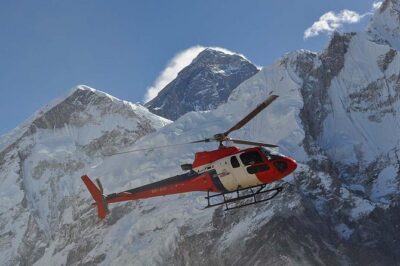
Everest Base Camp Trek with Helicopter Return from Gorakshep to Lukla
Read our review →Browse the lists this tour appears in