
REVIEW · COOKING CLASSES
Homo Momo: Beet to Butterfly Pea A Queer Momo-Making Class
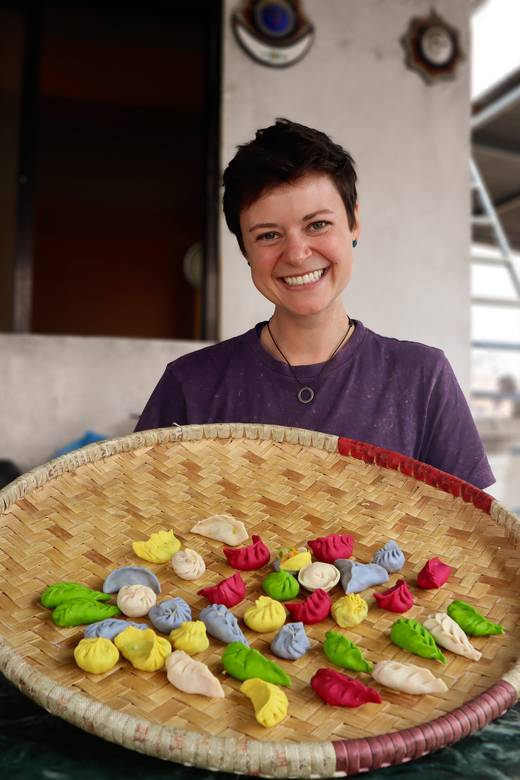
Momos become a Pride flag. This two-hour Kathmandu class pairs natural food colors with queer culture, and I like the hands-on shaping lesson and the private rooftop lunch. I also like that the menu makes room for both vegetarian and non-vegetarian preferences. The main consideration is simple: the session is in English, and the playful queer focus may not suit someone seeking a traditional cooking class only.
You meet outside the Garden of Dreams, then walk about 10 minutes toward the rooftop kitchen near Thamel. Guide Aayam brings humor and energy to the class, while his mother and sister may help with food production when needed. The price is $46 per person, which is fair if you value a meal, a personal guide, and a cultural conversation rather than just a recipe lesson.
In This Review
- Key points to know before you book
- From the Garden of Dreams to the rooftop kitchen
- Beetroot, spinach, carrot, and butterfly pea
- The face, the Botox, and the pinch
- A real choice between vegetarian and non-vegetarian momos
- Queer culture alongside the cooking
- Rooftop lunch after the folding lesson
- Is $46 a fair price in Kathmandu?
- Who will enjoy Homo Momo most?
- Practical booking advice for a two-hour session
- Should you book this momo class?
- FAQ
- Where does the Homo Momo class meet?
- How far is the kitchen from the meeting point?
- How long does the experience last?
- What language is the class conducted in?
- What ingredients create the momo colors?
- Are vegetarian and non-vegetarian options available?
- Is lunch included?
- Is bottled water included?
- Can I cancel the booking for a refund?
Key points to know before you book
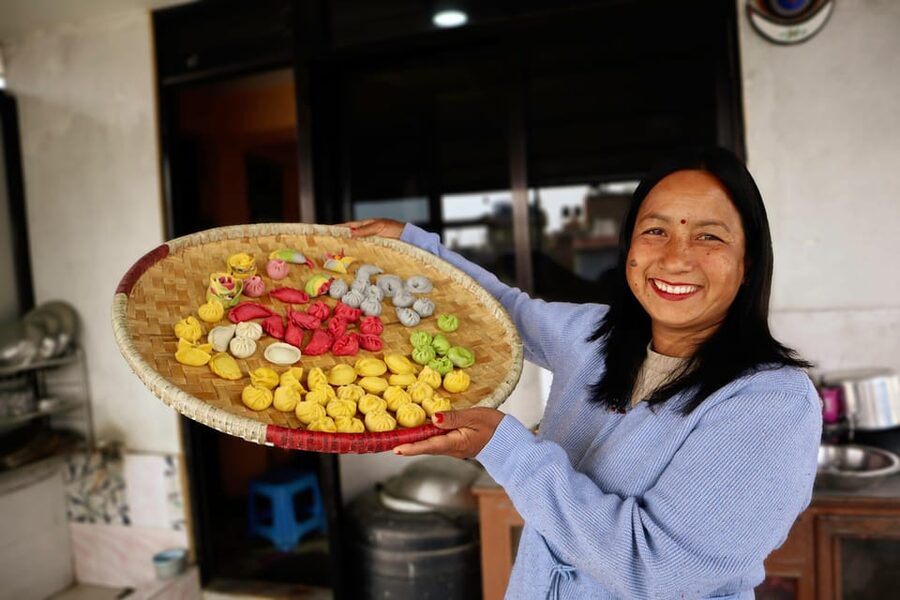
- Four natural colors shape the class: Beetroot, spinach, carrot, and butterfly pea create the bright momo wrappers.
- Aayam leads the session: His comic timing and cooking skill are a major part of the experience.
- The Pride flag gives the food a purpose: The colors are not just decoration. They connect the cooking to queer identity and celebration.
- The class ends with a rooftop lunch: You eat the momos you helped make in a private kitchen setting.
- The meeting point is easy to find: Start outside the Garden of Dreams, close to the center of Thamel.
- The session lasts two hours: That makes it a manageable choice for a free morning or afternoon in Kathmandu.
From the Garden of Dreams to the rooftop kitchen
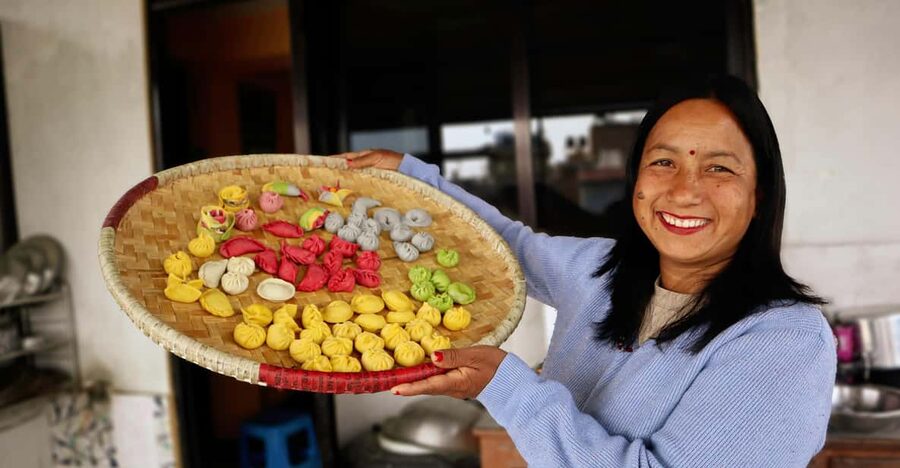
The class begins directly outside the Garden of Dreams, a useful landmark in central Kathmandu. You do not need to search for an obscure alley or arrange a long transfer. From this meeting point, the kitchen is about a 10-minute walk.
That short walk matters. Thamel can be noisy and crowded, so beginning at a clear public landmark keeps the arrival simple. You should still arrive ready to walk through central streets, but this is not a long transport-heavy activity.
The setting near Thamel also makes the class easy to fit into a Kathmandu day. You can pair it with time in the neighborhood before or after the workshop. Since the starting time varies, you need to check availability when booking rather than planning around a fixed departure hour.
The cooking takes place on a rooftop terrace kitchen. That gives lunch a more personal feel than a meal in a standard restaurant. The supplied details do not specify the view, seating arrangement, or weather plan, so I would treat the rooftop as a pleasant setting rather than book it for scenery alone.
More Cooking Classes in Kathmandu
- Half day cooking class in Thamel kathmandu
★ 5.0 · 607 reviews - Kathmandu: Local Women-Led Nepali Cooking & Momo Class
★ 4.9 · 360 reviews - Kathmandu: Local Lead Nepali Cooking & Momo-Making Class
★ 5.0 · 212 reviews
Beetroot, spinach, carrot, and butterfly pea
The central idea is simple and clever: use food to create the colors associated with the Pride flag. Beetroot supplies a strong red tone, spinach gives green, carrot brings orange, and butterfly pea adds blue. These ingredients color the momo dough without relying on artificial dyes.
This is where the class offers more than a standard dumpling lesson. You are not only learning how to fold a momo. You are seeing how familiar local food can carry a message about identity and inclusion.
The ingredients also make the process easy to understand. You can see the dough change as the natural colors are introduced, then compare the finished wrappers before cooking. The class does not present the colors as a separate art project. They remain part of the food, which keeps the Pride theme tied to everyday life.
You should not expect a professional pastry course or a technical study of food chemistry. The appeal is the combination of simple ingredients, visual results, and conversation. If you enjoy learning through making and eating, this balance works well.
The face, the Botox, and the pinch
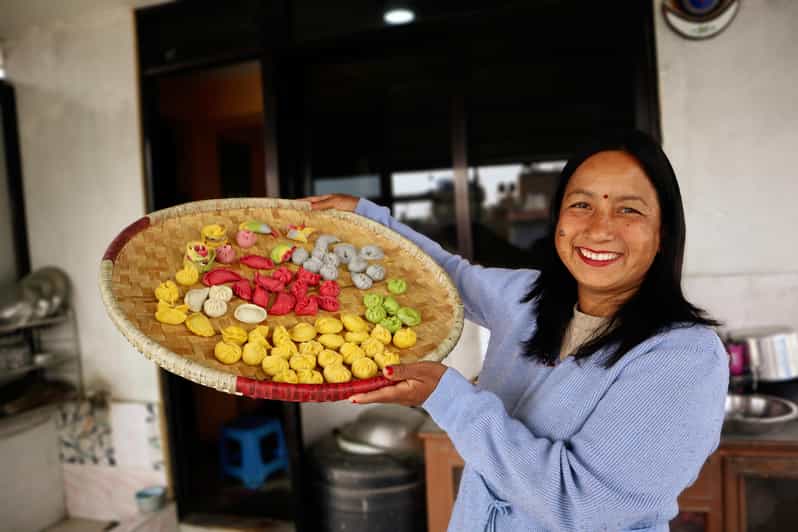
Momo shaping is the heart of the workshop. The playful instruction about putting the Botox in the face, then pinching again and again, turns a careful folding task into a joke you will remember.
That humor also points to a real skill. Momos need to be sealed properly, and the pleats or pinches affect how they look and hold together. A guide who keeps the room laughing can make repeated practice feel less like a test.
Aayam is central here. He is described as funny and talented, and the cooking is supported by his mother and sister when food production needs extra hands. That family involvement gives the meal a warmer, more personal quality, though the exact size of the group and the amount of individual instruction are not stated.
You should expect to work with the dough and filling rather than simply watch someone else cook. The class is designed around making the dumplings yourself. If your first few momos look uneven, that is part of the point. The food is handmade, and the guide’s humor helps take pressure off getting every fold perfect.
A real choice between vegetarian and non-vegetarian momos
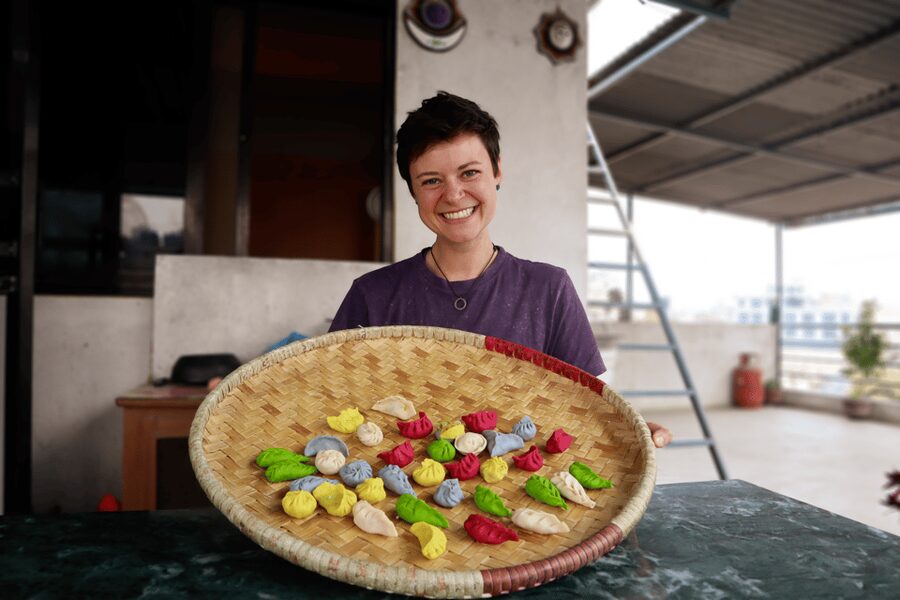
The class makes room for the veg and non-veg divide. That is important in Nepal, where momo fillings can vary widely and food preferences often shape where people eat.
The available information does not name the exact fillings, so you should confirm any dietary needs when booking. What is clear is that the session aims to give both vegetarian and non-vegetarian participants a suitable option.
This is a practical strength for mixed groups. One person does not have to skip the workshop because another wants meat. You can learn the same shaping method while choosing the filling that fits your diet.
The class also includes lunch, so the food choice is not a minor detail. You are not only making decorative dumplings for a demonstration. The momos become the meal at the end, which makes the menu worth checking before you arrive.
A completely different way to spend the day:
- Everest Base Camp Trek – 14 Days
★ 5.0 · 1,499 reviews - Private Kathmandu Sightseeing Tour | UNESCO World Heritage sites
★ 5.0 · 756 reviews - Everest Base Camp Helicopter Tour landing at Everest View Hotel
★ 5.0 · 668 reviews - Everest Base Camp Trekking
★ 5.0 · 485 reviews
Queer culture alongside the cooking
The queer focus is not a small extra added to a cooking class. It shapes the tone and subject of the session. As you fold the momos, conversation covers LGBTQ+ life in Nepal and current queer news.
That makes the workshop a useful choice for someone who wants a cultural exchange in addition to food. You are given a chance to hear about queer life from a local perspective, rather than treating Nepal only as a place of temples, trekking, and familiar sightseeing stops.
The guide is described as gay, and Aayam’s personality is a major part of the appeal. His humor keeps the conversation light, but the subject matter can still be personal and meaningful. You should come ready to listen as well as talk.
This will not be the right fit for every visitor. If you want a strictly traditional lesson with no social or identity-focused discussion, choose another cooking class. If you appreciate food with a clear connection to people and community, the queer theme gives this session its reason to exist.
Rooftop lunch after the folding lesson
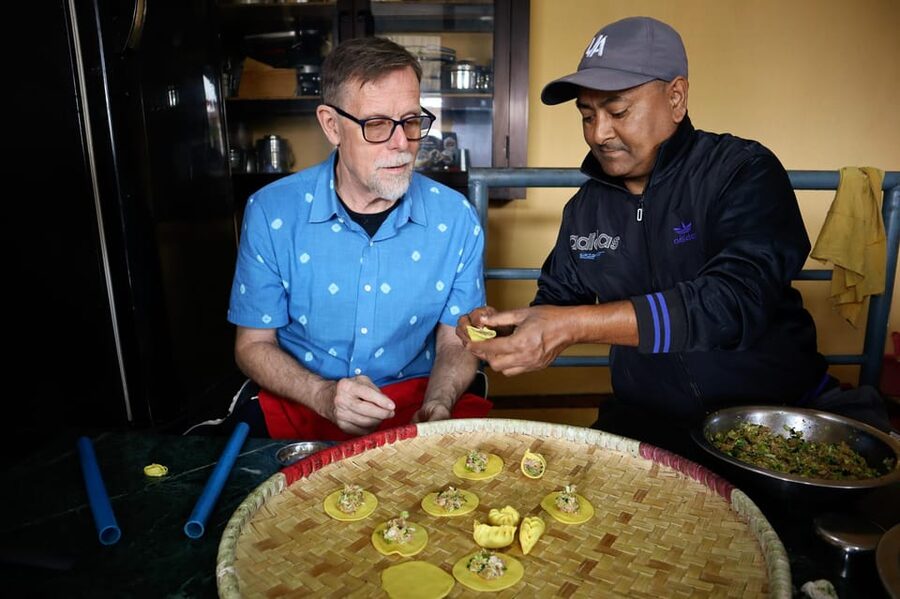
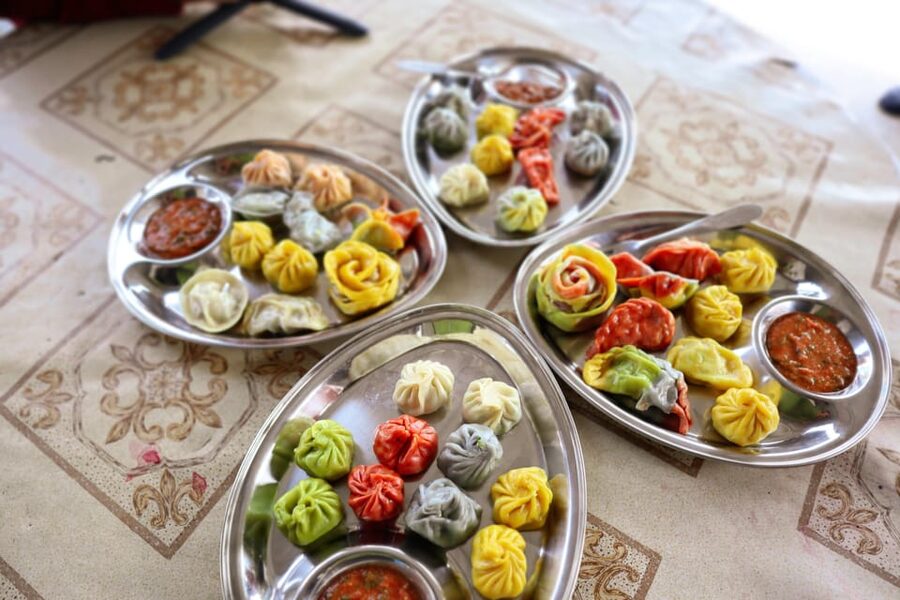
The class includes a private lunch on the rooftop terrace kitchen. Eating the momos after making them gives the two-hour session a clear shape: meet, walk, prepare, fold, cook, and eat.
The meal also lets you judge the results of your own work. Even imperfectly shaped momos can taste good, and the cooking process makes the lunch feel earned. A bottled water is included, which is useful during a hands-on activity in Kathmandu.
The word private applies to the lunch, but the information does not explain whether the entire class is private or how many people attend. I would not assume one-on-one teaching. If personal instruction is important to you, ask the provider about the group arrangement before paying.
The rooftop setting may be especially appealing after time in Thamel’s streets. Still, no specific view or weather arrangement is provided. The food and conversation are the dependable parts of the offer.
Is $46 a fair price in Kathmandu?
At $46 per person, this is not the cheapest way to eat momos in Kathmandu. You can find a less expensive meal elsewhere. The better comparison is with a guided food activity that includes instruction, cultural conversation, a rooftop lunch, bottled water, and a local guide.
I think the value is strongest for people who want a small cultural event, not just a plate of dumplings. You are paying for the setting, the Pride theme, Aayam’s hosting, and the chance to make the food yourself.
The price is less compelling if you are focused only on quantity or restaurant value. A regular momo meal will cost less, and a standard cooking class may offer a more traditional menu. Here, the personal and social parts are the main reason to spend more.
One verified booking praised the food as delicious and described the event as a strong cultural experience. That matches the design of the class: it is meant to leave you with a meal and a story.
Who will enjoy Homo Momo most?
I would suggest this class to:
- LGBTQ+ visitors and allies who want to support queer-led tourism
- Food lovers interested in Nepalese dumplings
- Couples or friends with different vegetarian and non-vegetarian preferences
- Visitors who enjoy guided conversation as much as hands-on cooking
- People staying around Thamel who want an activity close to the city center
- Anyone who likes playful instruction and does not mind making imperfect shapes
You may want to skip it if you dislike group conversation, prefer a formal cooking school, or want a fully traditional lesson without a Pride theme. The class is social by design, and its appeal depends on being open to both the food and the subject.
The English-language format is another point to consider. The guide speaks English, so you should be comfortable following cooking instructions and discussing queer life in that language.
Practical booking advice for a two-hour session
Plan on meeting outside the Garden of Dreams and walking roughly 10 minutes to the kitchen. Wear something comfortable for cooking, and avoid arriving in a hurry. The class is short, but the activity includes preparation, shaping, and lunch, so the full two hours has a purpose.
Ask about the filling if you have allergies, follow a strict diet, or need a particular vegetarian or non-vegetarian option. The class promises a choice across that divide, but the specific ingredients are not listed.
You can cancel up to 24 hours before the activity for a full refund. The reserve-now, pay-later option lets you hold a place without paying at the time of booking, which is useful when your Kathmandu schedule is still changing.
The advertised language is English, and the guide is live rather than recorded. Starting times depend on availability, so check the calendar before fitting the class around flights, tours, or other timed plans.
Should you book this momo class?
Book it if you want momos with a message. The combination of natural colors, queer culture, Aayam’s humor, family help in the kitchen, and a rooftop lunch gives the class a clear personality.
I would not book it simply because you need the cheapest meal or the most technical cooking lesson. The value comes from the people, the conversation, and the Pride-centered idea as much as from the food.
For a two-hour activity near Thamel, $46 is a reasonable price for the right audience. If the idea of shaping rainbow momos while talking about LGBTQ+ life in Nepal sounds like your kind of Kathmandu afternoon, this is an easy recommendation.
FAQ
Where does the Homo Momo class meet?
The meeting point is on the street directly outside the Garden of Dreams in Kathmandu.
How far is the kitchen from the meeting point?
The rooftop terrace kitchen is about a 10-minute walk from the heart of Thamel and the Garden of Dreams meeting area.
How long does the experience last?
The class lasts two hours.
What language is the class conducted in?
The live tour guide conducts the experience in English.
What ingredients create the momo colors?
The class uses beetroot, spinach, carrot, and butterfly pea to create natural colors inspired by the Pride flag.
Are vegetarian and non-vegetarian options available?
Yes. The class is designed to accommodate both vegetarian and non-vegetarian momo preferences.
Is lunch included?
Yes. A private lunch is included at the rooftop terrace kitchen.
Is bottled water included?
Yes. Bottled water is included.
Can I cancel the booking for a refund?
Yes. You can cancel up to 24 hours in advance for a full refund. You can also reserve now and pay later.
New in the Kathmandu listings
- Traditional Momo Making Class★ 5.0 · 10 reviews
- Kathmandu: Ancient City Kirtipur & Pharping Monastery Tour★ 5.0 · 2 reviews
- Kathmandu to Pokhara Premium sofa bus ticket★ 4.0 · 17 reviews
- Women Empowerment Project(Nepali cooking class & jewelry workshop★ 5.0 · 15 reviews
- 7-Day Langtang Valley Trek from Kathmandu★ 5.0 · 1 review
- Kathmandu 2 Nights 3 Days Chitwan Jungle Safari Tour★ 5.0 · 9 reviews
- Yoga Experience Day Trip with Private Transfer From Kathmandu★ 4.0 · 2 reviews
- Walking tour of real Kathmandu through back streets.★ 5.0 · 3 reviews
Cooking Classes, compared.
Nepalese Momos or Dal Bhat Cooking Class (Cook with Delight)
Read our review →
The best Private Nepali Cooking Class in Kathmandu
Read our review →
Nepalese Kitchen in Pokhara: Momos or Dal Bhat Cooking Class
Read our review →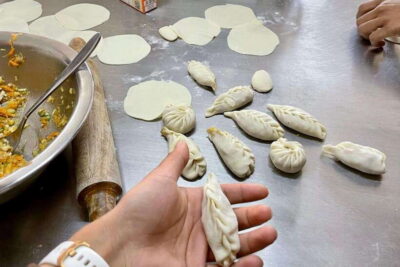
Browse the lists this tour appears in