
REVIEW · EVEREST BASE CAMP TREKS
Kathmandu: 12-Day Full-Board Everest Base Camp Private Trek
Everest rewards patience, and strong legs. This private trek combines the famous Everest Base Camp route with Sherpa villages, high mountain scenery, and two useful acclimatization days. I like that the $1,550 price includes flights, meals, permits, a guide, porter support, guesthouse stays, and trekking gear. I also like the private-group setup, which gives you more flexibility than a large fixed group. The main caution is simple: this is a serious high-altitude walk, not a casual holiday, and airport delays in Nepal can upset a tight schedule.
The route reaches 5,545 meters at Kala Patthar, higher than Everest Base Camp itself. Guide Suraj received particular praise for steady support on a September 2025 departure, while the company, Nepal High Trek & Expedition, was also credited with keeping the trip well organized. Still, you should arrive with travel insurance, warm clothing, and enough fitness for several days of five to seven hours on foot.
In This Review
- Key details before you book
- Kathmandu arrival and the flight to Lukla
- Phakding to Namche Bazaar, 10 kilometers uphill
- Namche’s acclimatization day
- Tengboche Monastery and the walk to Dingboche
- Dingboche and the second rest day
- Dingboche to Lobuche at 4,890 meters
- Everest Base Camp and the night at Gorak Shep
- Kala Patthar at sunrise, then a long descent
- Returning through Namche and Lukla
- What the $1,550 price really covers
- Who should choose this Everest trek
- Should you book this private Everest Base Camp trek?
- FAQ
- How long is the Everest Base Camp trek?
- What is the highest point on the trek?
- Are meals included?
- Is the Lukla flight included?
- Is travel insurance required?
- What accommodation and equipment are included?
Key details before you book
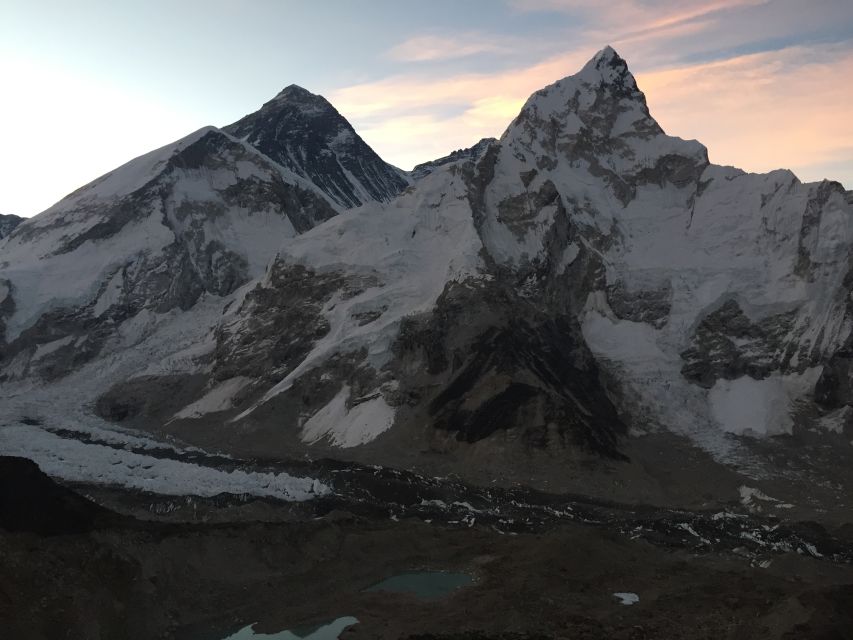
- Kala Patthar reaches 5,545 meters: This is the highest point of the trek and offers the major Everest massif viewpoint.
- The price includes the Lukla flights: Round-trip airfare from Kathmandu, permits, meals, tea or coffee, accommodation, guide, porter support, and selected gear are covered.
- Two acclimatization days are built in: You spend one rest day around Namche Bazaar and another around Dingboche.
- The trek uses private-group support: An English-speaking guide leads the route, with one porter for every two members.
- Peak-season flights may leave from Ramechhap: From September to November and March to May, the Lukla flight may be diverted from Kathmandu to Manthali.
- You walk high and often: Some days last five to seven hours, while the Base Camp and Kala Patthar days are longer.
Kathmandu arrival and the flight to Lukla
Your first day is straightforward. Staff meet you at Tribhuwan International Airport according to your arrival time and take you to the hotel in Kathmandu. That airport transfer matters after a long international flight, since it removes the need to arrange a taxi while tired and carrying trekking bags.
The following morning, you fly to Lukla at 2,820 meters. Lukla is the traditional gateway to the Khumbu Valley, and the flight is part of the adventure, not just a transfer. In peak months, the flight may operate from Ramechhap Manthali instead of Kathmandu. You should allow extra time and keep some flexibility in your wider Nepal plans.
One useful point from the trip details is the warning about airport disorder and delays. Build in buffer time if you have an international flight, hotel booking, or other fixed plan after the trek. A delayed mountain flight can affect the schedule in both directions.
From Lukla, you walk about seven kilometers to Phakding at 2,657 meters. The four-hour opening day is relatively short compared with what follows. It gives you a chance to settle into the walking pace, meet your guide and porter, and begin adjusting to the altitude without starting with a brutal climb.
More Everest Base Camp treks:
- Everest Base Camp Trek – 14 Days
★ 5.0 · 1,499 reviews - Everest Base Camp Trekking
★ 5.0 · 485 reviews - Everest Base Camp Trekking – 13 Day
★ 5.0 · 365 reviews
Phakding to Namche Bazaar, 10 kilometers uphill
Day three takes you from Phakding to Namche Bazaar, a walk of about 10 kilometers lasting seven to eight hours. Namche sits at 3,440 meters and marks the first major altitude jump of the route.
The setting changes quickly as you move farther into the Khumbu Valley. You pass through Sherpa villages and approach the lively trading center of Namche, where the route feels more connected to local life than it does in the smaller settlements. This is one of the most memorable stops because it is both a mountain town and a practical supply center for the region.
The long day requires patience. You should not treat the distance as the main challenge. The repeated uphill sections, thinner air, and slow pace make the hours feel longer than a similar walk at home. Your guide’s role is important here, especially in keeping the group moving steadily instead of too fast.
Namche’s acclimatization day
The fourth day is set aside for acclimatization. You remain in Namche and take a shorter local hike or excursion rather than pushing onward.
This rest day is not wasted time. It gives your body a chance to adjust before the route climbs higher. You still walk, but the effort is controlled. I consider this one of the strongest parts of the schedule because the trek does not simply race from Lukla to Base Camp.
The itinerary does not specify the exact hike or excursion, so the precise route can depend on conditions and the guide’s judgment. Carry water, dress in layers, and keep the pace easy. At this altitude, trying to prove your fitness can work against you.
Tengboche Monastery and the walk to Dingboche
Day five leads from Namche to Thyangboche, also commonly written as Tengboche. The walk covers about 11 kilometers in six to seven hours, ending at 3,867 meters.
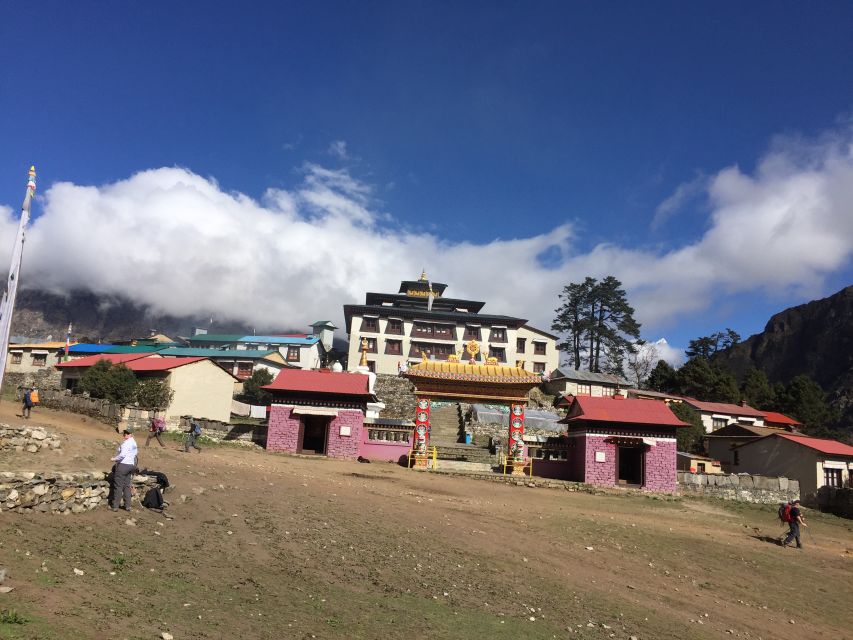
Tengboche Monastery is one of the cultural highlights of the trek. The monastery gives the route more meaning than a succession of mountain views. You are passing through a region shaped by Sherpa traditions and Buddhist practice, not simply walking toward a famous photo location.
The setting around the monastery is a major reason this stop is included. You can admire broad views of the Himalayan peaks while also seeing an important local religious site. Keep in mind that weather can affect visibility, so the best view is never guaranteed.
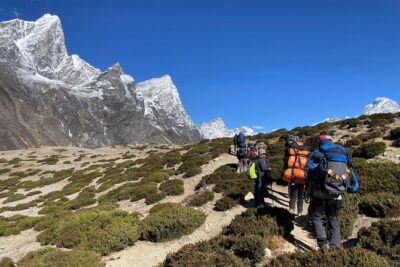
The next day, you continue to Dingboche at 4,365 meters. The walk is about 10 kilometers and takes five to six hours. This is a meaningful gain in altitude, even though the daily distance is modest. Your breathing may feel different, and the cold can become more noticeable, especially in the morning and evening.
More walking in the hills of Kathmandu:
- Nagarkot Sunrise View and Day Hiking from Kathmandu
★ 5.0 · 471 reviews - Annapurna Circuit Trek with Tilicho Lake
★ 5.0 · 368 reviews - Everest Base Camp Trek -14 Days
★ 5.0 · 321 reviews - Annapurna base camp trek 5 Days
★ 5.0 · 252 reviews
Dingboche and the second rest day
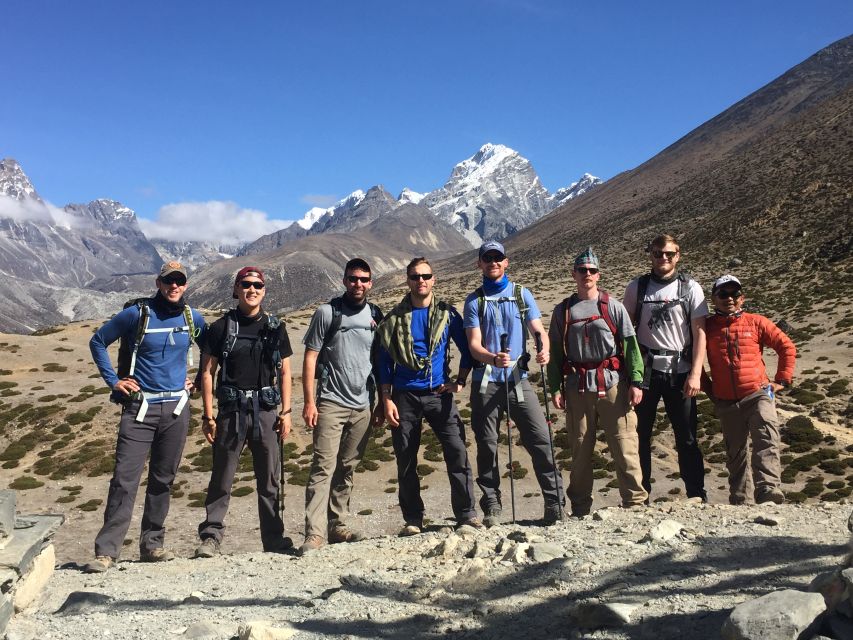
Day seven is another acclimatization day, with a local hike around Dingboche. Like the Namche rest day, it helps you prepare for the higher sections ahead.
Dingboche is a useful place to slow down before the route reaches Lobuche, Gorak Shep, and Base Camp. You should use the day for a gentle outing, not an exhausting side mission. Eat regularly, drink enough, and tell your guide promptly if you feel unwell.
The schedule includes three meals each trekking day, three cups of tea or coffee, and seasonal fresh fruit. Those inclusions make the full-board arrangement practical, particularly when you are spending long days in remote mountain settlements. Personal snacks and drinks beyond the included provisions are your responsibility, so carrying cash is sensible.
Dingboche to Lobuche at 4,890 meters
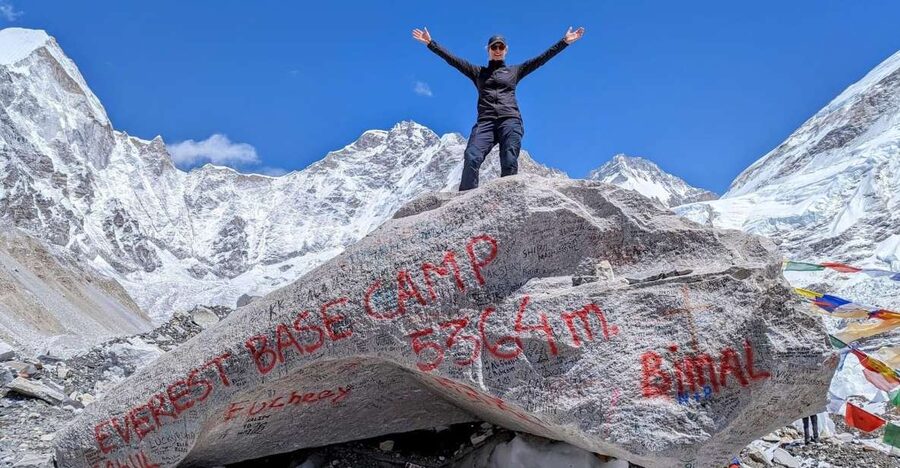
Day eight covers nine kilometers from Dingboche to Lobuche. It takes about six to seven hours and reaches 4,890 meters.
At this height, the walk may feel harder than the distance suggests. You are now close to the high point of the route, and every uphill section can demand concentration. The best approach is a slow, regular rhythm. Your guide can help you judge the pace, but you still need to pay attention to your own condition.
Lobuche is a staging point for the major goal ahead. Accommodation is in guesthouses throughout the trek, and this is not a lodge-based comfort tour. The trip includes 11 nights of guesthouse accommodation, but it does not promise luxury. You should expect basic mountain lodging and pack with that in mind.
The provided gear includes a down jacket, sleeping bag, and duffle bag. That is a valuable saving in luggage and equipment costs, though you should confirm sizes and arrangements before departure. Warm shoes, gloves, socks, toiletries, and suitable layers remain your responsibility.
Everest Base Camp and the night at Gorak Shep
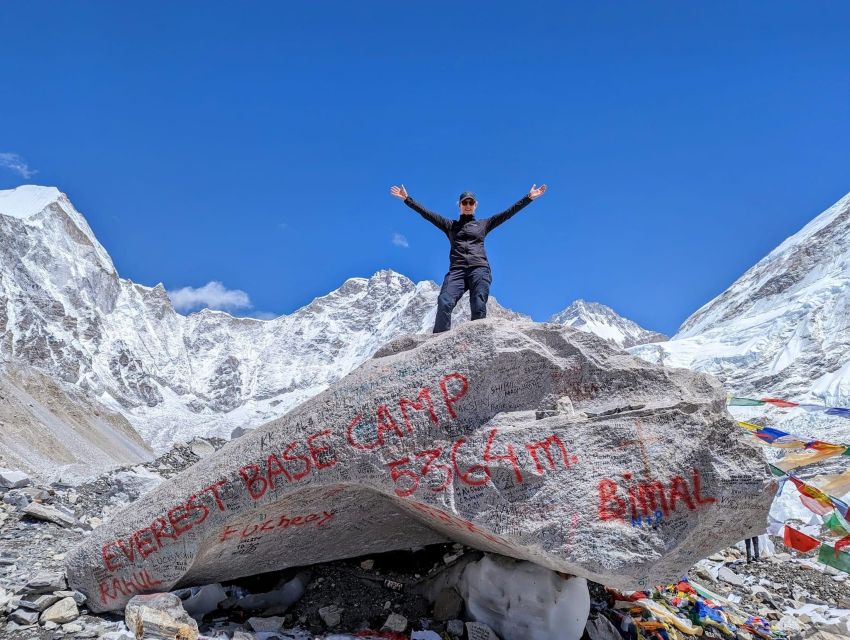
Day nine is one of the longest and most important. You walk from Lobuche to Everest Base Camp at 5,365 meters, then continue to Gorak Shep at 5,180 meters. The total distance is about 11 kilometers, with eight to nine hours on foot.
Reaching Base Camp is the emotional center of the journey. You are walking through the upper Khumbu toward the staging area used by Everest expeditions, surrounded by stark high mountain scenery. The experience is more about the route, effort, and setting than about comfort. At this elevation, simply reaching the destination is a genuine achievement.
You do not sleep at Base Camp. You return to Gorak Shep for the night, which makes this a demanding day. You should keep your camera accessible, but do not let photography turn the walk into a race. The air is thin, and the return matters just as much as the arrival.
Conditions can be cold and tiring. A waterproof bag helps protect clothing and electronics, while a headlamp, warm layers, and a charged phone or camera are sensible items to carry. The supplied information calls for travel insurance, and that requirement should be treated seriously for a high-altitude trek.
Kala Patthar at sunrise, then a long descent
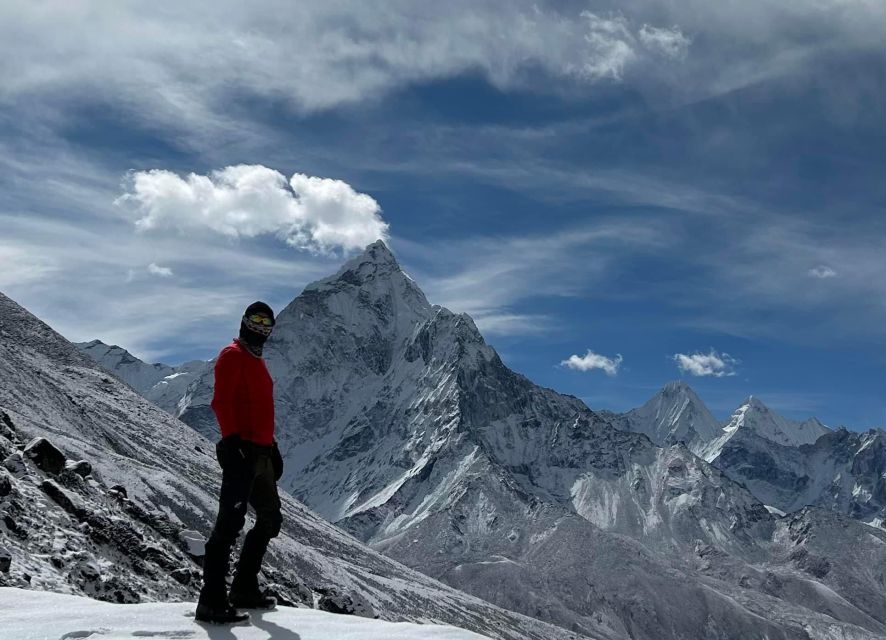
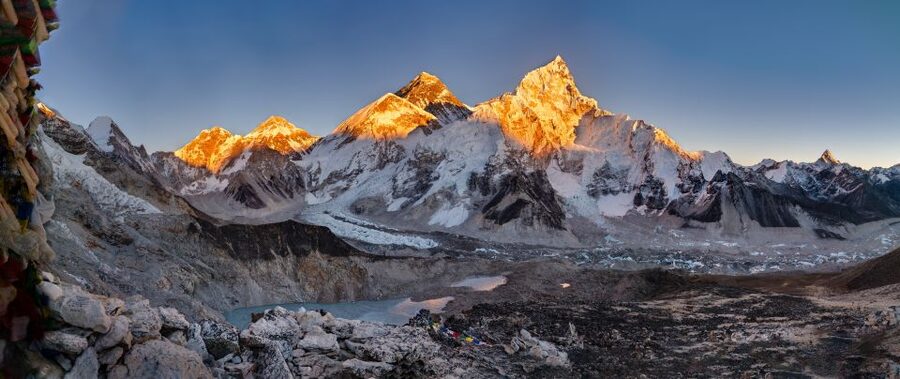
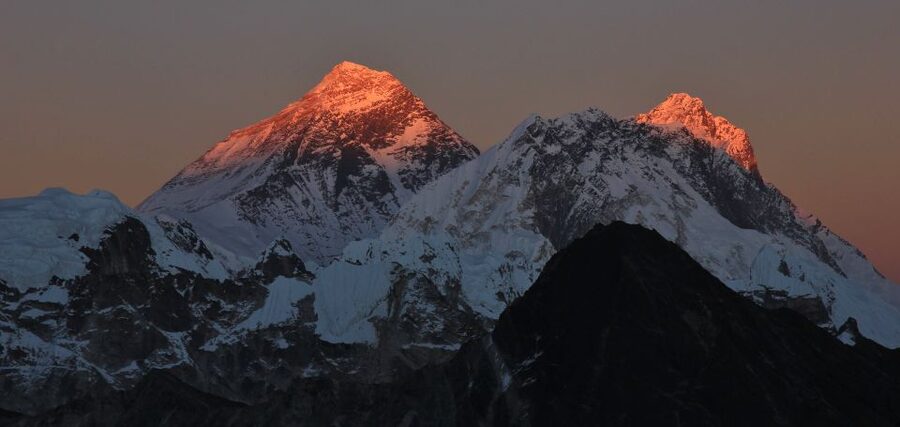
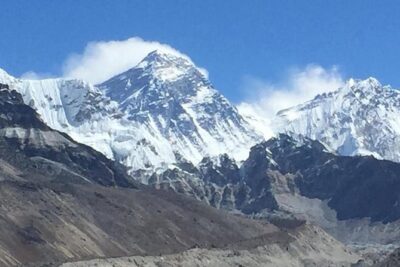
Day ten begins with a climb to Kala Patthar at 5,545 meters. This is the highest point of the entire trek and the place for the broadest views of Everest and the surrounding Himalayan peaks.
The itinerary describes a morning climb, followed by a long walk to Pangboche at 4,000 meters. The day lasts about nine hours and covers roughly 21 kilometers. That is a major effort, even though much of the route after Kala Patthar descends.
The viewpoint is the payoff for the physical work. You gain a clear sense of the Everest massif and the scale of the surrounding mountains. Because the viewpoint is exposed and high, warm clothing is essential. The supplied down jacket and sleeping bag are useful here, but you still need gloves, warm shoes, and a proper jacket.
Pangboche provides a lower night after the highest section. The descent may ease breathing, but tired knees and feet can become the new problem. Trekking poles are not listed among the included items, so bring them if you normally rely on them.
Returning through Namche and Lukla
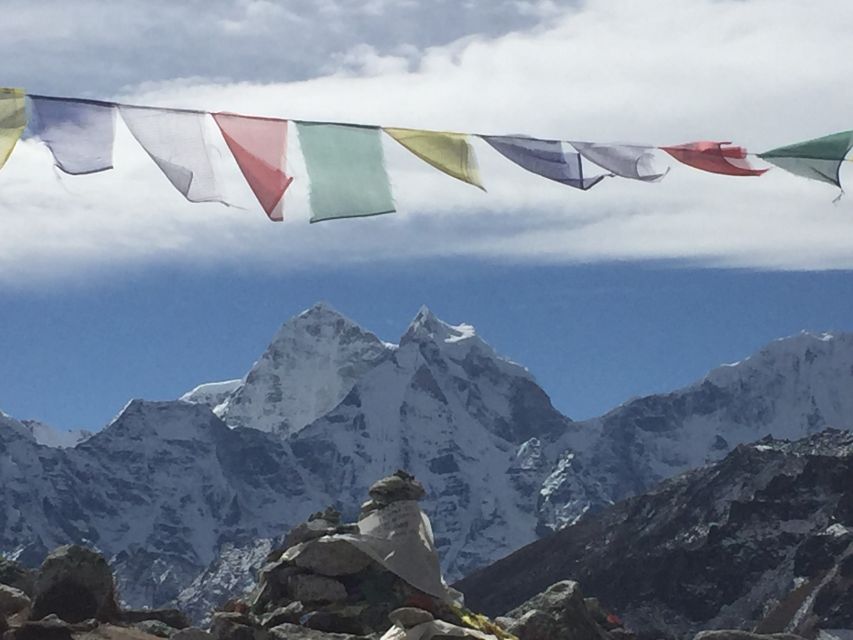
Day eleven takes you from Pangboche back to Namche Bazaar, about 16 kilometers in eight hours. You retrace part of the route, but the return does not feel like a repeat. You now know the villages and mountain passes, and the lower altitude may make the walking easier.
Day twelve is the final trekking day, from Namche to Lukla. It covers about 17 kilometers and takes seven to eight hours. This is another long day, and you may be tired after the push to Kala Patthar. Good hiking shoes and dry socks matter more than fancy equipment.
The private format can be useful during these return days. A guide can help manage the walking pace, and the porter carries the main duffle load, with one porter assigned to every two members. Solo participants should note that a personal porter is not included, so that cost may need to be added.
On day thirteen, you fly back to Kathmandu and transfer to the hotel. The afternoon is free, giving you time to rest or spend your remaining hours in the city. Keep the final day for departure on day fourteen rather than arranging an immediate international connection if possible. The mountain flight schedule can change, and the experience in Nepal rewards a little patience.
What the $1,550 price really covers
At $1,550 per person, this is a strong package if you use the included services. The price covers ground transportation, round-trip Kathmandu to Lukla airfare, 11 nights of guesthouse accommodation, three meals each trekking day, three cups of tea or coffee, seasonal fruit, guide services, guide expenses, porter support, national park and local entrance fees, and the down jacket, sleeping bag, and duffle bag.
Those inclusions remove several costs that can otherwise add up quickly. Permits and flights are especially important because Lukla airfare is central to the route, while a guide and porter make the high-altitude logistics more manageable.
The price does not include travel insurance, personal expenses, or a personal porter for a solo participant. You should also budget for cash needs along the route, since the information specifically advises bringing cash. Credit cards are listed among the suggested items, but personal spending arrangements in the mountains are not explained.
Who should choose this Everest trek
I would recommend this trip to a fit hiker who wants a structured route with private support and full-board meals. It suits you if reaching Everest Base Camp matters more than luxury, and if you value a guide who can help manage altitude, pace, and local logistics.
It is not suitable for wheelchair users, pregnant women, babies under one year, people with high or low blood pressure, people with altitude sickness, people with low fitness, or anyone over 95. The stated weight limit is 125 kilograms. Travel insurance is mandatory, not an optional extra.
The route involves long walking days, cold conditions, and a maximum elevation of 5,545 meters. You should bring your passport, passport-sized photo, warm and breathable clothing, waterproof shoes or a waterproof bag, hiking pants, gloves, toiletries, socks, camera equipment, and suitable cash. Drones are not allowed, and making fires is prohibited.
The trip has received a top rating from the two published bookings, with specific praise for organization and guiding. Suraj was named as the guide on one September 2025 departure, and the company was credited with handling the trek well. That is encouraging, but you should still ask about current flight procedures, gear sizes, and the exact meeting arrangements before paying.
Should you book this private Everest Base Camp trek?
Book it if you want the classic Everest route with the important costs bundled into one price. The combination of Namche and Dingboche acclimatization days, Tengboche Monastery, Sherpa villages, Base Camp, and Kala Patthar gives you both cultural stops and major mountain views.
Think twice if you dislike basic accommodation, cannot manage repeated five to nine-hour walking days, or need a fixed flight schedule. The airport warning is practical advice: give yourself spare time before and after the trek.
For a fit hiker who wants an organized private departure at a clear price, this is a sensible Everest Base Camp choice. Go prepared for altitude, accept that mountain flights can be messy, and treat the journey as a demanding walk rather than a sightseeing tour with a little hiking added.
FAQ
How long is the Everest Base Camp trek?
The full program lasts 14 days, including arrival and departure in Kathmandu, the trek from Lukla, the return flight, and the final departure day.
What is the highest point on the trek?
The highest point is Kala Patthar viewpoint at 5,545 meters. Everest Base Camp is reached at 5,365 meters.
Are meals included?
Yes. Three meals per day are included during the trek, along with three cups of tea or coffee and seasonal fresh fruit.
Is the Lukla flight included?
Yes. The price includes the round-trip fare between Kathmandu and Lukla. During peak periods from September to November and March to May, the flight may be diverted from Ramechhap Manthali.
Is travel insurance required?
Yes. Travel insurance is mandatory for this trek, and it is not included in the price.
What accommodation and equipment are included?
The trip includes 11 nights in guesthouses during the trek. A down jacket, sleeping bag, and duffle bag are also provided, while personal clothing, toiletries, shoes, gloves, and other individual items are your responsibility.
New in the Kathmandu listings
- Traditional Momo Making Class★ 5.0 · 10 reviews
- Kathmandu: Ancient City Kirtipur & Pharping Monastery Tour★ 5.0 · 2 reviews
- Kathmandu to Pokhara Premium sofa bus ticket★ 4.0 · 17 reviews
- Women Empowerment Project(Nepali cooking class & jewelry workshop★ 5.0 · 15 reviews
- 7-Day Langtang Valley Trek from Kathmandu★ 5.0 · 1 review
- Kathmandu 2 Nights 3 Days Chitwan Jungle Safari Tour★ 5.0 · 9 reviews
- Yoga Experience Day Trip with Private Transfer From Kathmandu★ 4.0 · 2 reviews
- Wildlife Adventure in Chitwan Nepal★ 4.0 · 4 reviews
Everest Base Camp Treks, compared.
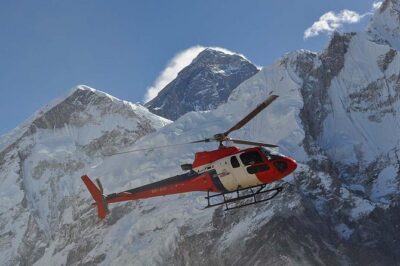
Everest Base Camp Trek with Helicopter Return from Gorakshep to Lukla
Read our review →Browse the lists this tour appears in