
REVIEW · EVEREST BASE CAMP TREKS
Kathmandu: 14-Day Everest Base Camp with Kala Patthar Trek
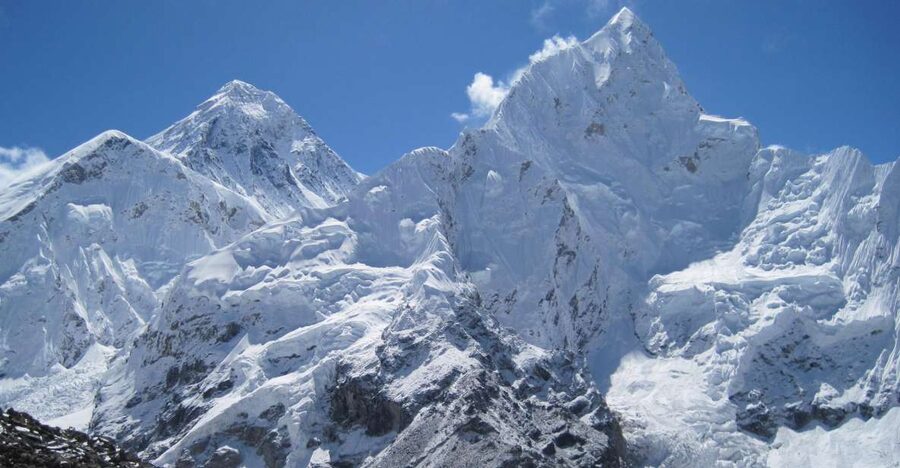
The mountain earns every step. This 14-day trek combines Everest Base Camp and Kala Patthar, giving you both the famous base camp route and the high viewpoint with sweeping views of Everest, Lhotse, Nuptse, and Ama Dablam. I like the careful acclimatization days in Namche Bazaar and Dingboche, and I also like that airport transfers, permits, domestic flights, a guide, and tea-house lodging are arranged for you. The main drawback is the altitude: reaching 5,545 meters at Kala Patthar is serious work, not a casual holiday walk.
The Sherpa heartland around Namche Bazaar adds a human side to the big mountain scenery. Guides such as Anjan and Padam have earned praise for attentive support, while Hari has been praised for staying reachable when plans changed. Still, Lukla flights depend on weather, meals and drinks are mostly extra, and porter arrangements need careful checking before you pay.
In This Review
- Key points to know before you book
- What the $1,296 package really gives you
- Kathmandu to Lukla: the trip begins with a flight
- Phakding to Namche Bazaar takes you into Sherpa country
- Tengboche brings the first major mountain drama
- Dingboche uses a second rest day wisely
- Lobuche and Gorak Shep make the altitude real
- Kala Patthar is the high point of the journey
- The return route is easier, but not effortless
- Guides, porters, and the human side of the trek
- Who should choose this 14-day Everest trek?
- Should you book Welcome Nepal Treks?
- FAQ
- How long is the Everest Base Camp and Kala Patthar trek?
- What is the highest point on the route?
- Is the flight from Kathmandu to Lukla included?
- Is airport pickup in Kathmandu included?
- Are hotel nights in Kathmandu included?
- Are meals included during the trek?
- Is tea-house accommodation included?
- Are permits and national park fees included?
- What language does the guide speak?
Key points to know before you book
- Kala Patthar reaches 5,545 meters: This is the highest point of the route and the best listed viewpoint for Everest.
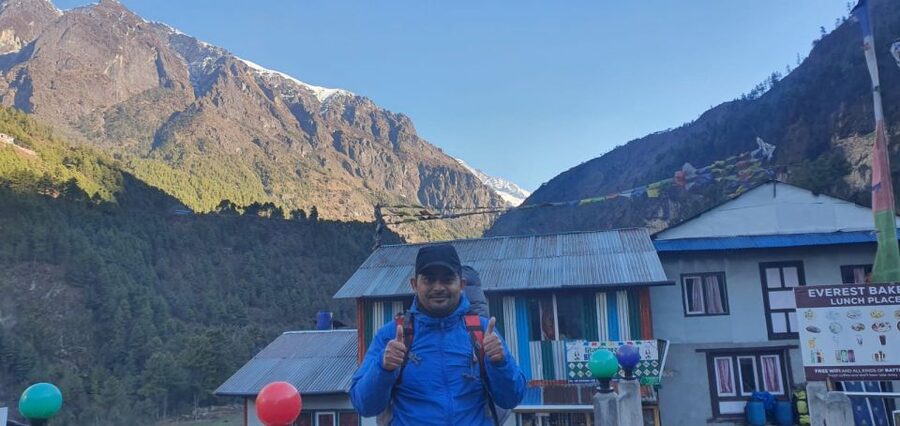
- Lukla is part of the adventure: The flight from Kathmandu uses one of the world’s most extreme airports, and weather can disrupt the schedule.
- Two acclimatization days help: You spend a shorter excursion day in Namche and a further rest day in Dingboche.
- Tea houses keep the trek practical: Lodging is included, but meals, drinks, and hot showers are not.
- The package costs $1,296 per person: That is useful value for permits, flights, lodging, transfers, and guide support, but extras can add up.
- The route demands fitness and health: It is not suitable for pregnant women, people with heart problems, or people with mobility impairments.
What the $1,296 package really gives you
At $1,296 per person, this is not simply a guided hike. The price covers the main moving parts that can make a Himalayan trek hard to arrange from abroad: airport pickup in Kathmandu, hotel nights, domestic flights between Kathmandu and Lukla, national park permits, tea-house lodging, and an English-speaking guide.
You also receive the necessary paperwork and Sagarmatha National Park fees. A jacket, sleeping bag, and duffle bag can be supplied if needed, which may save you from buying or transporting bulky gear for one trip.
The value is strongest if you want a planned route rather than a fully independent trek. You still need to budget for breakfast, lunch, dinner, and drinks during the hiking days. Kathmandu lunches and dinners are also excluded, as are hot showers during the trek. Alcoholic and non-alcoholic drinks cost extra.
There is one point to clarify before booking. The package says your guide and porter costs such as salary, food, accommodation, transport, and insurance are covered, yet the exclusions also say porters are not included and refer to one porter for two people. Ask the operator exactly what porter service is included for your booking. This is the sort of small detail that matters when you are carrying equipment at altitude.
Travel insurance with emergency medical evacuation is required but not included. Do not treat this as optional paperwork. The route reaches more than 5,000 meters, and evacuation cover is an important part of sensible preparation.
More Everest Base Camp treks:
- Everest Base Camp Trek – 14 Days
★ 5.0 · 1,499 reviews - Everest Base Camp Trekking
★ 5.0 · 485 reviews - Everest Base Camp Trekking – 13 Day
★ 5.0 · 365 reviews
Kathmandu to Lukla: the trip begins with a flight
Your arrival at Tribhuwan International Airport is met with a private transfer to your Kathmandu hotel. Two nights of standard accommodation in Kathmandu with breakfast are included, giving you a little time to arrive, settle in, and prepare before the walking begins.
The next day, you fly to Lukla at 2,850 meters. The flight is more than a simple transport link. Lukla is known for its extreme airport setting, and the short flight places you quickly in the Khumbu region, where the trek begins.
The practical warning is weather. A July departure had to be changed after flights to Lukla could not operate. The operator tried for several days and waited with the customer, then arranged another base camp trek with guide Padam. That shows useful flexibility, but you should still allow patience in your plans. A fixed international connection immediately after the trek leaves little room for weather delays.
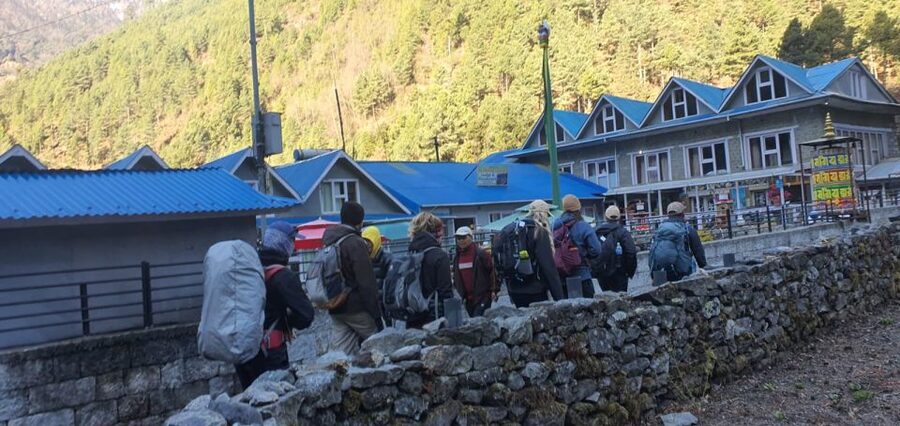
From Lukla, you walk to Phakding at 2,640 meters. The day takes about four to five hours. It is a sensible opening stage because the distance is manageable and the route begins the gradual adjustment to higher ground.
Phakding to Namche Bazaar takes you into Sherpa country
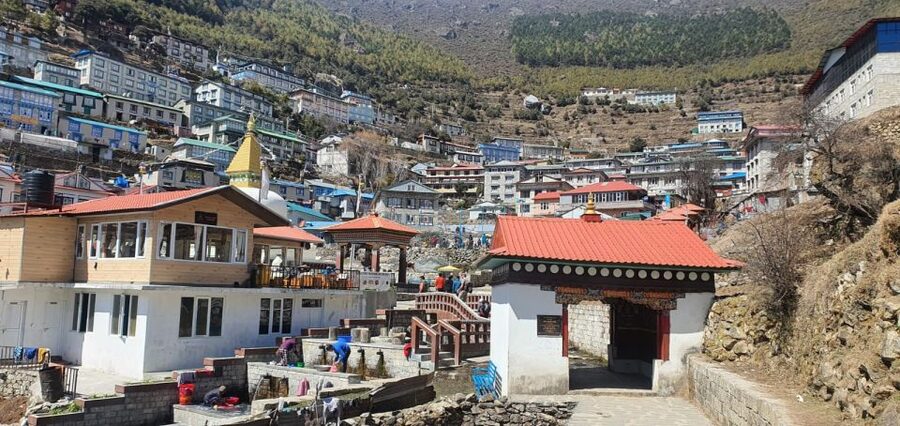
The walk from Phakding to Namche Bazaar is longer, around six to seven hours, and takes you to 3,440 meters. This is where the trek begins to feel more demanding. You gain height, and the combination of uphill walking and a full day on foot can test your pace.
Namche Bazaar is the Sherpa center of the route and one of the most important stops for both culture and acclimatization. The town gives you a chance to pause before the trail climbs much higher. I like that the itinerary does not rush straight through it.
Your Namche acclimatization day includes a two to three-hour excursion. The exact excursion is not specified, so you should think of it as a short active rest rather than a full day off. That is useful at this altitude. Gentle movement helps you get used to the height while keeping the main walking load modest.
You will also notice that the trek is not just a mountain-view checklist. Namche is a place to experience the Sherpa heartland, and the guide can help connect the route with the people and culture of the Khumbu region. The experience is stronger when you give yourself time to look around rather than treating the town as a bed for the night.
Tengboche brings the first major mountain drama
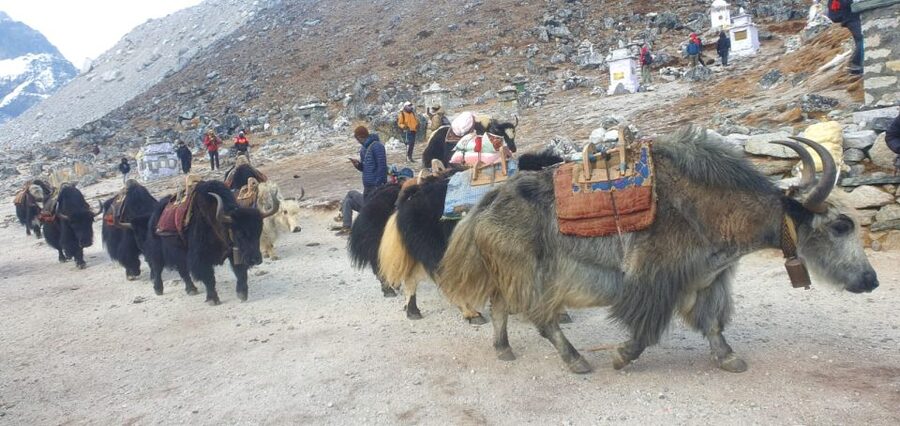
Day five takes you from Namche to Tengboche at 3,870 meters, in about five to six hours. You are now moving through the central section of the trek, where the scenery becomes increasingly important and the air becomes noticeably thinner.
Tengboche is one of the best-known stops on the route. The itinerary highlights Sherpa culture, and this is one of the places where that theme feels most relevant. The stop breaks up the climb toward Dingboche and gives the day a clear destination rather than one long push into the high country.
The gain in height from Namche to Tengboche is substantial enough that you should not judge the day by distance alone. Keep your pace slow, drink regularly, and follow your guide’s advice. The itinerary supplies an experienced English-speaking guide, and that support matters most when the route becomes less forgiving.
More walking in the hills of Kathmandu:
- Nagarkot Sunrise View and Day Hiking from Kathmandu
★ 5.0 · 471 reviews - Annapurna Circuit Trek with Tilicho Lake
★ 5.0 · 368 reviews - Everest Base Camp Trek -14 Days
★ 5.0 · 321 reviews - Annapurna base camp trek 5 Days
★ 5.0 · 252 reviews
Dingboche uses a second rest day wisely
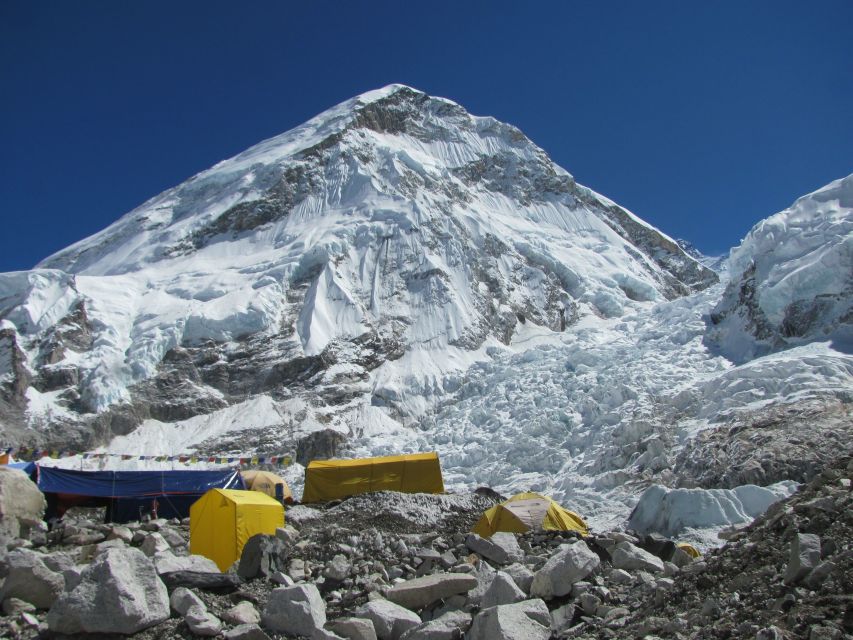
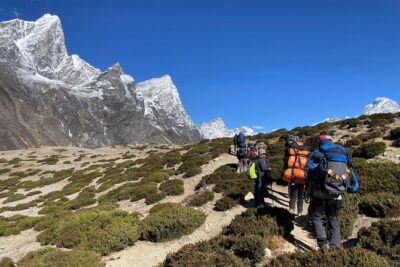
From Tengboche, you walk five to six hours to Dingboche at 4,410 meters. This is another large step upward. At this point, even simple routines can take longer, so a patient pace is more valuable than trying to finish early.
Day seven is set aside for further acclimatization in Dingboche. This is one of the best features of the schedule. A trek that rushes from lower villages to Base Camp may look efficient on paper, but the body needs time to adjust. Here, the itinerary gives you a second planned pause before the route reaches Lobuche and Gorak Shep.
Dingboche also marks the point where preparation becomes more important. Bring the listed warm and sun-protective clothing, including long pants, a hat, sunglasses, sunscreen, and enough socks. The packing list also asks for two T-shirts, shorts, toilet paper, trekking shoes, and mosquito repellent. You may not use every item in the same way at every altitude, but replacing forgotten basics is less convenient once you are high on the route.
Lobuche and Gorak Shep make the altitude real
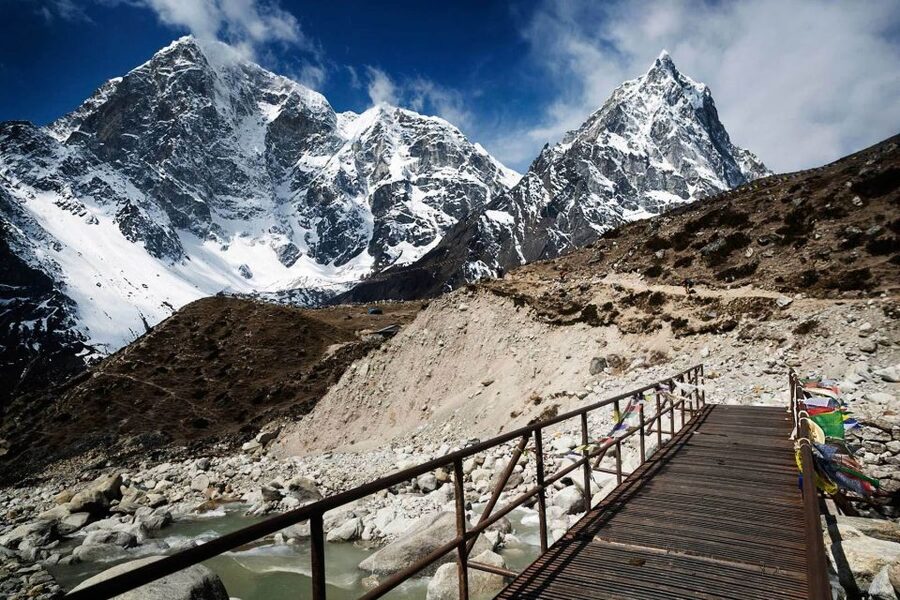
On day eight, you walk from Dingboche to Lobuche at 4,940 meters. The five to six-hour estimate is manageable only if you accept the pace. This is not the place for a race. Your body is working with less oxygen, and the next two days contain the trek’s biggest goals.
Day nine takes you from Lobuche to Gorak Shep at 5,170 meters. From there, you continue to Everest Base Camp at 5,364 meters and return to Gorak Shep for the night. This is a long and demanding day because the Base Camp walk is added after reaching the high settlement.
Everest Base Camp is the emotional target of the trip. You are walking at the foothill of the world’s tallest mountain, surrounded by the high Khumbu scenery that makes this route famous. At the same time, do not expect the Base Camp stop alone to provide the broadest view of Everest. Its value is being at the destination used by Everest expeditions, while the next morning’s Kala Patthar climb is designed for the major panorama.
The return to Gorak Shep is important. You do not finish at Base Camp and then descend to a lower village on the same day. The high overnight location makes day nine a serious test, so this is where your fitness, acclimatization, and willingness to walk slowly matter most.
Kala Patthar is the high point of the journey
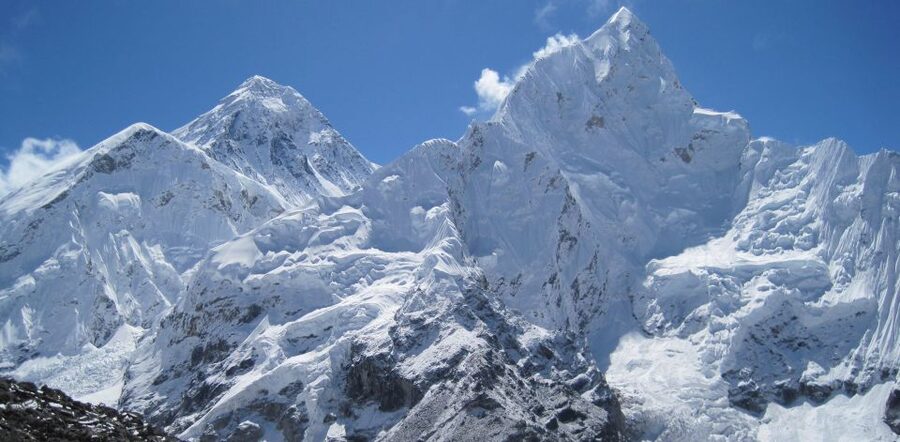
Day ten begins with the hike to Kala Patthar, at 5,545 meters. This is the highest point on the itinerary and the clearest test of your preparation.
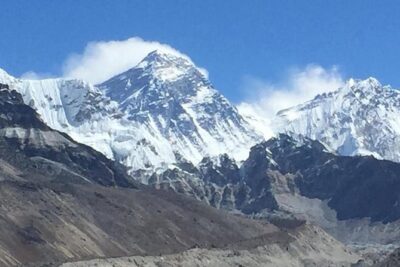
The reward is the chance to admire Everest along with Lhotse, Nuptse, and Ama Dablam. The viewpoint is a major reason to choose this itinerary instead of a Base Camp walk alone. You get the symbolic destination of Base Camp and a high lookout designed for mountain views.
The climb can feel harder than its distance suggests. At more than 5,500 meters, short uphill sections may require frequent pauses. Pack sunglasses and sunscreen because high-altitude light can be harsh, and keep warm layers accessible. The supplied jacket and sleeping bag can be useful if you do not have your own equipment.
After Kala Patthar, you descend to Pheriche at 4,371 meters. That loss of height should feel welcome, but do not expect the day to be easy. You have already completed the highest climb of the trek, and the descent still takes time and concentration.
The return route is easier, but not effortless
The final three days are spent descending before you return to Kathmandu on day thirteen. The supplied outline does not name every overnight stop on these descent days, so you should confirm the exact village plan before departure.
Descending generally gives your body relief from the altitude, but tired legs can make downhill walking uncomfortable. Trekking shoes with good support are especially important here. You should also continue following your guide’s instructions rather than assuming the difficult part ended at Base Camp.
Back in Kathmandu, you spend a final evening before departure on day fourteen. The return gives you a buffer between the mountain route and your international flight, although you should still ask how weather disruptions are handled if your departure date is fixed.
Guides, porters, and the human side of the trek
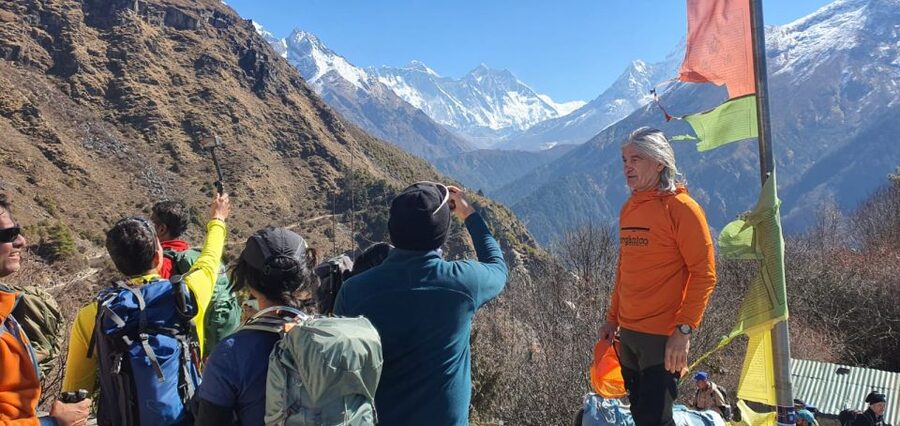
The strongest praise for this experience centers on the people running it. English-speaking guides are supplied, and specific guides named in past bookings include Anjan and Padam. Anjan was praised for careful organization and attention to safety, while Padam was singled out for staying attentive when a weather cancellation forced a change of plan.
Hari, the operator contact, was also praised for being reachable and trying to handle requests. That kind of communication is valuable on a trek where flights and weather can change the schedule.
Porters are part of the practical equation, but the package wording needs clarification. The supplied information refers to one porter for two people while also listing porter costs among the included services and porters among the exclusions. Ask whether the porter is assigned automatically, shared between two people, or charged separately.
Tea-house accommodation is included throughout the trek. You should expect basic lodge-style lodging rather than hotel comfort. One account praised the coziness and described showers as lukewarm luxury, which is a useful way to set your expectations. Hot showers are specifically excluded, so prepare for simple washing arrangements and extra charges if a hot shower is available.
Meals are not included, giving you some control over what you order but making the final cost less predictable. Food at high altitude is about fuel and convenience more than fine dining, so carry enough small personal snacks if you rely on them. The operator has been praised for arranging food and safety well, but you still pay for meals and drinks separately.
Who should choose this 14-day Everest trek?
You should consider this trek if you want a classic Everest route with a guide, arranged flights, permits, tea-house lodging, and two acclimatization days. It suits people who value structure but still want the daily reality of walking between mountain villages.
It is also a good fit if Sherpa culture matters to you. Namche Bazaar and Tengboche give the route more character than a simple point-to-point hike, and the English-speaking guide can help you understand what you are seeing.
You should think twice if you dislike basic lodging, need guaranteed flight times, or want most costs paid in advance. The itinerary includes major logistics, but meals, drinks, showers, travel insurance, and possibly porters remain outside the headline price.
This is not suitable for pregnant women, people with heart problems, or people with mobility impairments. Even for a fit person, the altitude is the central challenge. A calm attitude, proper insurance, and willingness to slow down are as important as strong legs.
Should you book Welcome Nepal Treks?
I would choose this tour if you want the classic 14-day route and prefer having the major arrangements handled before you arrive. The combination of Everest Base Camp, Kala Patthar, Sherpa villages, guide support, permits, flights, and tea-house accommodation gives the $1,296 price solid value.
Before booking, get written clarification on porter coverage, meal costs, shower charges, and the exact descent schedule. Also protect your trip with insurance that includes medical evacuation and leave room for Lukla flight delays.
Book it if you want a serious but well-supported Himalayan challenge, especially with a guide such as Anjan or Padam if available. Skip it if you need luxury, fixed timing, or an easy walk. The mountain will not adjust its schedule for you, but a sensible itinerary and a responsive local team can make the difference.
FAQ
How long is the Everest Base Camp and Kala Patthar trek?
The experience lasts 14 days, including arrival and departure arrangements in Kathmandu.
What is the highest point on the route?
Kala Patthar is the highest point, at 5,545 meters.
Is the flight from Kathmandu to Lukla included?
Yes. The Kathmandu to Lukla and Lukla to Kathmandu flight ticket is included, along with domestic airport transfers by car.
Is airport pickup in Kathmandu included?
Yes. Pickup and drop-off from the Kathmandu airport or hotel are included by private car, van, or bus.
Are hotel nights in Kathmandu included?
Two nights of standard accommodation in Kathmandu with breakfast are included. Lunch and dinner in Kathmandu are not included.
Are meals included during the trek?
No. Breakfast, lunch, and dinner during the trek are not included. Alcoholic and non-alcoholic drinks are also extra.
Is tea-house accommodation included?
Yes. Accommodation in lodges and tea houses during the trek is included.
Are permits and national park fees included?
Yes. The necessary paperwork, national park entry permits, Sagarmatha National Park fees, and related fees are included.
What language does the guide speak?
The live tour guide speaks English.
New in the Kathmandu listings
- Traditional Momo Making Class★ 5.0 · 10 reviews
- Kathmandu: Ancient City Kirtipur & Pharping Monastery Tour★ 5.0 · 2 reviews
- Kathmandu to Pokhara Premium sofa bus ticket★ 4.0 · 17 reviews
- Women Empowerment Project(Nepali cooking class & jewelry workshop★ 5.0 · 15 reviews
- 7-Day Langtang Valley Trek from Kathmandu★ 5.0 · 1 review
- Kathmandu 2 Nights 3 Days Chitwan Jungle Safari Tour★ 5.0 · 9 reviews
- Yoga Experience Day Trip with Private Transfer From Kathmandu★ 4.0 · 2 reviews
- Wildlife Adventure in Chitwan Nepal★ 4.0 · 4 reviews
Everest Base Camp Treks, compared.
Everest Base Camp Trek with Helicopter Return from Gorakshep to Lukla
Read our review →Browse the lists this tour appears in