
REVIEW · COOKING CLASSES
Local Women Led Nepali Cooking Class
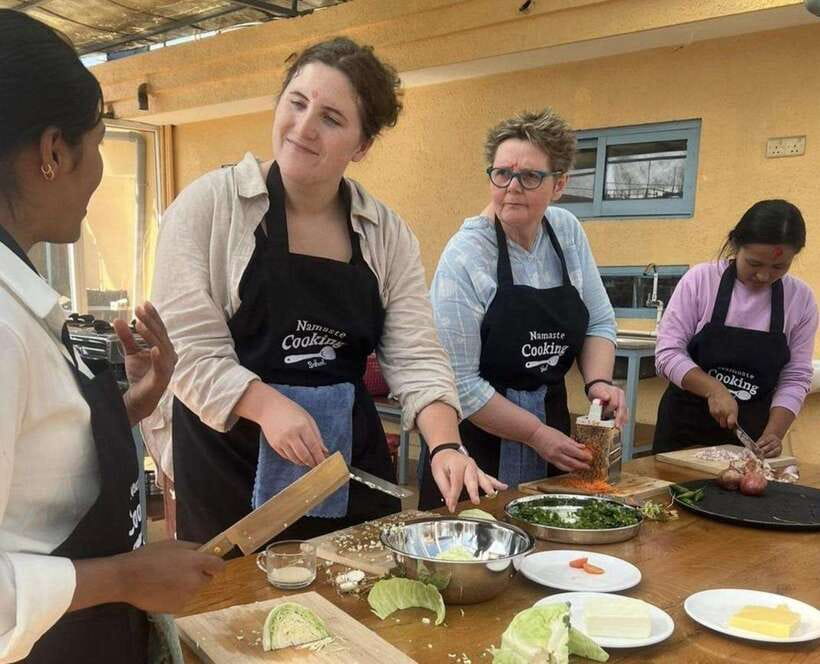
Come hungry, leave with more than recipes. The women-led cooking class in Thamel pairs farm-to-table Nepali food with a clear social purpose. I like the direct connection to local farmers, and I like that your finished dishes become lunch or dinner rather than a sample lost in a kitchen. The three-hour format also gives you enough time to cook, eat, and talk without taking over your whole day.
The main consideration is menu clarity. You are promised a broad choice covering an entree, main course, and dessert, but the exact dishes are not listed in advance. Hotel pickup and drop-off are not included, even though pickup service is mentioned as available, so confirm the transport details before booking.
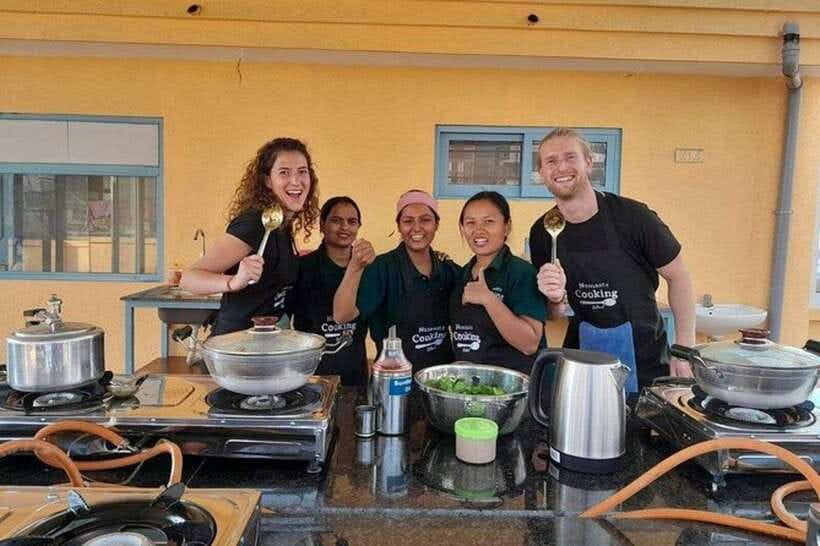
The class is limited to eight people and taught in English. That small size should make hands-on cooking easier, while the warm, cheerful teaching style adds a social lift. One especially memorable session involved four women, plenty of laughter, and a very satisfying feast. This is not a polished restaurant performance. It is a practical cultural experience built around food, dignity, and shared work.
In This Review
- Key points before you book
- Starting in Thamel: A convenient place to cook
- The three-hour cooking rhythm
- From local farms to the kitchen table
- Cooking with a women-led team
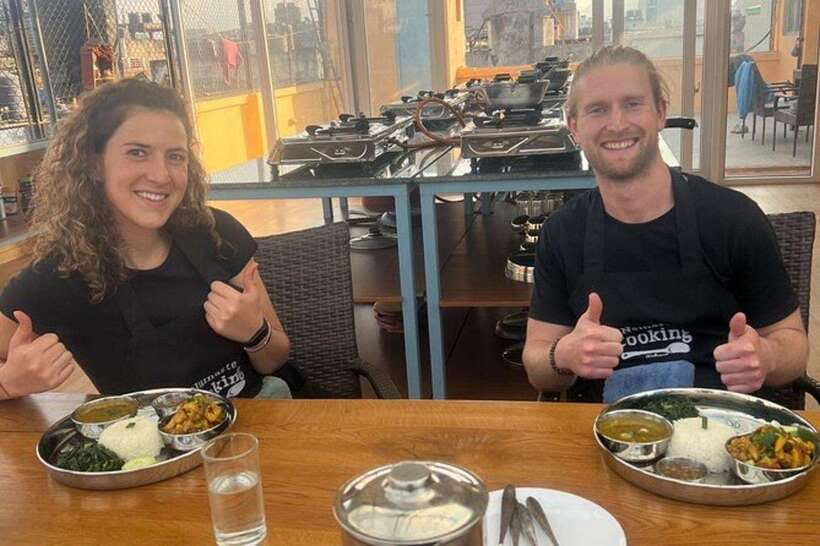
- The meal you make is part of the reward
- Recipes and a certificate to take home
- What $30 represents in value
- Who will enjoy this class most
- Booking details that matter in Thamel
- Should you book the Namaste Cooking School class?
- FAQ
- Where is the Nepali cooking class held?
- How long does the cooking class last?
- What language is the class taught in?
- How many people can join the class?
- What is included in the $30 price?
- Is hotel pickup and drop-off included?
- Can I cancel for a full refund?
Key points before you book
- Three hours in central Thamel: The school sits in the heart of Kathmandu’s best-known visitor district, making it easy to fit into a day of sightseeing.
- Women-led social mission: The instructors are survivors of trafficking who now work as skilled cooks and teachers, with the class supporting their independence.
- Farm-to-table ingredients: Food comes directly from local farmers, linking each dish to Nepal’s land, markets, and cooking traditions.
- A full meal is included: You cook the dishes, then sit down to eat lunch or dinner together.
- Small groups of up to eight: The limited size should give you more room to participate instead of simply watching.
- Good booking flexibility: You can cancel up to 24 hours before the class for a full refund, and reserve now while paying later.
Starting in Thamel: A convenient place to cook
The Namaste Cooking School is in Thamel, right in the center of Kathmandu’s visitor scene. That location matters. You can reach it more easily than a school far outside the city, and the class can fit neatly between sightseeing, shopping, or an evening meal.
Thamel is not quiet, but it is useful. You will find the school in an area already geared toward people exploring Nepal, which reduces the planning burden for a short activity. If you are staying nearby, you may be able to walk. If you need a pickup, ask for the exact arrangement before paying, since pickup service is noted as available but hotel pickup and drop-off are not included in the standard package.
The meeting point is more than a practical detail. A cooking class works best when you arrive relaxed and on time. A late start would cut into the part that matters most: preparing the food yourself and sharing it at the end.
More Cooking Classes in Kathmandu
- Half day cooking class in Thamel kathmandu
★ 5.0 · 607 reviews - Kathmandu: Local Women-Led Nepali Cooking & Momo Class
★ 4.9 · 360 reviews - Kathmandu: Local Lead Nepali Cooking & Momo-Making Class
★ 5.0 · 212 reviews
The three-hour cooking rhythm
The class lasts three hours, which is a sensible length for this kind of activity. A shorter session might rush the preparation, while a much longer one could feel like a full work shift in the kitchen.
You can expect the experience to move through three broad stages:
- Introduction to the ingredients and dishes
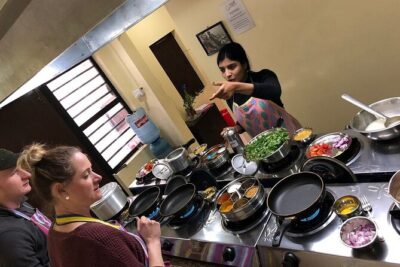
- Hands-on cooking
- A shared lunch or dinner made from your work
The exact order and menu can vary, so you should not expect a fixed restaurant-style schedule. The important point is that the class includes both preparation and eating. You are not paying just to watch a demonstration.
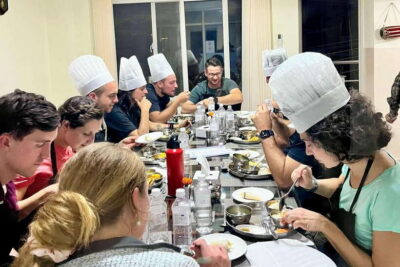
The instructors speak English, making the session suitable for visitors who do not speak Nepali. Language skills may vary from teacher to teacher, but the format is designed for English instruction. With no more than eight participants, you should have a better chance to ask questions, follow the steps, and take part in the cooking rather than stand behind someone else.
I would treat the class as a social meal as much as a lesson. The atmosphere has been praised for friendliness, humor, and easy conversation. A particularly upbeat session included four women leading the group, with plenty of laughter alongside the cooking. That detail gives you a useful picture of the tone: expect warmth and participation, not a formal culinary lecture.
From local farms to the kitchen table
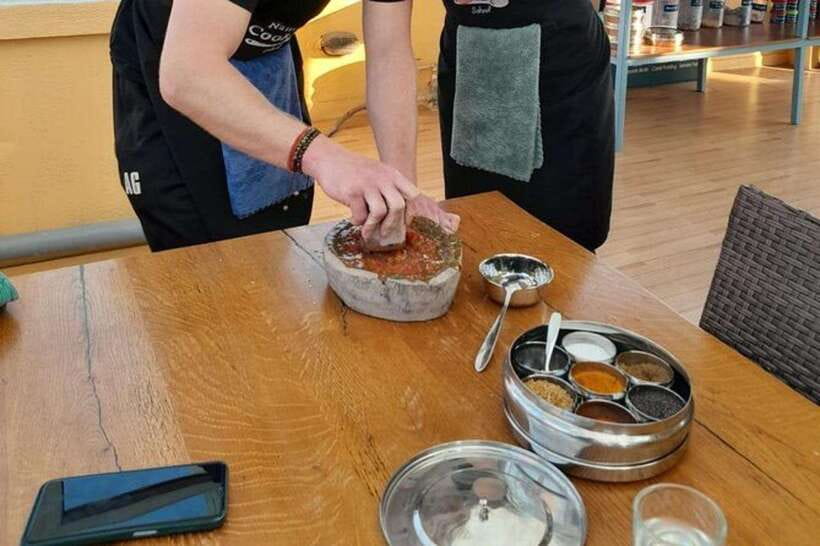
The school puts local ingredients at the center of its approach. That farm-to-table promise is valuable because Nepali food is tied closely to seasonal produce, grains, spices, and everyday home cooking. The ingredients are not simply decoration for a culture lesson. They are the raw material you use to understand the food.
You may learn how familiar ingredients are combined in Nepali cooking, how preparation changes flavor, and how a meal comes together across several courses. The supplied details do not name the exact recipes, so I would avoid booking this class for one particular dish unless the school confirms the menu first.
The menu is described as covering an entree, a main course, and dessert. That range gives the class a fuller feel than a single-dish workshop. You get to see how savory courses fit together and finish with something sweet. It also means the session may involve several preparations at once, so expect a busy kitchen rather than one slow recipe.
The lack of a published menu cuts both ways. If you enjoy surprises, it adds interest. If you have strong dietary needs or want to master a specific Nepali specialty, ask before booking. The available information does not confirm vegetarian options, vegan substitutions, allergies, or the names of the dishes.
Cooking with a women-led team
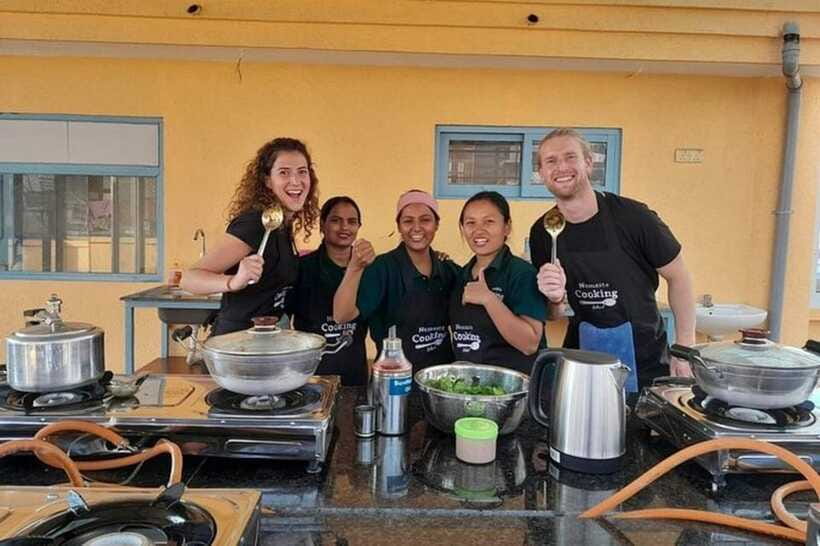
The social purpose is the heart of this experience. The cooking school works with women who survived trafficking and now teach, cook, and build their own futures. The language used by the school emphasizes strength and recovery rather than pity, which is important. You are meeting working professionals, not being asked to treat anyone as a charity exhibit.
That changes the meaning of the class. Your payment supports a setting where food skills, employment, and personal independence connect. You still receive a meal and recipes, but your participation also helps keep a women-led local enterprise working.
You should approach this part with respect. The class is not a storytelling session about trauma, and you should not expect personal histories to be shared. The focus is on food, culture, work, and community. That balance lets the women leading the class decide how much of their story belongs in the room.
I like the phrase cook for culture, empower for change because it describes the experience plainly. You learn through an ordinary activity, cooking dinner, while supporting a less ordinary path toward opportunity. For many people, that gives the class more weight than a standard tourist cooking lesson.
A completely different way to spend the day:
- Everest Base Camp Trek – 14 Days
★ 5.0 · 1,499 reviews - Private Kathmandu Sightseeing Tour | UNESCO World Heritage sites
★ 5.0 · 756 reviews - Everest Base Camp Helicopter Tour landing at Everest View Hotel
★ 5.0 · 668 reviews - Everest Base Camp Trekking
★ 5.0 · 485 reviews
The meal you make is part of the reward
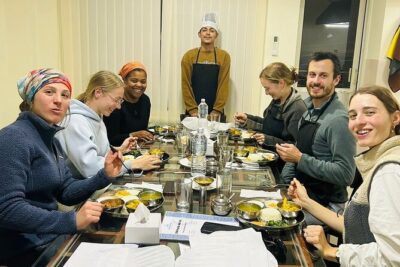
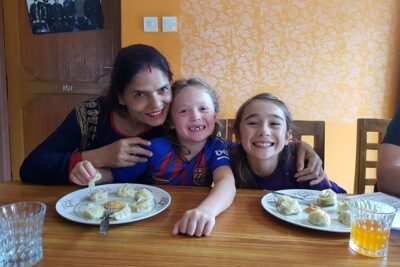
Once the cooking is complete, you eat lunch or dinner with the dishes you prepared. This is one of the strongest features of the package. You can taste the result while the steps are still fresh in your mind, and you will have a better sense of how the ingredients work together.
A shared meal also turns the class into a natural social event. You are not rushing away after the last cooking task. You have time to sit down, enjoy the food, and reflect on what you made.
The tone appears to be light and friendly. The strongest praise centers on the women running the session, their welcoming manner, and the laughter in the room. Another clear point is the food itself: the final meal is described as a feast, not just a token plate.
Still, keep your expectations realistic. This is a three-hour group activity, not a private chef’s table. You may be working at a shared pace, and the final result will depend partly on the group. If you want complete control over every dish, a private lesson may suit you better, but that option is not included in the information provided here.
Recipes and a certificate to take home
The recipe booklet is a useful inclusion. A cooking lesson has limited value if the food disappears at the end of the day, but written recipes give you a chance to repeat the dishes later. You can use them as a reminder of the techniques and ingredients introduced during the class.
The booklet may be especially helpful if you are new to Nepali cooking. You can return to the recipes at home instead of trying to remember every step from a busy kitchen. Since the exact contents are not specified, ask if the booklet includes all the dishes you prepare.
You also receive a certificate of participation. It will not transform you into a professional cook, but it is a pleasant memento of the experience. Think of it as a souvenir with more meaning than another shop-bought trinket.
The real keepsake, though, is the ability to recreate part of your Nepal trip at home. Food gives a journey a long afterlife. A recipe can bring back the smells, conversations, and shared meal long after you have left Kathmandu.
What $30 represents in value
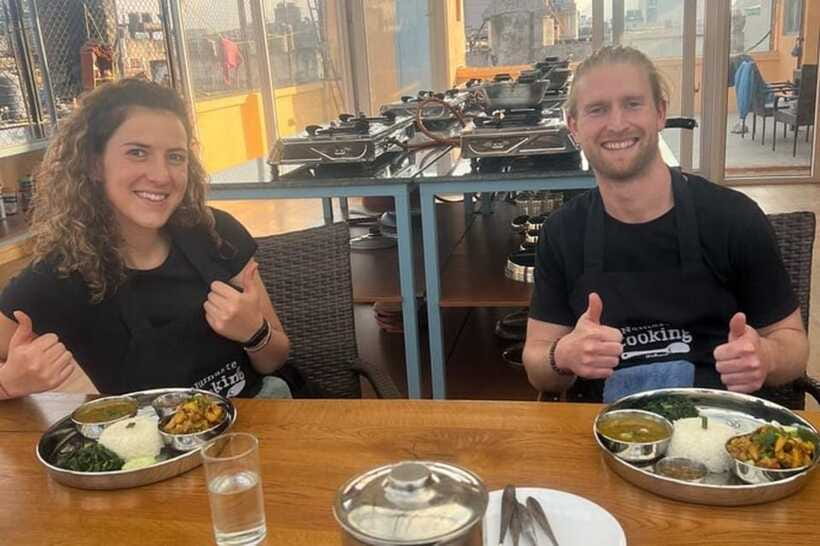
At $30 per person, this is priced as an affordable half-day activity rather than a luxury culinary event. The fee includes all cooking ingredients, the meal you prepare, a recipe booklet, and a participation certificate.
I consider that a fair package for three hours, especially because you receive both an activity and a full meal. The social mission adds another layer of value, since your booking helps support a women-led school and its work with survivors of trafficking.
The price becomes less attractive if you mainly want a quick tasting. You would be paying for time, instruction, participation, and the meal. If you are not interested in cooking, a food tour or restaurant meal may give you more of what you want for less effort.
For anyone who enjoys learning by doing, the calculation works better. You get a personal connection to Nepali food, a chance to ask questions in a small group, and something practical to take home. I would see the $30 as a good use of part of your Kathmandu budget, provided the menu suits your tastes and dietary needs.
Who will enjoy this class most
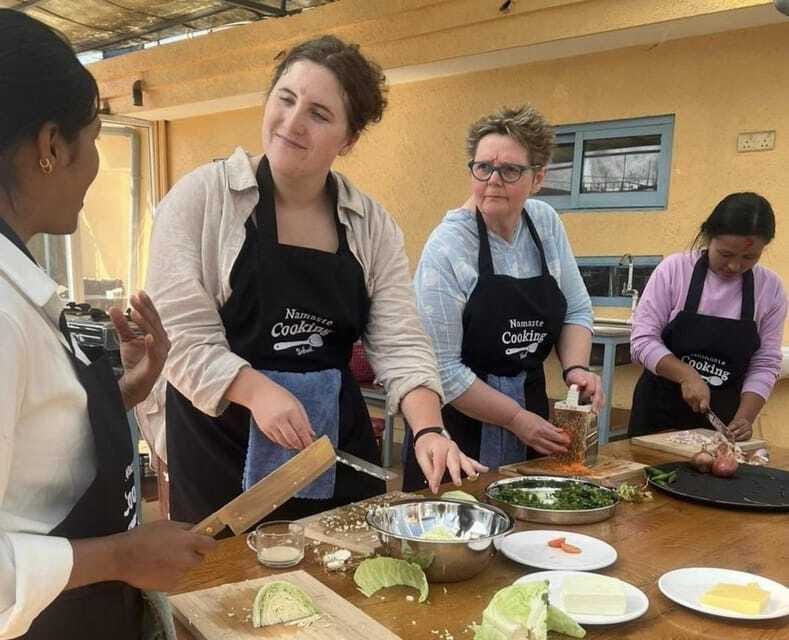
I would recommend the experience to you if you:
- Enjoy hands-on activities rather than passive sightseeing
- Want a direct connection to Nepali food and local farming
- Value responsible tourism with a clear community purpose
- Like meeting other people in a small group
- Want recipes you can try at home
- Have three hours available in central Kathmandu
It should also work well for couples, solo visitors, and small groups of friends. The class has enough structure to keep a solo participant involved, while the group setting gives you an easy way to meet people.
Families may need to check the age policy directly, since no minimum age is provided. I would also ask about allergies, vegetarian or vegan food, and any mobility concerns before booking. The available information does not confirm how the kitchen handles these needs.
Food-focused visitors will get the most from the experience, but you do not need advanced cooking skills. The class is presented as an introduction to Nepali cuisine, not an examination. Go ready to participate, ask questions, and accept that the kitchen may not move at your exact pace.
Booking details that matter in Thamel
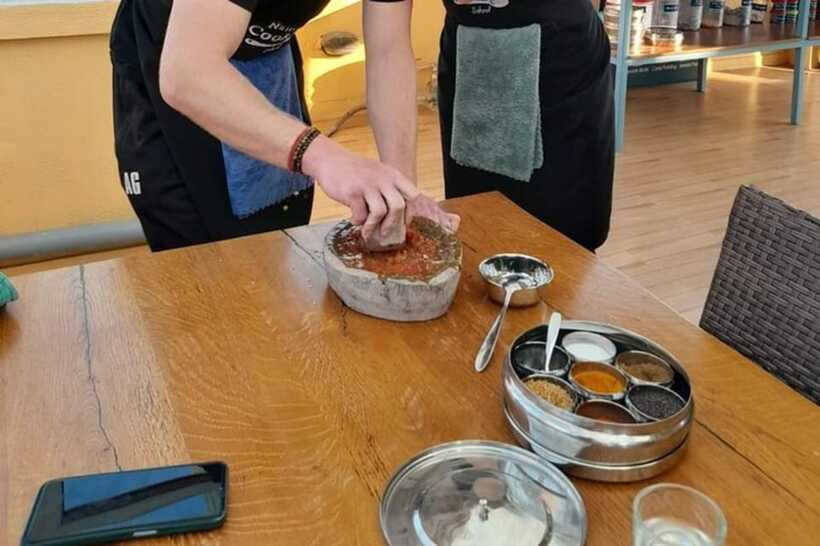
The class is taught in English and limited to eight people. That small-group cap is one of the better practical features, since cooking instruction loses much of its value when too many people crowd around one work area.
You can reserve now and pay later, which helps if your Nepal schedule is still changing. You can also cancel up to 24 hours in advance for a full refund. Read the final booking terms carefully, especially if you are relying on pickup service.
Pickup and drop-off are not included in the standard package. Since pickup service is mentioned separately, confirm whether it is available for your hotel, whether it costs extra, and where you should meet if you make your own way there.
Starting times depend on availability. Plan around the full three hours, plus the time needed to reach Thamel. A rushed arrival would work against the relaxed, social character that makes this class appealing.
Should you book the Namaste Cooking School class?
Book it if you want to cook, eat, and support a meaningful local enterprise in one compact Kathmandu activity. The strongest reasons are the women-led teaching team, farm-sourced ingredients, small group size, and the fact that you sit down to eat what you prepare.
Skip it if you want a guaranteed dish list, a private chef, or a quick food tasting with no kitchen work. The menu is not specified, and transport details need checking.
For most food-loving visitors, the $30 price is sensible. You leave with a meal, recipes, a certificate, and a better understanding of Nepali cooking, while your booking supports women rebuilding their lives through skilled work. That is a useful combination of pleasure and purpose.
FAQ
Where is the Nepali cooking class held?
The class is held at Namaste Cooking School in Thamel, in Nepal’s Bagmati Zone.
How long does the cooking class last?
The experience lasts three hours.
What language is the class taught in?
The instructor language is English.
How many people can join the class?
The class is limited to eight participants.
What is included in the $30 price?
The price includes all cooking ingredients, lunch or dinner made with the dishes you prepare, a recipe booklet, and a certificate of participation.
Is hotel pickup and drop-off included?
Hotel pickup and drop-off are not included. Pickup service is mentioned as available, so confirm the details with the provider before booking.
Can I cancel for a full refund?
Yes. You can cancel up to 24 hours before the experience for a full refund.
New in the Kathmandu listings
- Traditional Momo Making Class★ 5.0 · 10 reviews
- Kathmandu: Ancient City Kirtipur & Pharping Monastery Tour★ 5.0 · 2 reviews
- Kathmandu to Pokhara Premium sofa bus ticket★ 4.0 · 17 reviews
- Women Empowerment Project(Nepali cooking class & jewelry workshop★ 5.0 · 15 reviews
- 7-Day Langtang Valley Trek from Kathmandu★ 5.0 · 1 review
- Kathmandu 2 Nights 3 Days Chitwan Jungle Safari Tour★ 5.0 · 9 reviews
- Yoga Experience Day Trip with Private Transfer From Kathmandu★ 4.0 · 2 reviews
- Walking tour of real Kathmandu through back streets.★ 5.0 · 3 reviews
Cooking Classes, compared.
Nepalese Momos or Dal Bhat Cooking Class (Cook with Delight)
Read our review →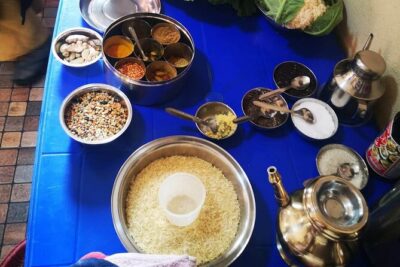
The best Private Nepali Cooking Class in Kathmandu
Read our review →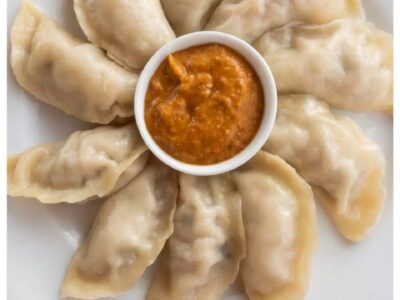
Nepalese Kitchen in Pokhara: Momos or Dal Bhat Cooking Class
Read our review →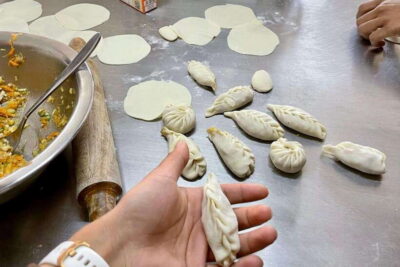
Browse the lists this tour appears in