
REVIEW · EVEREST BASE CAMP TREKS
Luxury Everest Base Camp Trek – 11 Days
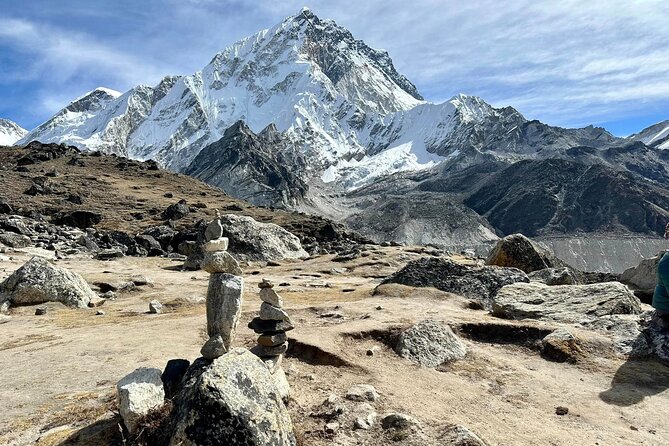
Everest rewards patience and strong legs. This 11-day trek pairs the classic route through Namche, Tengboche, Dingboche, Lobuche, Gorak Shep, and Everest Base Camp with luxury accommodation and helicopter transfers at the most useful points. I especially like the helicopter from Kathmandu to Lukla, which saves a long overland journey, and the return helicopter from Gorak Shep to Kathmandu, which cuts out a difficult descent.
The route also includes two important acclimatization stops, in Namche and Dingboche, plus time for Everest views from Syangboche and Kala Patthar. The main concern is the altitude and the tight schedule. You need moderate physical fitness, an early 5:15 am start, and a sensible plan for asthma or other medical issues.
In This Review
- Key Details Before You Book
- What the $4,070 Price Really Buys
- Day 1: A Soft Landing in Thamel
- Day 2: Helicopter to Lukla, Then Walk to Phakding
- Day 3: Pine Forests and the Climb Toward Namche
- Day 4: Acclimatization and the Everest View Point
- Day 5: The Trail to Tengboche Monastery
- Day 6: Dingboche at 4,410 Meters
- Day 7: Chukhung and Another Useful Acclimatization Step
- Day 8: Along the Khumbu Glacier to Lobuche
- Day 9: Gorak Shep and Everest Base Camp
- Day 10: Kala Patthar at First Light
- Day 11: Airport Transfer and the Journey Home
- Guides, Porters, and Group Size
- What Is Not Included
- Who Should Book This Everest Trek?
- FAQ
- How long is the Luxury Everest Base Camp Trek?
- Where does the experience begin?
- What time does the tour start?
- How do I reach Lukla?
- Is accommodation included?
- Are meals included?
- Is Everest Base Camp included?
- Is Kala Patthar included?
- How many people can join the group?
- Is travel insurance included?
- Should You Book It?
Key Details Before You Book
- Helicopter access to Lukla: You fly from Kathmandu to the mountain airstrip, then begin walking from Lukla toward Phakding.
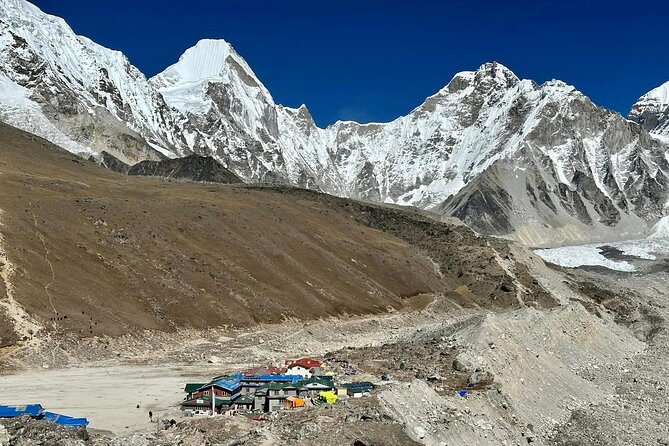
- A full Everest Base Camp route: The trek passes through Namche Bazaar, Tengboche, Dingboche, Chukhung, Lobuche, Gorak Shep, and Everest Base Camp.
- Kala Patthar viewpoint: An early morning hike and helicopter landing near Kala Patthar add some of the finest mountain views of the trip.
- Comfort in remote places: Luxury lodging, meals during the trek, guides, porters, insurance for the crew, and daily crew costs are included.
- Small organized group: The maximum group size is 15 people, with group discounts available.
- A costly but time-saving package: At $4,070 per person, the price is high, but helicopter transport and remote lodging account for much of the cost.
What the $4,070 Price Really Buys
At $4,070 per person, this is not a budget Everest Base Camp trek. The value comes from combining the walking route with helicopter flights and upgraded accommodation in a region where comfort and transport are expensive.
The package includes the helicopter from Kathmandu to Lukla and the return flight from Gorak Shep to Kathmandu. That second flight matters. You do not need to retrace the long trail back down the Khumbu Valley after reaching Base Camp and Kala Patthar.
You also get luxury accommodation during the trek, a guide, porters, their daily wages, insurance, and meals for most of the route. Breakfast is included on nine days, while lunch and dinner are included on eight days. Kathmandu hotel nights beyond the planned stay are not included, and meals in Kathmandu are generally your responsibility except for breakfast and the farewell dinner.
The value depends on what you want from Nepal. If you mainly want the cheapest possible route to Base Camp, this package will feel expensive. If you want help with logistics, helicopter access, a supported group, and a more comfortable place to sleep in the high country, the price becomes easier to justify.
The word luxury needs a little care here. The package promises luxury accommodation, but the available details do not name each lodge or describe room facilities. Ask for the exact hotel and lodge list before paying. In remote mountain villages, luxury can mean the best available option rather than a city-style five-star room.
More Everest Base Camp treks:
- Everest Base Camp Trek – 14 Days
★ 5.0 · 1,499 reviews - Everest Base Camp Trekking
★ 5.0 · 485 reviews - Everest Base Camp Trekking – 13 Day
★ 5.0 · 365 reviews
Day 1: A Soft Landing in Thamel
Your guide meets you at the airport and takes you to your booked hotel in Thamel. This is a useful first day because Kathmandu can be busy, noisy, and confusing after an international flight.
Thamel gives you a practical base for the start of the trip. You can use the arrival day to rest, organize gear, and confirm the early airport transfer. Since the mountain schedule begins before sunrise, I would avoid filling this first evening with ambitious sightseeing.
Your guide is an important part of the opening. The company has used guides including Surya, Prakash, Keshab, Babu, and Ram on recent trips. Feedback has especially praised Prakash for his guiding and Keshab for his friendly manner, cultural knowledge, and care on the route. Guide assignments can change, so confirm your own guide before departure.
Day 2: Helicopter to Lukla, Then Walk to Phakding
The day starts early with a transfer to Kathmandu Airport. From there, you take a helicopter to Lukla, the gateway for the Everest region.
This is one of the strongest features of the package. A helicopter flight removes the need for a longer transfer to the trek start and gives you an immediate view of the mountain country. It also reduces one common source of delay, though mountain weather can still affect flying.
At Lukla, you meet the rest of the trekking crew and begin the walk to Phakding. The trek takes about four hours. This first walking day gives you time to settle into the pace before the route becomes steeper and the air thinner.
Do not treat the short distance as a free pass. You have already had an early start, a flight, and a change in altitude. Keep your first day steady and drink water according to your guide’s advice.
Day 3: Pine Forests and the Climb Toward Namche
The route continues toward Namche Bazaar, with Monjo listed as a stop along the way. You walk through pine forests and follow a trail that changes from gentle sections to a more demanding climb.
Namche is the main commercial and social center of the Khumbu region. It is a good place to notice the contrast between the remote setting and the practical life of a Sherpa town. Shops, markets, and mountain views make it feel like more than a simple overnight stop.
The climb to Namche is challenging, and this is where your fitness begins to matter. You may find the pace slow, especially as the altitude rises. That is normal. The best approach is to walk steadily, keep your breathing controlled, and avoid trying to prove anything in the first few days.
More walking in the hills of Kathmandu:
- Nagarkot Sunrise View and Day Hiking from Kathmandu
★ 5.0 · 471 reviews - Annapurna Circuit Trek with Tilicho Lake
★ 5.0 · 368 reviews - Everest Base Camp Trek -14 Days
★ 5.0 · 321 reviews - Annapurna base camp trek 5 Days
★ 5.0 · 252 reviews
Day 4: Acclimatization and the Everest View Point
The Namche rest day is one of the most important parts of the program. You are not simply taking a day off. Your body is adjusting to the altitude, and the schedule gives you time to explore without moving to a higher overnight stop.
The itinerary includes an excursion to the Everest View Point, with views toward the major Himalayan peaks. The outing lasts about an hour according to the supplied timing, though the full walking time can vary.
You can also wander through Namche, look around the market area, and enjoy the town’s mountain setting. This is a good day to ask your guide about altitude symptoms, the next section of the route, and how your pace should change.
The itinerary descriptions use slightly different day numbers for this part of the trek, but the overall structure is clear: Lukla, Phakding, Namche, an acclimatization day, and then Tengboche.
Day 5: The Trail to Tengboche Monastery
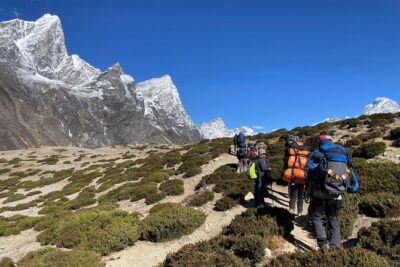
The walk to Tengboche takes you through rhododendron forest and toward one of the spiritual centers of the Everest region. Tengboche is known for its ancient monastery and its setting among high peaks.
This section gives the trek a cultural center, not just a scenic one. The monastery helps explain why the Khumbu is more than a route to Everest Base Camp. Your guide can add useful context about local traditions and the role of Buddhism in mountain communities.
The route can feel long because the trail rises and falls rather than climbing in one clean line. You will want good shoes, patience, and layers that can handle changing temperatures. The views are a major reward, but you should still save energy for the higher days ahead.
Day 6: Dingboche at 4,410 Meters
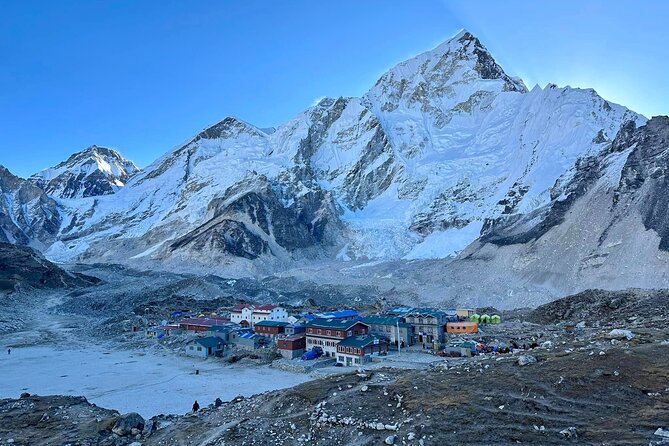
From Tengboche, you continue to Dingboche in the Imja Valley. The walk usually takes five to six hours, and the destination sits at about 4,410 meters.
This is a serious change from the lower part of the route. The air is thinner, the terrain feels more exposed, and a pace that felt easy near Lukla may no longer feel easy here. I like that the program does not rush straight through the high country. Dingboche is used as another acclimatization base.
Your guide and porters are central to the experience at this point. The crew carries the supported group’s equipment and handles daily logistics, while you focus on walking, eating, resting, and noticing how your body responds.
If you have asthma, take the health warning seriously. The supplied information specifically flags asthma as a concern. Speak with a medical professional before booking and tell the operator about your condition in advance.
Day 7: Chukhung and Another Useful Acclimatization Step
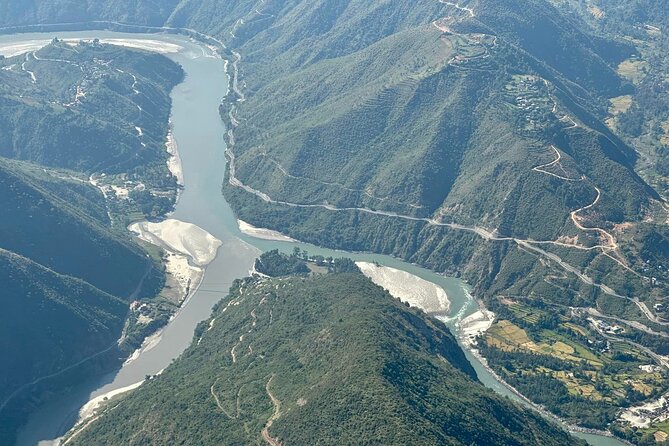
The route includes Chukhung during the Dingboche section. The purpose is not simply to add another name to the map. It gives you more time at altitude before the route climbs toward Lobuche, Gorak Shep, and Base Camp.
The exact walking details for this day are limited, so you should ask the operator how long your group will spend in Chukhung and what the day’s elevation plan will be. The supplied timing lists about 30 minutes for the stop, but that appears to describe the listed attraction rather than the entire day of trekking.
At this height, small choices matter. Walk slowly, keep your pack light, and listen to your guide if the schedule changes. The final approach to Base Camp is not the place to rush.
Day 8: Along the Khumbu Glacier to Lobuche
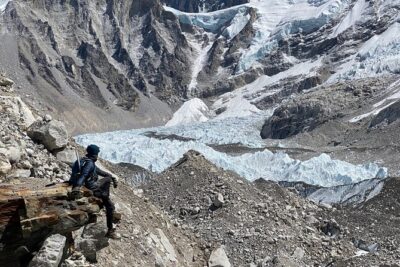
The trail toward Lobuche follows the terminal moraine of the Khumbu Glacier. The scenery becomes harsher and more dramatic as you move higher.
You are now walking through a high-altitude zone where the air feels crisp and the route can be demanding. The glacier and moraine give the day a strong sense of movement through a changing mountain environment. You may find the trail more tiring than the distance suggests.
Lobuche is a key overnight point before Gorak Shep. The practical challenge is recovery. Eat what you can, stay warm, and prepare your clothing and headlamp for the next morning. The package includes meals on the trek, which removes one daily concern, though personal snacks and drinks are not included.
Day 9: Gorak Shep and Everest Base Camp
The next major stop is Gorak Shep, at about 5,164 meters. It is the last village on the route toward Everest Base Camp and a high, demanding place to spend time.
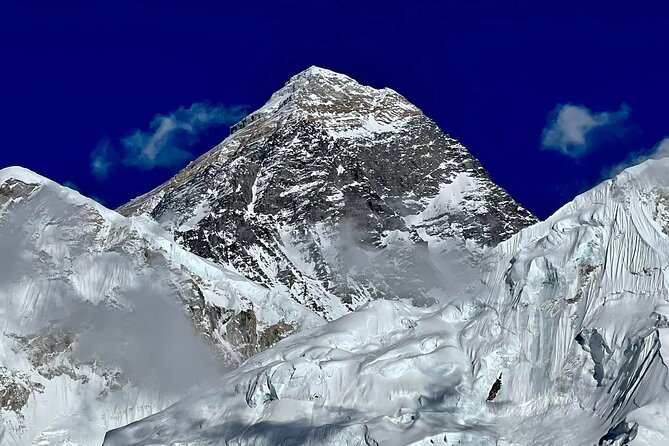
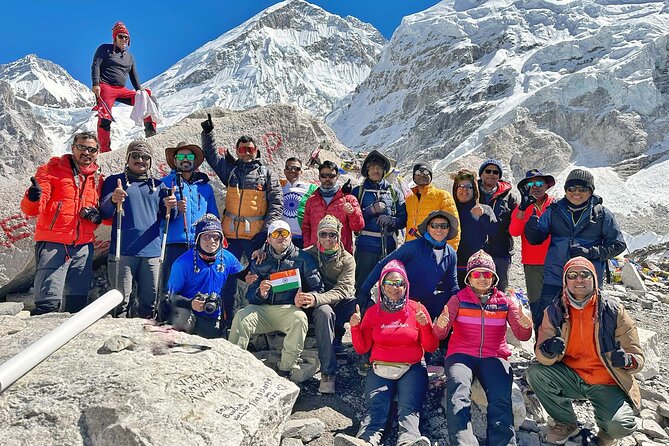
From Gorak Shep, you continue to Everest Base Camp. Reaching Base Camp is the symbolic heart of the trip, but remember that it is not the summit of Everest and does not usually offer the classic summit view people imagine. The achievement is getting to this extreme point on foot, surrounded by the Khumbu Glacier and the peaks above it.
The itinerary gives about 30 minutes for the Everest Base Camp stop. That may feel brief after such a long approach, so ask how the timing works for your departure date. Conditions, group pace, and altitude can affect how long you remain there.
This is one of the toughest parts of the trek. You may feel tired, cold, or short of breath even if you are fit. A guide who pays close attention to the group can make a real difference. Past trips have praised guides for helping people who developed mountain sickness and for keeping groups safe when weather disrupted flights.
Day 10: Kala Patthar at First Light
The day begins early with a hike toward Kala Patthar. The aim is to reach the viewpoint around sunrise, when the mountain peaks catch the first light.
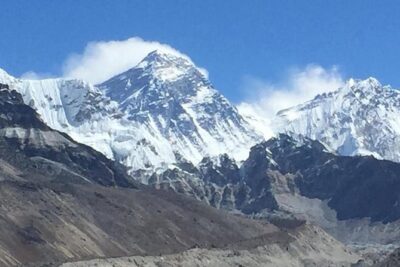
Kala Patthar sits on the south ridge of Pumori above Gorak Shep. It is one of the best places on this route for broad views of Everest and the surrounding peaks. The climb is short in distance but hard at altitude, especially after the previous day’s Base Camp walk.
The itinerary also lists a helicopter landing at Kala Patthar. Since the description refers to an early morning hike, confirm the exact flight plan before departure. Helicopter operations in this region depend on weather, safety, and local conditions.
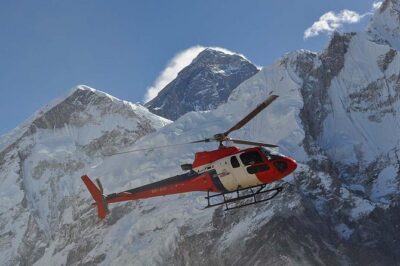
After the Kala Patthar section, the program includes a helicopter from Gorak Shep to Kathmandu. This is a major comfort advantage. You trade a long descent through the valley for a much faster return, giving you more time to recover before flying home.
Day 11: Airport Transfer and the Journey Home
On the final day, you are transferred to the airport for your flight home. The package ends with airport transport, but it does not include your international airfare.
Keep your return plans practical. Mountain weather can alter helicopter schedules, and the program specifically notes that poor weather may force a different date. The company has handled cancelled flights and weather problems for past groups, but no operator can control Himalayan conditions.
Guides, Porters, and Group Size
The maximum group size is 15 people. That is large enough to provide company but small enough for the guide to keep an eye on the group, assuming the party stays together.
The strongest praise for this company focuses on its people. Surya has been credited with organizing the trip and working hard when weather caused transport problems. Prakash has been praised for guiding skill, while Keshab was described as friendly, culturally informed, and caring. Ram also supported a solo trekker who felt safe throughout the trip.
These personal details matter on an altitude trek. A good guide does more than point toward the next village. The guide manages pace, watches for illness, explains local culture, and helps the group respond when plans change.
Porters are included, along with their wages, meals, and insurance. Tips are not included, so budget separately for gratuities.
What Is Not Included
The package leaves several everyday costs to you:
- International flights to and from Nepal
- Extra hotel nights in Kathmandu
- Kathmandu meals apart from breakfast and the farewell dinner
- Travel insurance
- Laundry, internet, phone calls, shopping, cold drinks, and drinking water
- Tips for the guide, porters, and other crew
Travel insurance is especially important for a high-altitude trip. The package does not include it, and the itinerary can be affected by weather. Review your policy carefully before departure.
The 5:15 am start is another practical detail worth taking seriously. You need to be ready for an early airport transfer and a full walking day. Pack warm layers, personal medication, and any small items you need in an easy-to-reach day bag.
Who Should Book This Everest Trek?
I would recommend this trip to you if you want the Everest Base Camp route but prefer organized support and helicopter transport. It suits people who value time, comfort, and a guide-led experience more than the lowest possible price.
It may also suit a small group of friends or relatives. Several successful trips involved friends traveling together, and the operator has adjusted itineraries to suit group needs.
I would be cautious if you have little walking experience, a serious medical condition, or a fixed schedule that cannot tolerate weather delays. The supplied information calls for moderate fitness, and the high points of the route reach more than 5,000 meters.
You should also ask direct questions before booking:
- Which hotels and lodges count as luxury accommodation?
- How much time is planned at Everest Base Camp?
- Is the Kala Patthar helicopter landing guaranteed or weather dependent?
- What happens if the Lukla helicopter cannot fly?
- Who is your guide, and how does the company handle altitude illness?
The operator offers free cancellation up to 24 hours before the start time for a full refund. Cancellations inside that window are not refunded, and weather or minimum-group cancellations may lead to a new date or a full refund.
FAQ
How long is the Luxury Everest Base Camp Trek?
The trek lasts approximately 11 days, including arrival in Kathmandu, the mountain route, helicopter transport, and departure.
Where does the experience begin?
The experience begins in Kathmandu, Nepal. Airport pickup is offered, and the guide takes you to your booked hotel in Thamel.
What time does the tour start?
The stated start time is 5:15 am. This early start is especially relevant for the airport transfer and helicopter flight to Lukla.
How do I reach Lukla?
You travel from Kathmandu Airport to Lukla by helicopter. After landing, you meet the trekking crew and walk to Phakding.
Is accommodation included?
Yes. Luxury accommodation during the trek is included. Extra nights in Kathmandu are not included.
Are meals included?
Breakfast is included on nine days. Lunch and dinner are included on eight days. Meals in Kathmandu are not included except for breakfast and the farewell dinner.
Is Everest Base Camp included?
Yes. The itinerary includes a trek from Gorak Shep to Everest Base Camp.
Is Kala Patthar included?
Yes. The itinerary includes an early morning hike to Kala Patthar and lists a helicopter landing there. Confirm the precise flight plan because mountain weather can affect helicopter operations.
How many people can join the group?
The maximum group size is 15 people. Group discounts are available.
Is travel insurance included?
No. Travel insurance is not included, so you need to arrange it separately.
Should You Book It?
Book this trek if you want the famous Everest route with a strong support team, helicopter access, and better accommodation than a basic trekking package. The included flight from Gorak Shep to Kathmandu is the biggest practical advantage, especially after the high-altitude walk to Base Camp and Kala Patthar.
Skip it if your main goal is saving money or if you cannot allow flexibility for bad weather. At $4,070, this is a premium trip, but it gives you a faster, more comfortable way to reach one of the world’s great trekking destinations. Ask for the full lodge list and flight contingencies first, then book with realistic expectations about altitude, early starts, and mountain weather.
New in the Kathmandu listings
- Traditional Momo Making Class★ 5.0 · 10 reviews
- Kathmandu: Ancient City Kirtipur & Pharping Monastery Tour★ 5.0 · 2 reviews
- Kathmandu to Pokhara Premium sofa bus ticket★ 4.0 · 17 reviews
- Women Empowerment Project(Nepali cooking class & jewelry workshop★ 5.0 · 15 reviews
- Yoga Experience Day Trip with Private Transfer From Kathmandu★ 4.0 · 2 reviews
- 7-Day Langtang Valley Trek from Kathmandu★ 5.0 · 1 review
- Kathmandu 2 Nights 3 Days Chitwan Jungle Safari Tour★ 5.0 · 9 reviews
- Wildlife Adventure in Chitwan Nepal★ 4.0 · 4 reviews
Everest Base Camp Treks, compared.
Everest Base Camp Trek with Helicopter Return from Gorakshep to Lukla
Read our review →Browse the lists this tour appears in