
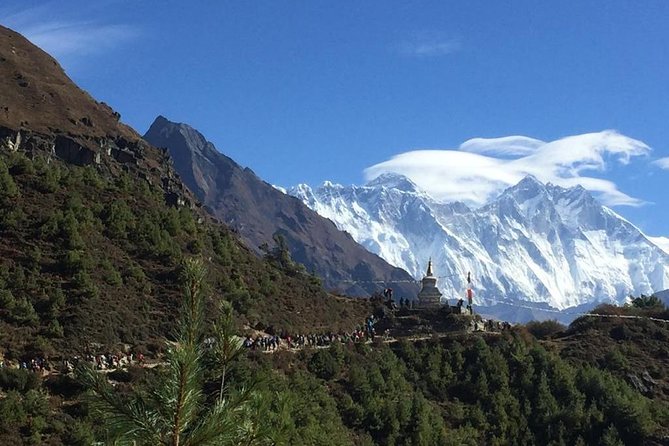
REVIEW · EVEREST BASE CAMP TREKS
Mt. Everest Base Camp (EBC) Trekking from Kathmandu
The mountain trail earns its reputation. This 13-day private trek from Kathmandu takes you by scenic flight to Lukla, then on foot through Sherpa villages, high valleys, and the Everest region toward Everest Base Camp. I like the built-in acclimatization days in Namche Bazaar and Dingboche, and I like that flights, permits, lodging, transfers, and an English-speaking guide are included. The main concern is the price of $1,066.67, which does not include meals, drinks, or emergency rescue costs.
I also appreciate the private-trip format. Your group travels together rather than joining a large shared departure, which can make the long walking days easier to manage. The drawback is the physical demand: you need strong fitness, and the itinerary includes several six-to-eight-hour trekking days at high altitude.
In This Review
- Five things to know before you book
- Why the 13-day route works
- Kathmandu to Lukla, then Phakding
- Namche Bazaar and a day with Sherpa culture
- Tengboche and Dingboche
- Duglha and Lobuche, the high section begins
- Reaching Everest Base Camp on Day 9
- Kala Patthar and the long return to Pheriche
- Back through Namche and Lukla
- What the $1,066.67 price really covers
- The guide and private-trip advantage
- Who should book this Everest trek?
- My booking verdict
- FAQ
- How long is the Everest Base Camp trek from Kathmandu?
- What time does the tour start?
- Is hotel pickup included?
- Are the Kathmandu and Lukla flights included?
- Is accommodation included?
- Are meals and drinks included?
- Is this a private tour?
- Do I need strong physical fitness?
- What happens if poor weather cancels the trip?
Five things to know before you book
- Lukla is the real beginning: The adventure starts with a short flight from Kathmandu, followed by the first walk to Phakding.
- Two acclimatization stops matter: You spend an extra day in Namche Bazaar and another in Dingboche, with shorter hikes to help you adjust.
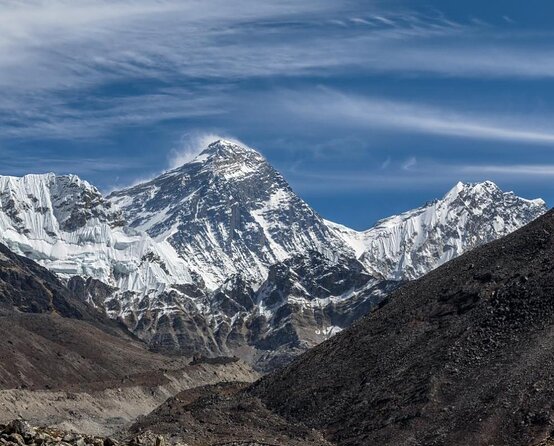
- The route reaches Everest Base Camp on Day 9: The approach takes about seven hours and begins early.
- Kala Patthar adds a major payoff: The next day combines the high viewpoint with a descent to Pheriche, making it one of the longest days.
- The price covers the big logistics: Flights, permits, airport taxes, accommodation, transfers, and a guide are included, but food and rescue costs are not.
- The trip is private: Only your own group takes part, with group discounts available and mobile tickets offered.
Why the 13-day route works
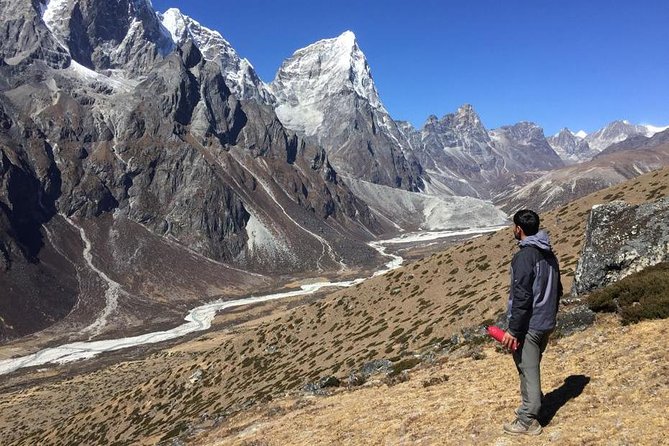
The classic Everest Base Camp route is not simply a march uphill. Your body needs time to adjust as the altitude rises, and this itinerary gives you two planned rest and acclimatization days. That is one of its strongest features.
You spend Day 3 in Namche Bazaar and Day 6 in Dingboche. These are not empty days. The plan calls for shorter hikes, nearby exploration, and time with local Sherpa communities. You gain a chance to walk higher and return to sleep at a lower altitude, which is useful preparation for the harder section ahead.
The schedule also balances walking with village stops. You pass through Phakding, Namche Bazaar, Tengboche, Dingboche, Duglha, Lobuche, Pheriche, and Lukla. Each place marks a change in altitude and scenery, so the trek feels like a series of stages rather than one long blur of stone paths.
Still, 13 days is not a relaxed holiday. The walking times are approximate, but several days run six hours or longer. Day 10 is listed at eight hours, and the combination of Kala Patthar and the descent to Pheriche will test your legs. You should think of this as a serious mountain trip with guesthouse nights, not a sightseeing tour with a few walks added.
More Everest Base Camp treks:
- Everest Base Camp Trek – 14 Days
★ 5.0 · 1,499 reviews - Everest Base Camp Trekking
★ 5.0 · 485 reviews - Everest Base Camp Trekking – 13 Day
★ 5.0 · 365 reviews
Kathmandu to Lukla, then Phakding
Your day begins with a 6:30 am start and a transfer to Kathmandu airport. From there, you take the short flight to Lukla, the gateway to the Everest region. The flight is part of the experience, since the scenery begins before you reach the trail.
After arriving in Lukla, you start walking toward Phakding. The first day takes about six hours, according to the schedule. That is a firm introduction to the pace, but it is also a useful first day because you are not yet tackling the highest sections of the route.
Phakding gives you your first overnight stop in the trekking area. Accommodation is in a guesthouse, and the cost of meals and drinks is separate. I would plan for simple mountain lodging and keep your expectations practical. The included accommodation helps control the overall cost, but this is not a hotel-based trip.
Namche Bazaar and a day with Sherpa culture
Day 2 takes you to Namche Bazaar, with about six hours of trekking. Namche is one of the most important stops on the route, both for altitude adjustment and for its connection to Sherpa life.
The itinerary also includes a visit toward Khumjung, where you can experience a typical Sherpa village setting. This gives the trek more substance than a simple race to the mountain. You are not only walking toward a famous peak. You are passing through communities shaped by the high-altitude environment and by the demands of guiding and mountain travel.
Day 3 remains in Namche for acclimatization. The plan allows about four hours for a higher hike and local exploration. This is a good point in the journey to slow down, get your bearings, and notice how your body is responding.
I like this part of the route because it includes time to interact with local Sherpas rather than treating the villages as scenery outside the window. The schedule describes village exploration and Nepali Sherpa lifestyle as central parts of the experience. You should use this day wisely and avoid treating it as a wasted rest day.
Tengboche and Dingboche
From Namche, you walk to Tengboche on Day 4, a journey of roughly six hours. The stop is known for its mountain setting and its place along the route through the Everest region. The supplied details do not specify a separate activity in Tengboche, so the value here is mainly the walk, the village stop, and the changing views of the surrounding peaks.
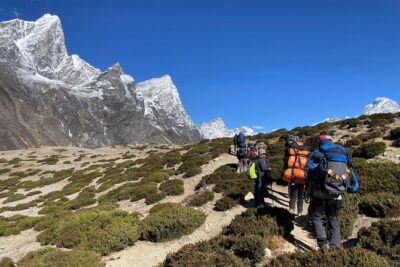
Day 5 continues to Dingboche, another six-hour trek. Dingboche is described as a popular Sherpa village, with mountain views along the way. By this stage, the route is taking you into a higher valley, and the walking becomes more demanding.
Dingboche is especially important because you spend two nights there. On Day 6, you take a shorter acclimatization outing of about three hours and explore nearby places. The plan highlights the mountain valley and the striking high-altitude scenery, but the practical benefit matters just as much: you have time to prepare for the final push toward Base Camp.
You should not judge these acclimatization days by distance alone. Their purpose is to help you continue safely. The schedule gives you a chance to move at a higher altitude, return to Dingboche, and sleep there before climbing farther.
More walking in the hills of Kathmandu:
- Nagarkot Sunrise View and Day Hiking from Kathmandu
★ 5.0 · 471 reviews - Annapurna Circuit Trek with Tilicho Lake
★ 5.0 · 368 reviews - Everest Base Camp Trek -14 Days
★ 5.0 · 321 reviews - Annapurna base camp trek 5 Days
★ 5.0 · 252 reviews
Duglha and Lobuche, the high section begins
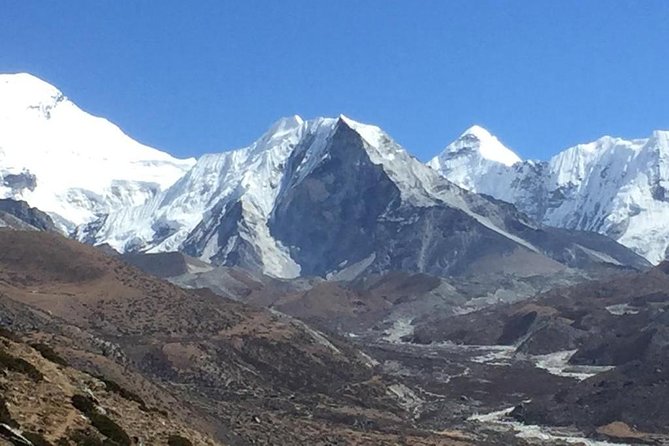
Day 7 takes you toward Duglha, also called Dughla in some route references, in Nepal’s Solukhumbu district. The day is scheduled for about five hours. It is described as a small glacial mountain village and one of the highest human settlements in the world.
The itinerary labels this stop under Mount Everest, but Duglha is not Everest Base Camp. Think of it as a high route stage on the way to the main goal. The air and walking conditions can feel more serious here, and your earlier acclimatization days become especially relevant.
On Day 8, you continue to Lobuche for another five-hour trek. Lobuche is a small settlement near Mount Everest in the Khumbu region. It is the final overnight stop before the Base Camp approach, so this is where the trip shifts from steady progress to a focused summit-route style day, although Everest Base Camp itself is not a summit.
The lodging remains in guesthouses. Food is available for purchase, but it is not included in the quoted price. That distinction matters because you will need to budget for every meal and drink across nearly two weeks.
Reaching Everest Base Camp on Day 9
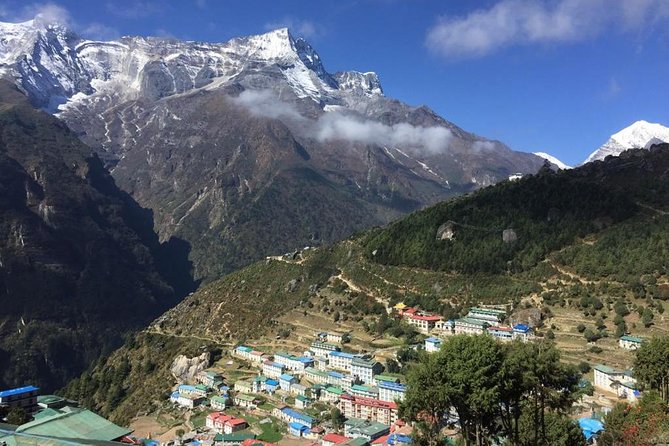
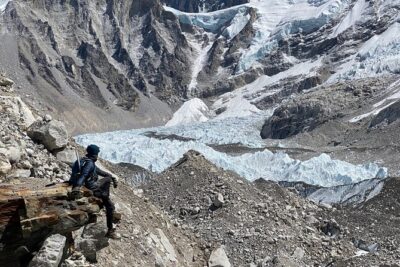
Day 9 is the emotional center of the trip. You start early and follow the Everest Base Camp trail, with about seven hours of trekking planned. The description calls for a steady ascent before finally reaching Base Camp.
This is not the kind of attraction where you arrive by vehicle, take a quick photograph, and leave. The destination has meaning because you walk toward it over many days. The villages, altitude changes, rest stops, and long climbs all build toward this point.
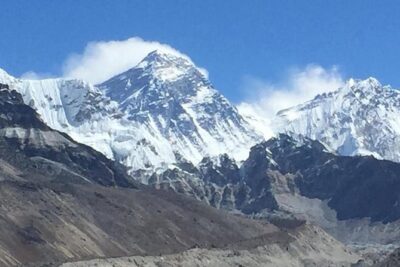
The tour description also promises views of Mount Everest, listed at 8,848 meters, along with other surrounding peaks. The exact views depend on weather and conditions, so I would treat the mountain scenery as a major possibility rather than a guarantee. The trip requires good weather, and poor conditions can cause cancellation or a date change.
The seven-hour estimate also deserves respect. You may be excited, tired, or both by the time you arrive. A strong fitness level is not a box-ticking requirement here. It affects how much attention you can give to the trail and the setting instead of focusing only on making it through the day.
Kala Patthar and the long return to Pheriche
Day 10 adds Kala Patthar before the descent to Pheriche. The full day is estimated at eight hours, making it the longest scheduled trekking day.
Kala Patthar is a high viewpoint associated with the Everest area, and reaching it gives the trip another major goal after Base Camp. The schedule combines the ascent with a long downhill walk, so you should expect fatigue. The reward is the chance to take in the high mountain views from a different point rather than simply retracing the previous day.
The admission ticket for this stop is included, unlike the other listed stops, which are marked as free admission. More important than the ticket detail is the structure of the day: an early or demanding high walk followed by a substantial descent.
Pheriche is your overnight stop. From here, the route turns back toward Namche Bazaar. The return walk is not an anticlimax. Descending lets you notice how different the trail feels after the highest section, and it gives your body a gradual change rather than an immediate return to low altitude.
Back through Namche and Lukla
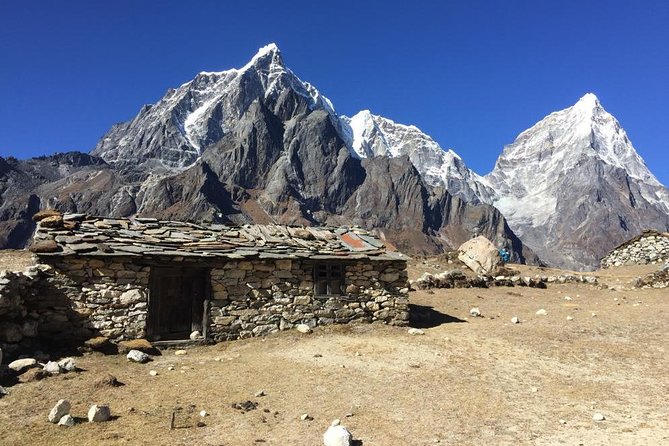
Day 11 follows the Pheriche to Duglha road area and continues back toward Namche Bazaar. The schedule gives this day about seven hours. That is another long walking day, even though you are now heading downhill overall.
Day 12 takes you back to Lukla after the trek reaches its final walking stage. The supplied schedule lists six minutes for this stop, but the description clearly says you trek back to Lukla, so the timing appears inconsistent. I would confirm the exact walking time and overnight arrangement with Couch Adventure Nepal before departure.
The return to Lukla marks the end of the walking portion. You have completed the route to Everest Base Camp and Kala Patthar, then retraced the trail through the Khumbu region. That sense of completion is part of the appeal, particularly if your goal is to experience the journey rather than simply reach one photo spot.
On Day 13, you take the short flight back to Kathmandu. The listed flight time is about 40 minutes, followed by a transfer to your hotel. Hotel pickup and drop-off are included, so the airport connections are handled as part of the package.
What the $1,066.67 price really covers
At $1,066.67 per person, the tour offers useful value for a private 13-day trip, mainly because several expensive and complicated pieces are bundled together.
Included services are:
- Hotel pickup and drop-off
- Trekking permit
- Kathmandu to Lukla and Lukla to Kathmandu flights
- Airport taxes
- An English-speaking trekking guide
- Guesthouse accommodation
- Private-trip service
The flights are especially important. Organizing the Kathmandu to Lukla route on your own adds another task to an already demanding trip, and the permit and airport tax coverage keeps the headline price from being misleading.
However, the cost is not all-inclusive. You must pay for meals and drinks, which are available for purchase. Emergency rescue costs are also excluded. Gratitude, meaning tips, is optional but not included.
For a fair budget, I would treat the advertised price as the base cost rather than the final amount. Add food, drinks, optional tips, and a financial buffer for rescue or other unexpected needs. The exact value will depend on how much you spend along the route and how much you value having a private guide and the flights arranged for you.
The guide and private-trip advantage
The experience is operated by Couch Adventure Nepal, with an English-speaking trekking guide included. The available feedback gives special praise to the guide’s helpfulness and ability to make the trek comfortable, although no guide name is provided.
That praise matters because a guide’s role on a long trek goes beyond showing the path. You have a person coordinating the route, helping with guesthouse arrangements, and supporting the acclimatization schedule. Since only your group participates, the experience is more personal than a large group departure.
A private trip can also make the pace easier to manage within your group. Still, private does not mean effortless. You must meet the same high-altitude physical demands, and the guide cannot remove the long climbs or uncertain weather.
Who should book this Everest trek?
I would recommend it to you if reaching Everest Base Camp is a major personal goal, you have strong physical fitness, and you want the practical support of a guide and arranged flights. It also suits people who value village visits and Sherpa culture alongside mountain scenery.
The tour may work well for a small group of friends or family members who want to walk together privately. The group discount may improve the value for a larger private party, though the exact discount is not stated.
I would be cautious if you want a luxury trip, an easy walking holiday, or a package with every meal and emergency service included. The guesthouse accommodation is practical, the days are long, and the extra costs need planning. You should also be comfortable with weather-related uncertainty, since poor conditions can force a date change or cancellation.
Couch Adventure Nepal has received a perfect overall rating from the two supplied ratings, with praise centered on the memorable route and the effort to keep the trip comfortable. That is encouraging, but the small number of ratings means I would still read the included details carefully and ask questions before paying.
The cancellation terms are reasonably clear: cancel at least three full days before the local start time for a full refund. Inside that window, refunds and changes are not accepted. If bad weather cancels the experience, you can choose another date or receive a full refund.
My booking verdict
I would book this trek if I wanted a private, guided route to Everest Base Camp with the main transport and permits arranged in advance. The two acclimatization days, Sherpa village visits, and Kala Patthar section give the itinerary more value than a rushed walk to Base Camp and back.
I would not book it without confirming the Day 12 timing, asking how meals are handled in practice, and setting aside money for rescue costs. If you are fit, patient, and ready for long mountain days, this is a strong-value way to experience the Everest region. If you mainly want comfort, flexibility, or a low final price, look carefully at the exclusions before making your choice.
FAQ
How long is the Everest Base Camp trek from Kathmandu?
The experience lasts approximately 13 days, including flights between Kathmandu and Lukla, trekking days, acclimatization stops, and the return transfer to your hotel in Kathmandu.
What time does the tour start?
The listed start time is 6:30 am.
Is hotel pickup included?
Yes. Hotel pickup and drop-off are included in the experience.
Are the Kathmandu and Lukla flights included?
Yes. The package includes the Kathmandu to Lukla and Lukla to Kathmandu flight tickets, along with airport taxes.
Is accommodation included?
Yes. Guesthouse accommodation is included during the trek.
Are meals and drinks included?
No. All meals and drinks are available for purchase but are not included in the tour price.
Is this a private tour?
Yes. Only your own group participates in this private activity.
Do I need strong physical fitness?
Yes. The additional information states that participants should have a strong physical fitness level. The itinerary includes several trekking days of six to eight hours.
What happens if poor weather cancels the trip?
If poor weather causes cancellation, you will be offered a different date or a full refund. You can also cancel for a full refund if you do so at least three full days before the experience start time.
New in the Kathmandu listings
- Traditional Momo Making Class★ 5.0 · 10 reviews
- Kathmandu: Ancient City Kirtipur & Pharping Monastery Tour★ 5.0 · 2 reviews
- Kathmandu to Pokhara Premium sofa bus ticket★ 4.0 · 17 reviews
- Women Empowerment Project(Nepali cooking class & jewelry workshop★ 5.0 · 15 reviews
- 7-Day Langtang Valley Trek from Kathmandu★ 5.0 · 1 review
- Kathmandu 2 Nights 3 Days Chitwan Jungle Safari Tour★ 5.0 · 9 reviews
- Yoga Experience Day Trip with Private Transfer From Kathmandu★ 4.0 · 2 reviews
- Wildlife Adventure in Chitwan Nepal★ 4.0 · 4 reviews
Everest Base Camp Treks, compared.
Everest Base Camp Trek with Helicopter Return from Gorakshep to Lukla
Read our review →Browse the lists this tour appears in