
REVIEW · EVEREST BASE CAMP TREKS
Private 15 Days Everest Base Camp Trekking Tour in Kathmandu
The Himalayas begin before the trail. This 15-day private trip combines Kathmandu’s major temples with a demanding walk to Everest Base Camp, Kalapathar, Namche Bazaar, and several Sherpa villages. I like the private format, since your group can travel with its own arrangements, and I like the cultural start in Kathmandu before the high-altitude trekking begins.
The route also gives you two useful acclimatization stops, at Namche Bazaar and Dingboche, rather than treating Everest Base Camp as a simple sightseeing outing. The main drawback is that the included services are not fully clear: only 12 breakfasts are listed, while domestic flights, insurance, drinks, tips, and most personal costs are excluded or unclear.
In This Review
- Key points at a glance
- What this Everest trek is really offering
- Days 1 and 2: Kathmandu’s temples set the tone
- Day 3: The flight to Lukla and the first walk
- Days 4 and 5: Namche Bazaar and a needed rest day
- Days 6 and 7: Tengboche and Dingboche
- Day 8: Lobuche and the first truly high camp
- Day 9: Everest Base Camp and Gorakshep
- Day 10: Kalapathar and the return toward Pheriche
- Days 11 to 13: The return through Khumjung and Lukla
- Altitude, fitness, and daily effort
- What the $1,955 price does and does not tell you
- Who will like this private trek?
- Should you book this Everest Base Camp tour?
- FAQ
- Where does the tour start?
- How long does the experience last?
- Is this a private tour?
- Which major places are visited on the trek?
- What altitude does the route reach?
- Are meals included?
- Is the tour refundable if I cancel?
Key points at a glance
- A private 15-day route: Only your group takes part, with airport and meeting-point transfers arranged by private mini coaster or van.
- Kathmandu before the mountains: You visit Pashupatinath, Boudhanath, Swayambhunath, and Kathmandu Durbar Square.
- A classic Everest trail: The walk passes Phakding, Namche Bazaar, Tengboche, Dingboche, Lobuche, Gorakshep, Everest Base Camp, and Kalapathar.
- High-altitude acclimatization: The schedule includes a rest and hiking day at Namche, plus time in Dingboche before the trail rises higher.
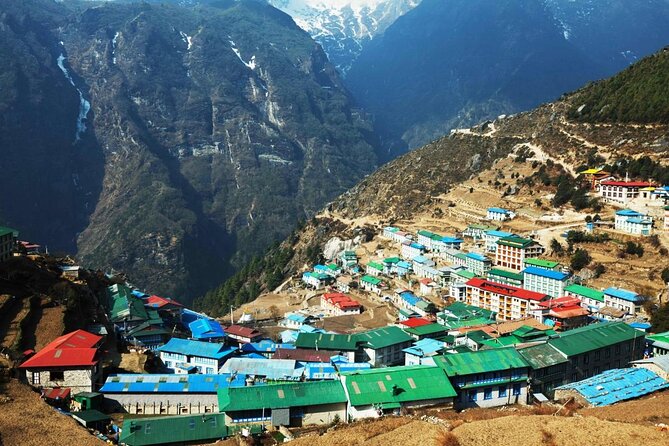
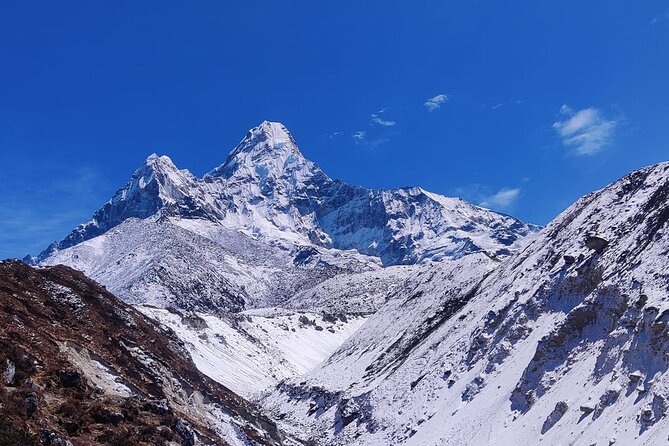
- Sherpa culture and mountain views: Khumjung, Tengboche Monastery, stone villages, suspension bridges, and views of Everest, Ama Dablam, Lhotse, and Thamserku shape the route.
- A demanding physical challenge: Several walking days last six to seven hours, and the route reaches 5,560 meters at Kalapathar.
What this Everest trek is really offering
At $1,955 per person, this is not a casual Nepal holiday with a quick mountain photo stop. You are paying for a private, organized journey through one of Nepal’s best-known trekking regions, plus time in Kathmandu and airport transfers.
I like the overall shape of the trip. You begin with temples and city sights, fly to Lukla, walk gradually upward, reach Everest Base Camp, climb Kalapathar for the major mountain view, and then return toward Lukla before flying back to Kathmandu. It gives you the full arc of the Everest experience rather than focusing only on the base camp label.
The price needs careful reading, though. Breakfast is listed 12 times, but dinner, drinks, tips, personal expenses, travel insurance, and emergency expenses are not included. The wording about airfare is unclear, so you should ask specifically if the Kathmandu to Lukla and Lukla to Kathmandu flights are included in the $1,955 price.
The trip is private, which can be worth paying for. You are not locked into the pace of a large group, and communication may be simpler when your own party is moving between villages. The provider’s manager, Achut Kark, is named in the available feedback as someone who personally welcomes and helps organize trekkers. That personal approach is one of the strongest reasons to consider this company.
More Everest Base Camp treks:
- Everest Base Camp Trek – 14 Days
★ 5.0 · 1,499 reviews - Everest Base Camp Trekking
★ 5.0 · 485 reviews - Everest Base Camp Trekking – 13 Day
★ 5.0 · 365 reviews
Days 1 and 2: Kathmandu’s temples set the tone
Your first day is mainly arrival day. You are met after customs at Tribhuvan International Airport and transferred to the hotel. On a clear approach to Kathmandu, you might see snow-capped peaks from the aircraft, though mountain views depend on weather and visibility.
The next day covers four important sights. Pashupatinath is a major Hindu temple complex associated with Shiva, whose name here means Lord of Animals. The two-story pagoda-style temple has a gold roof and four silver doors. The complex is an important religious site, so dress and behavior should be respectful.
Boudhanath follows, with its enormous Buddhist stupa and surrounding Tibetan community. The visit is valuable because it gives you a cultural frame for the trek. The mountain route is not only about peaks. It also passes through communities shaped by Tibetan Buddhist customs, monasteries, prayer practices, and high-altitude trade.
Swayambhunath Stupa and Kathmandu Durbar Square complete the city day. The schedule allows about five hours, so this is a concentrated introduction rather than a slow, detailed city tour. I would treat it as a useful orientation, not as enough time to know Kathmandu fully.
Day 3: The flight to Lukla and the first walk
The flight from Kathmandu to Lukla takes about 40 minutes. Lukla sits at approximately 2,850 meters, so you begin at an altitude that already demands attention. The first walking day is relatively manageable, lasting about five hours, and ends at Phakding at 2,640 meters.
From Lukla, the route passes through an attractive village setting before joining the main trail near Churi Kharka. You follow the east bank of the Dudh Koshi, also called the River of Milk, passing terrace fields, slate-roofed homes, small souvenir shops, and views toward Kusum Kanguru West Peak.
The short flight is an important part of the experience, but it is also a point to clarify before booking. Ask how weather delays are handled and whether the flight cost is included. The supplied information does not answer those questions, and mountain flights can affect the schedule.
Days 4 and 5: Namche Bazaar and a needed rest day
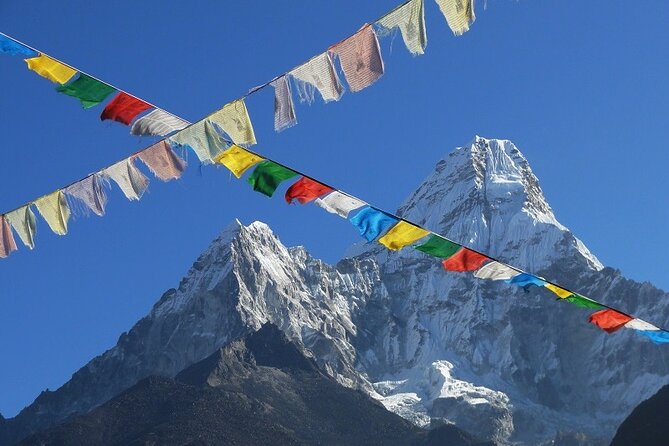
The walk from Phakding to Namche Bazaar takes about six to seven hours. The trail passes Benkar, crosses bridges, and enters Sagarmatha National Park near Jorsale. From there, you follow the Dudh Koshi toward the steep approach to Namche.
This is one of the more demanding early days because the trail climbs sharply toward Namche at 3,440 meters. From the higher section, you may catch your first views of Everest, along with Thamserku and the surrounding peaks. The route through conifer forest gives the walk some shade and variety, but the altitude makes the final ascent feel serious.
Day 5 is reserved for acclimatization, with a day hike to Khumjung. This is a good design choice. Sitting still at altitude is less useful than climbing higher and returning to sleep lower, and the Khumjung outing gives you a cultural stop as well as a physical adjustment day.
You should not treat this as a free sightseeing day. Namche is already high, and the walk to Khumjung still requires energy. Go slowly, drink regularly, and use the day to notice how your body responds before the route gets harder.
More walking in the hills of Kathmandu:
- Nagarkot Sunrise View and Day Hiking from Kathmandu
★ 5.0 · 471 reviews - Annapurna Circuit Trek with Tilicho Lake
★ 5.0 · 368 reviews - Everest Base Camp Trek -14 Days
★ 5.0 · 321 reviews - Annapurna base camp trek 5 Days
★ 5.0 · 252 reviews
Days 6 and 7: Tengboche and Dingboche
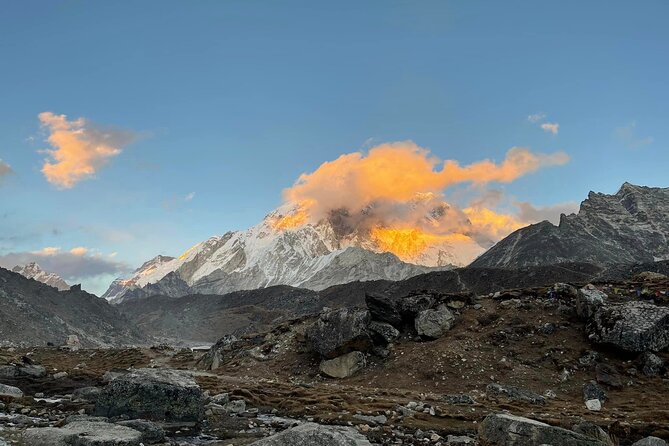
The trail from Namche to Tengboche takes six to seven hours. It first descends roughly 250 meters to the Dudh Koshi, then climbs about 670 meters to Tengboche at 3,967 meters.
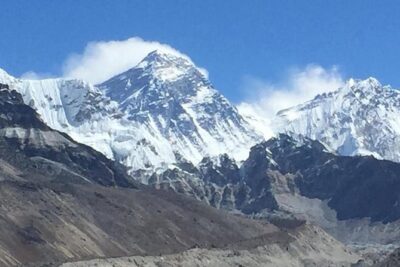
The mountain views become more dramatic here. Thamserku, Khangtega, Ama Dablam, Lhotse, and Everest are all named along this section. Tengboche is also known for its large monastery and its broad mountain viewpoint. For many people, this is one of the most memorable cultural stops on the route because the monastery gives the high valley a strong spiritual character.
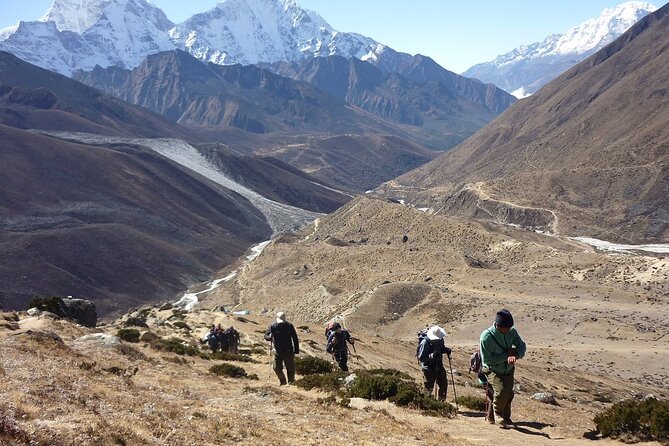
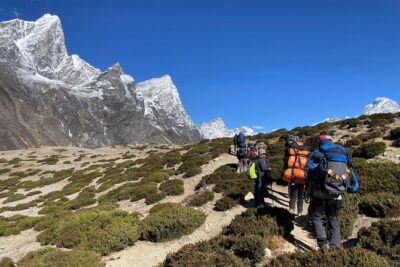
The following day leads to Dingboche at 4,280 meters. You descend stone steps through conifer and rhododendron forest, pass Deboche, cross the Imja Khola by suspension bridge, and continue through Pangboche and open pasture toward the Dingboche valley.
This section marks a real change. The trail is now higher, colder, and more exposed than the lower approach from Lukla. Walking six or seven hours at this altitude is not a small matter. Your fitness needs to include sustained uphill and downhill walking, not simply the ability to walk long distances on level ground.
Day 8: Lobuche and the first truly high camp
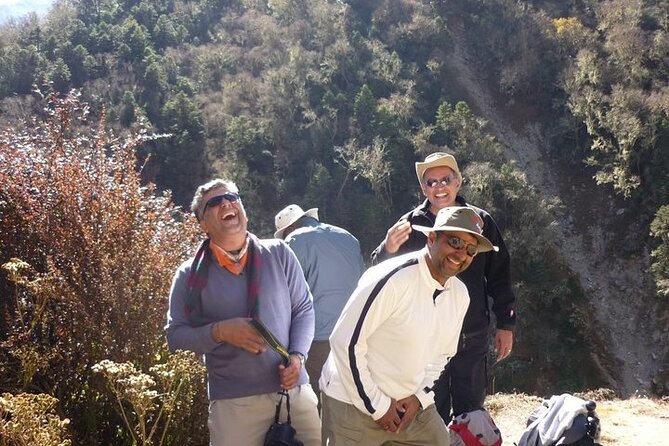
From Dingboche, you walk toward Lobuche at about 4,930 meters. The route descends toward Pheriche, then climbs west and north through Thukla before following the side of the glacier to Lobuche.
Lobuche is a practical stopping point before the final approach to Base Camp. The elevation is high enough that sleep and appetite can become difficult, even for a fit person. You should expect a slower pace, shorter steps, and less recovery than at lower elevations.
The description gives six to seven hours for this day, but mountain conditions can change the feel of any timetable. Your private format may help if the group needs to adjust its pace, but it does not remove the effects of altitude. A private trek is still a high-altitude trek.
Day 9: Everest Base Camp and Gorakshep
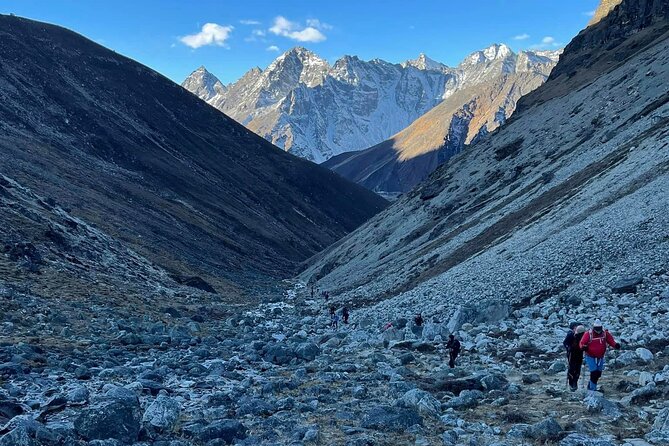
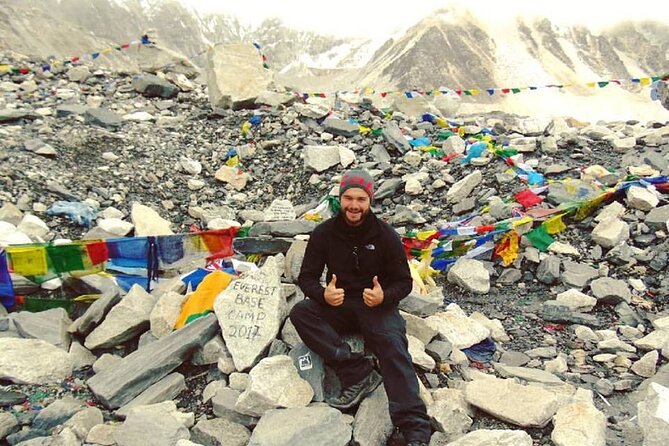
The route from Lobuche goes to Everest Base Camp, with an overnight stay at Gorakshep at about 5,140 meters. This is the emotional center of the trip, but it is worth keeping expectations realistic.
Everest Base Camp is not the summit and does not automatically provide the best view of Everest itself. The point is reaching the base area used by expeditions and walking among the glaciers and peaks of the Khumbu region. The journey there is as important as the destination, with the glacier, rough trail, and thin air making the day physically demanding.
You should confirm the exact timing and sleeping arrangement for this day. The plan names Everest Base Camp and Gorakshep, but does not give a detailed hour-by-hour schedule. At this altitude, clarity about meals, rooms, water, and the next morning’s departure matters.
Day 10: Kalapathar and the return toward Pheriche
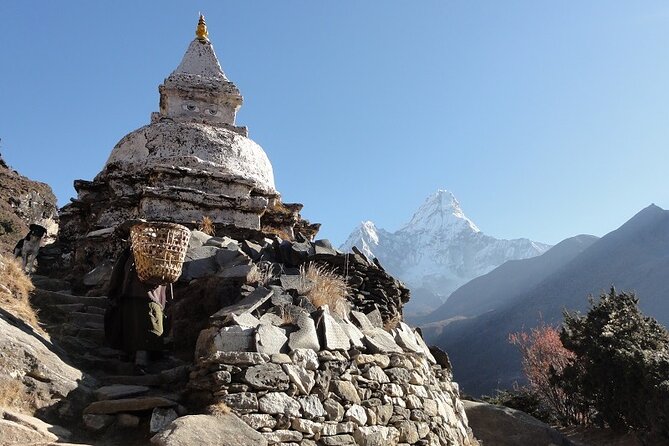
The early morning visit to Kalapathar is designed to provide the major panoramic mountain view. At about 5,560 meters, this dark brown hill is the highest point on the published route and offers views toward Everest, the snowy peaks, and the Khumbu Glacier.
An early start makes sense because mountain visibility can change during the day. The climb is short in distance compared with a full trekking day, but the altitude makes it hard. You need to walk slowly and accept that the summit may take longer than expected.
The plan then lists an overnight stay at Pheriche. This descent is welcome after Gorakshep and Kalapathar, but the itinerary is not perfectly clear about the walking sequence. Since the next days list Khumjung and Lukla, ask the company to confirm the exact route and overnight villages before paying.
Days 11 to 13: The return through Khumjung and Lukla
Day 11 is listed as a trek to Khumjung at 3,850 meters. Khumjung is a useful return stop because you encounter a different village setting from the higher glacier route. It also links back to the culture and community life introduced during the Namche acclimatization day.
Day 12 continues to Lukla. By this point, the return should feel familiar in places, but downhill walking can be hard on knees and feet. You may be tired enough that the final approach matters as much as the first day’s excitement.
On Day 13, you fly roughly 40 minutes from Lukla to Kathmandu after breakfast and transfer back to the hotel. Again, weather can affect mountain flights, so you should avoid scheduling an important international connection immediately after the Lukla flight unless you have a backup plan.
The itinerary gives one full day, Day 14, for shopping in Kathmandu. That is useful for buying gifts, local goods, or anything you postponed before trekking. It also gives you a buffer after returning from the mountains.
Day 15 is airport departure. The activity begins at Hotel Vaishali in Thamel at 6:15 a.m. and ends back at the meeting point, with pickup offered. Confirm the exact airport transfer timing with the operator, especially if your flight leaves early.
Altitude, fitness, and daily effort
The physical requirement is serious. The route rises from Kathmandu to Lukla, then reaches 5,560 meters at Kalapathar. Walking times of six to seven hours appear on several consecutive days, and the trail includes steep climbs, descents, suspension bridges, stone steps, and uneven glacier-side paths.
You are specifically expected to have a strong level of physical fitness. That does not mean speed. It means being able to walk for many hours, manage repeated uphill sections, and keep going when the air is thin.
The itinerary includes a Namche acclimatization day and a staged rise through Tengboche, Dingboche, Lobuche, and Gorakshep. Those are useful features. Still, the schedule is fixed, and the information provided does not describe an altitude emergency plan, porter arrangements, medication guidance, or evacuation terms. Ask about these before booking and make sure your travel insurance covers trekking at the stated elevations.
What the $1,955 price does and does not tell you
The private format and 15-day structure give the price some value. You receive a planned route, Kathmandu transfers, domestic airport transfers, hotel time, cultural sightseeing, and a private group arrangement. For someone who wants one company to coordinate the city and mountain portions, that convenience can be worth more than assembling separate bookings.
The included list is short, however. It specifically lists 12 breakfasts. Dinner is excluded, as are drinks, liquor, tips, emergency expenses, travel insurance, and personal costs. The airfare wording is incomplete, so I would not assume that the Lukla flights are included without written confirmation.
Before booking, ask these practical questions:
- Are Kathmandu to Lukla and Lukla to Kathmandu flights included?
- Which hotels and trekking lodges are covered?
- Are lunches and dinners excluded throughout the trek?
- Are trekking permits and national park fees included?
- Is a guide assigned for the entire walking route?
- Are porters included, and what baggage weight is allowed?
- What happens if the Lukla flight is delayed?
- How are altitude illness and emergency evacuation handled?
The tour is non-refundable and cannot be changed for any reason. That makes these questions especially important before you commit your payment.
Who will like this private trek?
I would recommend this experience to a fit person who wants the standard Everest Base Camp route but prefers a private group instead of a large departure. It suits people who value a planned schedule, direct assistance in Kathmandu, and time at major cultural and mountain sites.
It is also a good match if you want more than a base camp walk. The Kathmandu temples, Khumjung, Tengboche Monastery, Namche Bazaar, and the high Himalayan valleys give the trip broader meaning.
I would be cautious if you want a relaxed holiday, a flexible cancellation policy, or a fully itemized package with every meal and flight already covered. The altitude is high, the days are long, and the listed itinerary contains a few unclear details around the return route and airfare.
Should you book this Everest Base Camp tour?
Book it if you want a private, structured route with Kathmandu sightseeing, two acclimatization stages, Everest Base Camp, and Kalapathar in one 15-day plan. The strongest features are the private format, the cultural visits, and the personal organizing approach associated with manager Achut Kark.
Before making the final decision, get the inclusions in writing, especially the Lukla flights, meals, permits, porter support, and emergency arrangements. If those costs are added to the advertised $1,955, compare the final total with other private Everest packages. If the answers are clear and your fitness is ready for high-altitude walking, this can be a useful way to tackle the Everest route without managing every moving part yourself.
FAQ
Where does the tour start?
The meeting point is Hotel Vaishali, Thamel Bhagawati Marg, Kathmandu 44600, Nepal. The stated start time is 6:15 a.m., and pickup is offered.
How long does the experience last?
The tour lasts approximately 15 days. It includes arrival and departure days, Kathmandu sightseeing, the trek, and flights between Kathmandu and Lukla.
Is this a private tour?
Yes. Only your group participates in the activity.
Which major places are visited on the trek?
The route includes Lukla, Phakding, Namche Bazaar, Khumjung, Tengboche, Dingboche, Lobuche, Everest Base Camp, Gorakshep, Kalapathar, Pheriche, and a return to Lukla.
What altitude does the route reach?
Kalapathar is listed at approximately 5,560 meters. Everest Base Camp is included, and Gorakshep is listed at about 5,140 meters.
Are meals included?
Breakfast is listed 12 times. Dinner, beverages, liquor, tips, and personal expenses are not included.
Is the tour refundable if I cancel?
No. The experience is non-refundable and cannot be changed for any reason.
New in the Kathmandu listings
- Traditional Momo Making Class★ 5.0 · 10 reviews
- Kathmandu: Ancient City Kirtipur & Pharping Monastery Tour★ 5.0 · 2 reviews
- Kathmandu to Pokhara Premium sofa bus ticket★ 4.0 · 17 reviews
- Women Empowerment Project(Nepali cooking class & jewelry workshop★ 5.0 · 15 reviews
- 7-Day Langtang Valley Trek from Kathmandu★ 5.0 · 1 review
- Kathmandu 2 Nights 3 Days Chitwan Jungle Safari Tour★ 5.0 · 9 reviews
- Yoga Experience Day Trip with Private Transfer From Kathmandu★ 4.0 · 2 reviews
- Wildlife Adventure in Chitwan Nepal★ 4.0 · 4 reviews
Everest Base Camp Treks, compared.
Everest Base Camp Trek with Helicopter Return from Gorakshep to Lukla
Read our review →Browse the lists this tour appears in