REVIEW · WORKSHOPS
Traditional Leaf Plate Making Workshop in Kathmandu
Leaves become lunchware here. This three-hour Kathmandu workshop gives you two things I value in a city experience: hands-on craft and a direct connection with local tradition. I especially like that you make duna and tapari yourself, then add incense and cotton wick making, though the $60 price may feel high if you want only a quick craft demonstration.
The small group, capped at five people, keeps the session personal. Aama teaches the leaf work, while Santosh can translate and help explain the process. Pickup, private transportation, tea or coffee, materials, an English-speaking guide, and the artisan fee are included, but meals and travel insurance are not.
In This Review
- Key Things To Know Before You Book
- Why Leaf Plates Matter in Kathmandu
- A Three-Hour Session With Aama and Santosh
- Making Duna and Tapari By Hand
- Incense and Cotton Wicks Add A Spiritual Note
- What You Take Home
- Is $60 A Fair Price?
- Timing, Transport, and Group Size
- Who Will Enjoy This Workshop Most?
- Should You Book The Leaf Plate Workshop?
- FAQ
- How long does the workshop last?
- What time does the workshop start?
- What will I make during the session?
- Are materials included?
- Is transportation provided?
- How many people can join?
- Can I cancel for a full refund?
Key Things To Know Before You Book
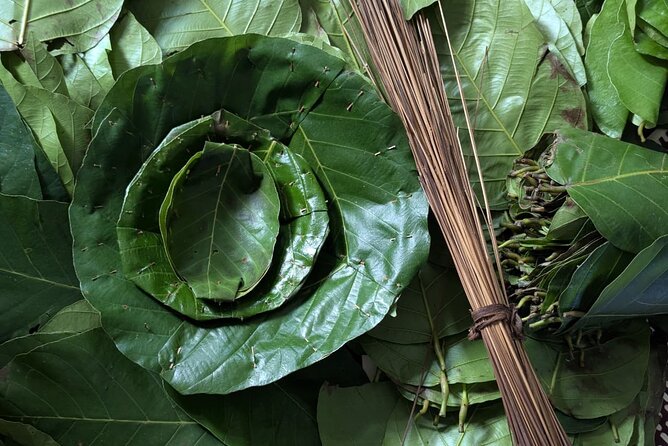
- You make traditional duna and tapari: Learn to stitch natural sal leaves into plates and bowls used in Nepali festivals, rituals, and food service.
- Aama leads the craft lesson: Her instruction gives the workshop a personal connection to an old local skill.
- Santosh helps with translation: His support is useful when you want to understand the process clearly and ask questions.
- The session includes two extra crafts: Twisted incense and cotton wick making add a spiritual side to the leaf work.
- The group is limited to five: This is a quieter, more personal format than a large demonstration.
- You take home handmade pieces: Your finished work becomes a useful souvenir tied to sustainability and Nepali culture.
Why Leaf Plates Matter in Kathmandu
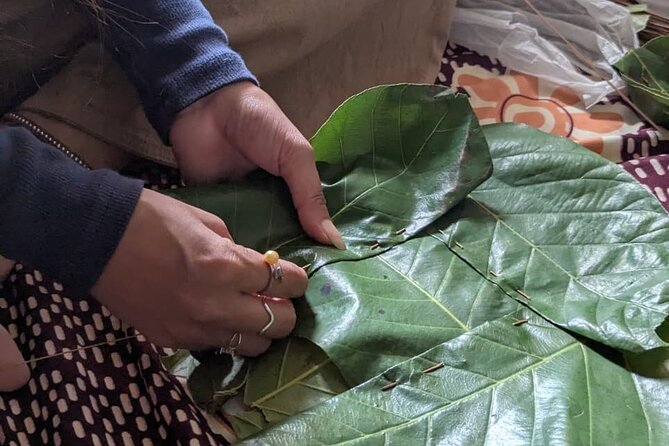
Duna and tapari are more than attractive souvenirs. They are functional plates and bowls made from natural leaves, and they remain part of Nepali festivals, religious rituals, street-food service, and some everyday uses.
The workshop shows you how a simple material can serve a practical purpose. Instead of looking at a finished leaf plate and seeing only its rustic shape, you begin to notice the work involved in selecting, arranging, and stitching the leaves. That change in perspective is one of the best reasons to choose a craft session during a Kathmandu visit.
I also like the environmental lesson here. You are learning about a traditional alternative to modern tableware without sitting through a formal talk about sustainability. The point comes through your hands. You work with a natural material and see how a community has turned it into something useful.
The craft has a modest, honest appeal. It is not a polished factory product. Small variations in shape and stitching are part of the experience, and your own finished plate or bowl may look a little different from the model made by the artisan. That is exactly what makes it a better keepsake than another mass-produced item.
More hands-on classes in Kathmandu:
- Half day cooking class in Thamel kathmandu
★ 5.0 · 607 reviews - Kathmandu: Local Women-Led Nepali Cooking & Momo Class
★ 4.9 · 360 reviews - Kathmandu: Local Lead Nepali Cooking & Momo-Making Class
★ 5.0 · 212 reviews
A Three-Hour Session With Aama and Santosh
The experience begins at about 10:15 am and lasts roughly three hours. Pickup is offered, and private transportation is included, but you should confirm the precise pickup or meeting details when you book. The information gives a start time rather than a detailed public meeting address.
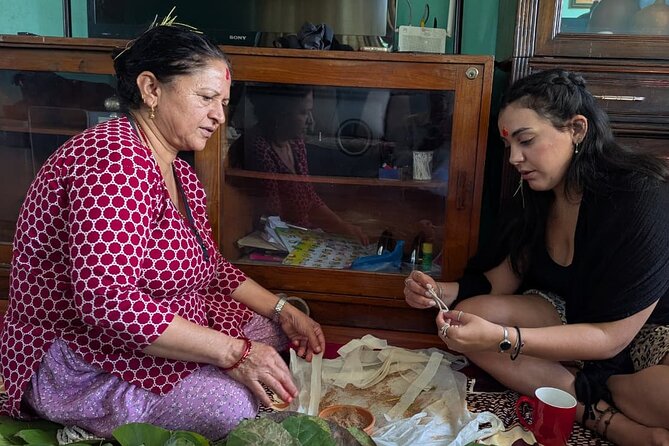
Once the workshop begins, the central activity is learning how to create duna and tapari from sal leaves. Aama guides you through the traditional method. You should expect the pace to be practical rather than hurried, with time to watch, copy, adjust, and try again.
Santosh assists with translation. That matters because craft instruction often depends on small details: how the leaves are positioned, where the stitches pass, and how the shape is kept together. Clear translation also gives you a better chance to ask about the objects, their use, and their place in Nepali life.
The session is private in feel, even though it is a bookable activity. With no more than five participants, you are less likely to be lost at the back of a room or forced to wait through a long turn. If you enjoy asking questions or prefer learning by doing, this small limit is a real benefit.
Tea or coffee is included, which suits the relaxed character of the workshop. Do not expect a meal, however. Since food is not included, plan your breakfast and later lunch separately.
Making Duna and Tapari By Hand
The leaf plate section is the heart of the experience. You work with the supplied materials and learn how flat leaves become containers with a clear purpose.
Duna generally refers to a small leaf bowl, while tapari is a broader leaf plate. The names are useful to know because they help you connect the shape in front of you with the wider tradition. You are not just producing a generic craft item. You are learning the forms used for serving food and supporting ceremonial customs.
The process also gives you a practical lesson in patience. Natural leaves do not behave like uniform sheets of paper or plastic. The artisan’s skill lies in working with their shape and arranging them so the finished piece holds together.
I would pay close attention to Aama’s hands at the start. The first attempt may require more concentration than you expect. You may need to correct the position of a leaf or repeat a stitch before the form looks right. That is not a flaw in the workshop. It is the point at which you begin to understand why these skills are passed from one person to another.
You also get a useful sense of scale. A single plate looks simple once it is complete, but making one yourself reveals the labor behind a whole stack prepared for a festival or food service. That small shift in understanding gives the experience more weight than a quick photo stop.
Because all necessary materials are included, you do not need to bring craft supplies. The main thing to bring is attention, along with clothing you can work comfortably in. The activity details do not specify protective clothing or a special dress code, so ordinary practical travel clothes should be sufficient.
Incense and Cotton Wicks Add A Spiritual Note
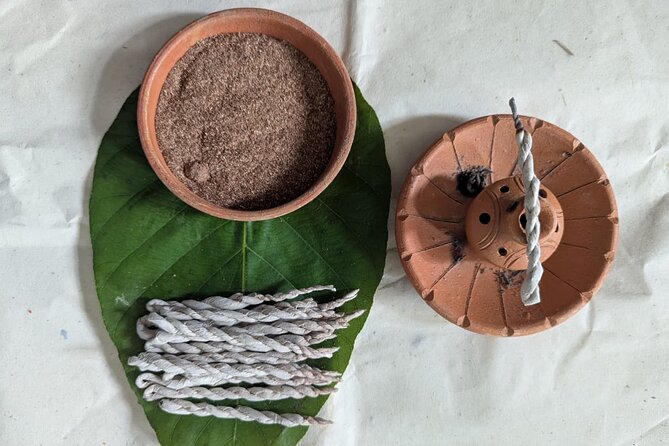
After working with leaves, you also try making twisted incense and cotton wicks. These are smaller crafts, but they broaden the workshop beyond tableware.
Incense is closely tied to spiritual practice in Nepal, and cotton wicks are used with lamps and religious offerings. Making them helps show how everyday materials can take on a devotional role. Leaves, cotton, and incense are not presented as separate curiosities. Together, they point to a close relationship between nature, household use, and worship.
This part should appeal to you if you enjoy understanding the ordinary objects behind religious customs. Kathmandu has many famous temples and shrines, but a workshop like this explains the small handmade items that support ritual life.
The extra crafts also help balance the session. If the leaf stitching proves fiddly, the change of activity gives you another way to take part. If you already enjoy handwork, you may appreciate having several simple techniques to practice rather than spending all three hours on one object.
The description does not promise a large production session or a formal religious ceremony, so you should view these activities as craft instruction. You learn how the items are made and why they matter. You are not being asked to take part in a ritual.
A short list of alternatives around Kathmandu
- Everest Base Camp Trek – 14 Days
★ 5.0 · 1,499 reviews - Private Kathmandu Sightseeing Tour | UNESCO World Heritage sites
★ 5.0 · 756 reviews - Everest Base Camp Helicopter Tour landing at Everest View Hotel
★ 5.0 · 668 reviews - Everest Base Camp Trekking
★ 5.0 · 485 reviews
What You Take Home
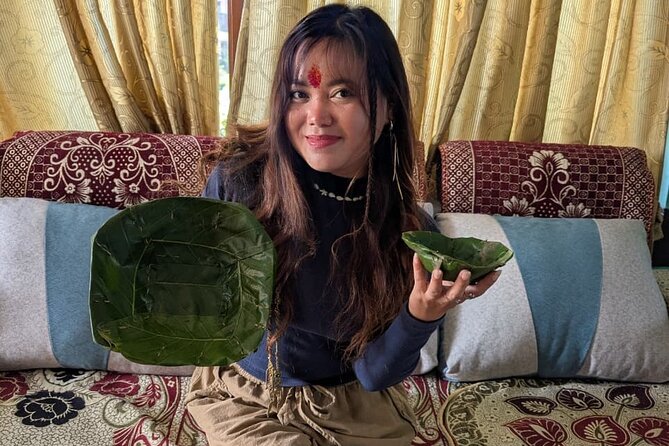
You leave with your handmade creations. That makes the workshop more rewarding than an activity where the finished item stays behind.
A handmade duna or tapari is easy to pack compared with a large Nepalese handicraft. It also carries a clear memory of the place and the people who taught you. When you use or display it later, you can remember the process rather than only the shop where you bought it.
The pieces may not be perfectly symmetrical. In fact, they probably should not be. The charm is in seeing your own work beside the artisan’s example and recognizing the difference that practice makes.
I would treat the finished items as meaningful souvenirs rather than rugged travel equipment. They are made from natural leaves, so follow the artisan’s advice about handling and keeping them. The supplied information does not specify how long the items last or how they should be stored, so ask Aama if you want care instructions before leaving.
The incense and cotton wick work can also give you small objects to remember the session by. Their value is less about price and more about the story attached to them.
Is $60 A Fair Price?
At $60 per person, this is not the cheapest way to spend three hours in Kathmandu. The value depends on what you want from a cultural activity.
You are paying for more than materials. The price includes private transportation, an English-speaking guide, the artisan fee, tea or coffee, and all supplies. The experience is also limited to a maximum of five people, which usually means more personal instruction and less waiting.
That package makes the cost easier to understand. If you only want to buy a leaf plate, you can likely find one for far less. If you want to learn how it is made, hear its cultural context, practice the technique, and take home your own work, the price becomes more reasonable.
The added incense and cotton wick activities help, too. You are getting three connected craft experiences rather than one short demonstration.
Still, I would not recommend this to someone who dislikes hands-on work or expects a major sightseeing tour. The value is in participation, not in checking off famous Kathmandu landmarks. You should also remember that meals and travel insurance are extra.
For a visitor who already plans to spend time in Kathmandu and wants a small cultural activity with a local teacher, $60 can be a fair trade. For a strict budget traveler, it may be better suited to a special afternoon than an everyday tour.
Timing, Transport, and Group Size
The 10:15 am start makes this an easy addition to a morning schedule, but you should avoid booking another fixed activity too close to the three-hour finish. Transport time may affect the total length of your outing, especially if pickup is used.
Private transportation is included, which removes one practical concern. You do not have to arrange a separate taxi for the workshop, though you should confirm where pickup will occur and how the provider will identify you.
The mobile ticket is useful for a phone-based booking. Confirmation is sent at the time of booking, so keep those details available on the day.
The group limit of five is one of the strongest practical features. A small class gives you more room to see the artisan’s technique and receive corrections. It also suits families, couples, solo visitors, and small private groups who prefer a calm setting.
Most participants can take part, and service animals are allowed. The activity is near public transportation as well, giving you another option if you do not use the offered pickup.
Cancellation is flexible if you plan ahead. You can receive a full refund by canceling at least 24 hours before the local start time. Cancellations or changes made inside that window are not accepted for a refund.
Who Will Enjoy This Workshop Most?
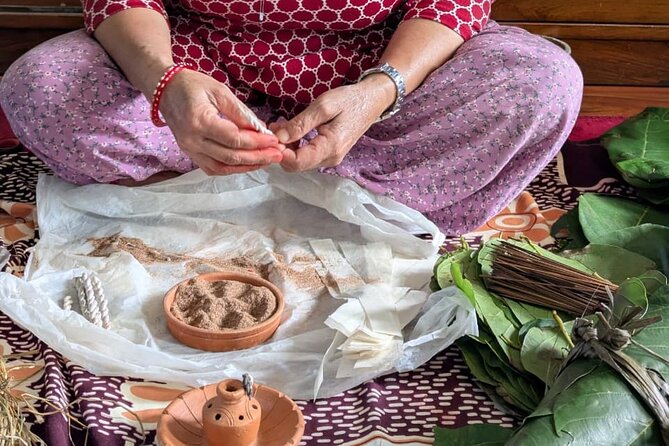
I would recommend this experience to you if you like learning through your hands. It is a good choice for anyone who wants a quieter cultural activity and prefers meeting a local artisan to watching a large staged performance.
It also suits visitors interested in sustainability. You will see a natural material used for real purposes, and you will gain a better sense of how traditional skills can offer alternatives to modern tableware.
Families may enjoy the simple shapes and short craft stages, though the description does not give a specific minimum age. If you are booking for children, confirm suitability directly with the provider.
Couples and small groups should find the five-person limit appealing. Solo visitors may also like the chance to join a private-scale session rather than search for a larger class.
This is less suitable if your main goal is food tasting, temple sightseeing, shopping, or a packed schedule. No meal is included, and the session focuses on craft. It is also not the right pick if you want to leave with a professionally finished object made by someone else. Here, your own imperfect work is part of the reward.
Should You Book The Leaf Plate Workshop?
Book it if you want a personal Kathmandu activity with real participation. The combination of duna and tapari making, incense, cotton wicks, local instruction, and a small group gives you a useful look at daily and spiritual traditions without turning the session into a lecture.
I especially like the presence of Aama as the artisan teacher and Santosh as the translator. That pairing helps make an old skill accessible, while the handmade souvenirs give the lesson a lasting connection.
Skip it if $60 feels too high for a three-hour craft class, or if you would rather spend the time on major sights. But if you value local contact, practical learning, and a souvenir you helped create, this is a thoughtful use of half a day in Kathmandu.
FAQ
How long does the workshop last?
The experience lasts approximately three hours.
What time does the workshop start?
The stated start time is 10:15 am.
What will I make during the session?
You will learn to make duna and tapari, traditional Nepali leaf bowls and plates. You will also try twisted incense and cotton wick making.
Are materials included?
Yes. All necessary workshop materials are included in the price.
Is transportation provided?
Yes. Private transportation and pickup are offered. Confirm the exact pickup or meeting details when booking.
How many people can join?
The activity has a maximum of five participants.
Can I cancel for a full refund?
Yes, if you cancel at least 24 hours before the experience start time. Cancellations or changes made less than 24 hours in advance are not accepted for a refund.
New in the Kathmandu listings
- Traditional Momo Making Class★ 5.0 · 10 reviews
- Kathmandu: Ancient City Kirtipur & Pharping Monastery Tour★ 5.0 · 2 reviews
- Kathmandu to Pokhara Premium sofa bus ticket★ 4.0 · 17 reviews
- Women Empowerment Project(Nepali cooking class & jewelry workshop★ 5.0 · 15 reviews
- 7-Day Langtang Valley Trek from Kathmandu★ 5.0 · 1 review
- Kathmandu 2 Nights 3 Days Chitwan Jungle Safari Tour★ 5.0 · 9 reviews
- Yoga Experience Day Trip with Private Transfer From Kathmandu★ 4.0 · 2 reviews
- Walking tour of real Kathmandu through back streets.★ 5.0 · 3 reviews
Workshops, compared.
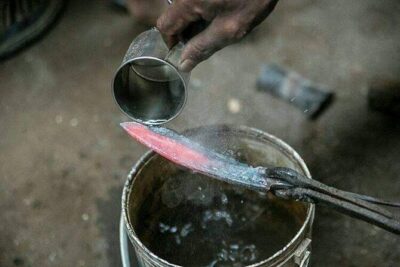
Knife (Khukuri) Making Workshop- Forge of the Gurkhas
Read our review →
Nepalese Momos or Dal Bhat Cooking Class (Cook with Delight)
Read our review →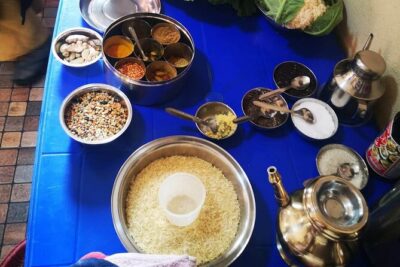
The best Private Nepali Cooking Class in Kathmandu
Read our review →
Nepalese Kitchen in Pokhara: Momos or Dal Bhat Cooking Class
Read our review →