
REVIEW · EVEREST BASE CAMP TREKS
Unforgettable Everest Base Camp Trek with Third Rock Adventures! 🌄 I recently completed an incredible journey to Everest Base Camp with Third Rock Adventures, and I can’t recommend them enough! From starRead more
The Himalayas reward steady walkers. This 14-day Everest Base Camp trek combines the famous trail with Sherpa villages, Buddhist culture, and close views of Ama Dablam, Lhotse, and Everest. I especially like the two acclimatization stops, which give your body time to adjust, and the inclusion of guides, porters, meals, park fees, flights, and key gear. The main drawback is the altitude: Kala Patthar reaches 5,550 meters, and the trek is a serious physical test even at a moderate pace.
I also like the small maximum group of 12 and the practical support from an English-speaking, first-aid-trained guide. Past guests have singled out guides including Dawa, Gnawang, and Deepak for patience, care, and calm decisions when weather or altitude caused changes. You should still expect basic tea houses, cold conditions, flight delays, and extra costs for water, showers, snacks, tips, insurance, and personal gear.
In This Review
- Key points to know before booking
- What the $1,799 price really covers
- Kathmandu begins with preparation, not sightseeing
- Day 2: Lukla and the easy start to Phakding
- Day 3: Suspension bridges and the climb to Namche Bazaar
- Day 4: Why the Namche acclimatization day matters
- Day 5: Forest trails and Tengboche Monastery
- Day 6: Pangboche and the approach to Dingboche
- Day 7: Nagarjun Hill at 5,100 meters
- Day 8: Thukla Pass and the memorials for Everest climbers
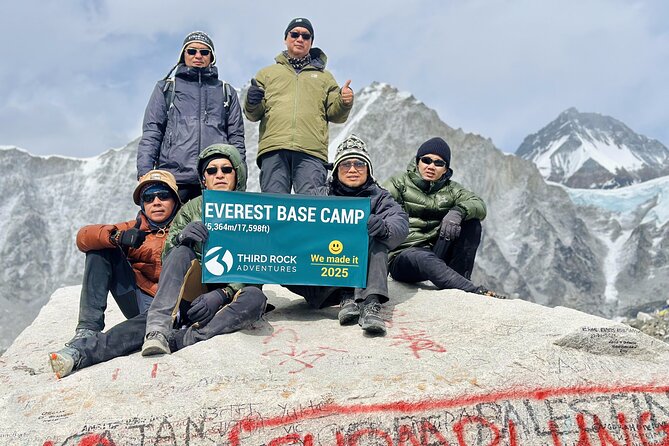
- Day 9: Khumbu Glacier and Everest Base Camp
- Day 10: Kala Patthar delivers the great panorama
- Days 11 and 12: A long return through Namche to Lukla
- Day 13: Flying back to Kathmandu
- Guides, porters, and the human side of the trek
- Who should book this Everest trek?
- Should you book the $1,799 Everest Base Camp Trek?
- FAQ
- How long is the Everest Base Camp Trek?
- What is the highest point on the trek?
- Are domestic flights to Lukla included?
- Is helicopter transport included?
- What accommodation is provided?
- What is the baggage allowance?
Key points to know before booking
- Kala Patthar at 5,550 meters: The sunrise walk gives you the best broad view of Everest, Lhotse, Nuptse, Pumori, and the Khumbu peaks.
- Two nights in Dingboche: The Nagarjun Hill hike provides an important acclimatization day before the trail gets higher and rougher.
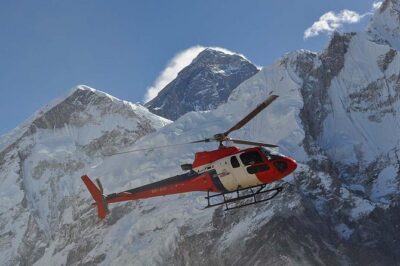
- Lukla flights are included: Domestic flights between Ramechhap or Kathmandu and Lukla are covered, but shared helicopter transport costs an additional $1,200 per person.
- Sherpa culture is part of the route: Phakding, Namche Bazaar, Pangboche, and Tengboche bring village life, monasteries, markets, and mountain traditions into the trek.
- Porter support reduces your load: One porter is assigned for every two trekkers, with a stated 15-kilogram baggage allowance.
- Strong guide support: First-aid training, a pulse oximeter, essential medicines, and a small group add useful safeguards at altitude.
What the $1,799 price really covers
At $1,799 per person, this is not a simple walking holiday. The price includes airport transfers, two nights in a three-star deluxe hotel in Kathmandu, tea house lodging during the trek, meals from breakfast through dinner, domestic flights, park and community fees, guide and porter costs, and several useful pieces of equipment.
You also receive a duffel bag, T-shirt, trekking map, down jacket, and sleeping bag. The jacket and sleeping bag must be returned after the trek, but that arrangement saves you from buying bulky cold-weather kit for one trip.
The package also covers staff food, lodging, salaries, flights, insurance, and equipment. That matters because porter and guide costs are often easy to overlook when comparing Nepal treks. Here, much of the support is built into the headline price.
Still, budget for extras. Kathmandu lunch and dinner are not included. You pay your Nepal visa fee, international flights, travel and medical insurance, personal internet and laundry, hot showers, bottled or boiled water, snacks, battery charging, souvenirs, and tips. Extra baggage costs about $1 per kilogram above the 15-kilogram allowance.
The published personal-expense estimates are modest, around $10 per person for some categories, but the real amount depends on how often you buy drinks, showers, snacks, internet access, and souvenirs. Tipping is expected, so set aside money for your guide, porter, and driver.
The biggest possible surprise is transport disruption. A shared helicopter option from Kathmandu to Lukla and back is listed at $1,200 per person. That is a major extra charge, not a minor upgrade, so ask before departure how flight delays are handled and what alternatives may be available.
More Everest Base Camp treks:
- Everest Base Camp Trek – 14 Days
★ 5.0 · 1,499 reviews - Everest Base Camp Trekking
★ 5.0 · 485 reviews - Everest Base Camp Trekking – 13 Day
★ 5.0 · 365 reviews
Kathmandu begins with preparation, not sightseeing
Your first day starts with airport pickup and a private transfer to your hotel. You meet the trek leader and team for a briefing, then have time to check your gear, buy missing supplies, or walk around Thamel.
That first day has real value. You are not simply waiting around for the trail to start. You can confirm what your porter will carry, ask about the flight to Lukla, and make sure your sleeping bag and down jacket fit properly.
The two Kathmandu hotel nights include breakfast. Lunch and dinner are on your own, which gives you freedom to choose local food or keep meals simple before the trek.
The final Kathmandu night comes after your return from Lukla. You can rest, shop for handicrafts and souvenirs, or visit Ason Market for spices, tea, and decorative items before a farewell dinner.
Day 2: Lukla and the easy start to Phakding
The trek begins with a flight to Lukla, followed by a meeting with your local crew. The walking day is relatively gentle by Himalayan standards, taking you through Chauri Kharka and along the Dudh Koshi River to Phakding.
You will see early examples of the region’s village life and may spot Khumbila, a sacred unclimbed peak. This first section helps you find your walking rhythm without immediately facing the steep climbs that come later.
Phakding is a useful first overnight stop because it keeps the opening day manageable. You stay in tea house accommodation rather than a conventional hotel, so expect a clean and comfortable but basic setting.
The Lukla flight is part of the adventure and part of the uncertainty. The package specifies flights from Ramechhap or Kathmandu, depending on the operating plan. Weather can affect mountain flights, and one past group had to adjust its schedule because of poor conditions. Keep your plans flexible around the start and end of the trek.
Day 3: Suspension bridges and the climb to Namche Bazaar
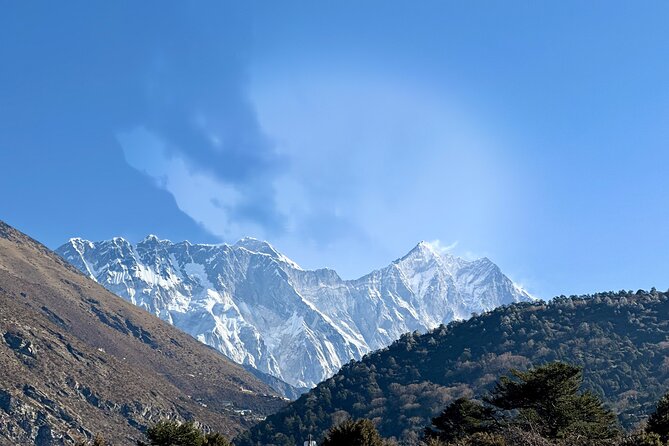
From Phakding, the route follows the Dudh Koshi and crosses several suspension bridges. The Hillary Bridge is the famous crossing, and the path then enters Sagarmatha National Park.
After lunch at Jorsale, you face a steep climb to Namche Bazaar. This is one of the first days when the trek feels demanding rather than merely scenic. The reward is Namche, the main Sherpa trading center and a lively high mountain village.
Namche is more than a place to sleep. It is where you begin to feel the scale of the route, meet other trekkers, and see supplies moving through the Khumbu. The village has bakeries, shops, and a Saturday Market, giving you a last chance to buy useful items before the trail becomes more remote.
More walking in the hills of Kathmandu:
- Nagarkot Sunrise View and Day Hiking from Kathmandu
★ 5.0 · 471 reviews - Annapurna Circuit Trek with Tilicho Lake
★ 5.0 · 368 reviews - Everest Base Camp Trek -14 Days
★ 5.0 · 321 reviews - Annapurna base camp trek 5 Days
★ 5.0 · 252 reviews
Day 4: Why the Namche acclimatization day matters
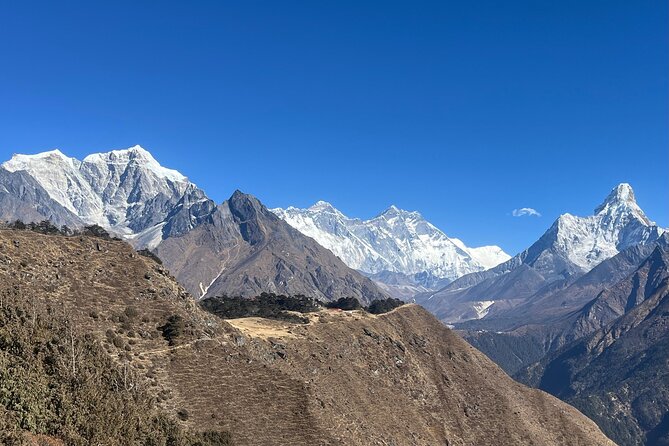
The rest day in Namche is one of the strongest features of this schedule. You take a sunrise hike toward Sagarmatha National Park, with views of Everest, Ama Dablam, and Lhotse, then return to the village to explore or rest.
An acclimatization day is not wasted time. You gain height during the day but sleep at the same elevation, giving your body a better chance to adjust before the route rises toward Dingboche and Lobuche.
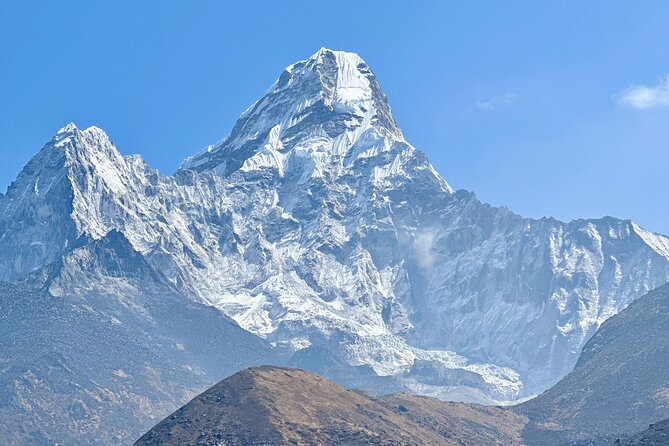
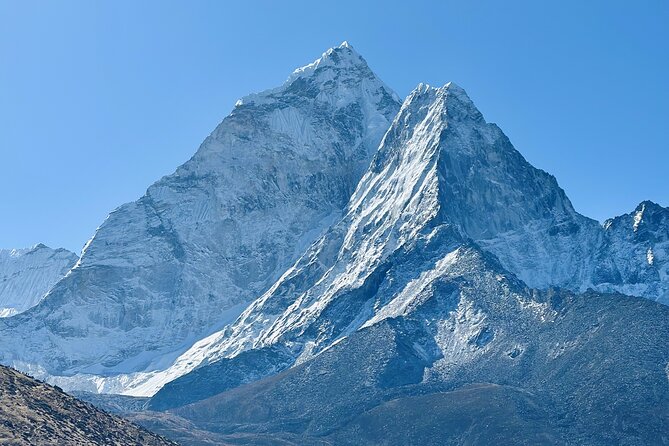
The early hike also gives you a first clear look at Everest. The mountain is not yet the only focus, however. Ama Dablam often draws the eye because of its sharp, distinctive shape, while Lhotse and Nuptse form a powerful wall nearby.
You should use the afternoon sensibly. Namche’s cafés and shops are tempting, but your main job is to hydrate, eat, and rest. The next days will ask more from your legs and lungs.
Day 5: Forest trails and Tengboche Monastery
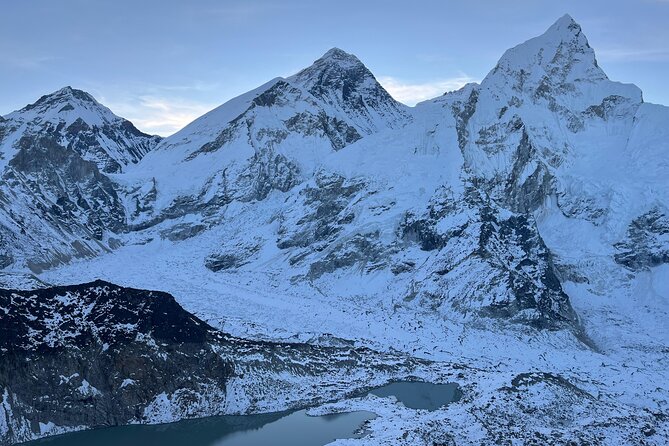
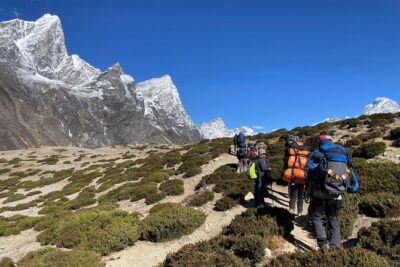
The path leaves Namche through rhododendron and juniper forest. Along the way, you get views of Everest, Lhotse, Nuptse, and Ama Dablam before arriving at Tengboche.
Tengboche is home to the region’s largest monastery. A visit gives the trek a cultural center, not just a chain of mountain viewpoints. The monastery also helps explain why the Khumbu route feels different from a standard high-altitude hike. Sherpa traditions and Buddhist practice are part of daily life here.
Ama Dablam is especially impressive from Tengboche. The mountain appears close and sharply defined, a good reminder that the most memorable view is not always Everest.
The trail includes descents and climbs, so do not judge the day by distance alone. In the Himalayas, a short route can still take effort when the path repeatedly rises and falls.
Day 6: Pangboche and the approach to Dingboche
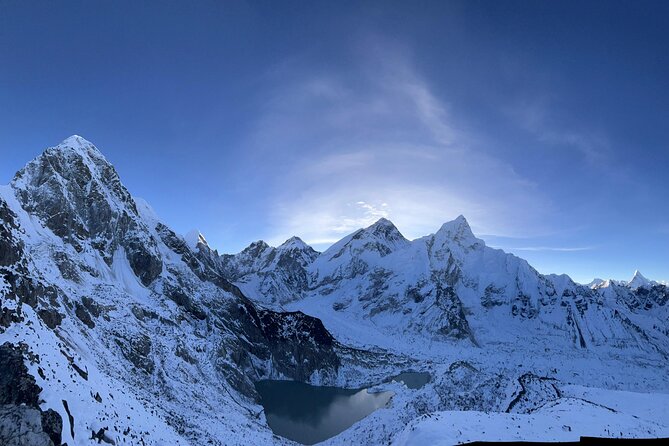
You cross the Imja Khola and pass through Pangboche, described as the highest permanent Sherpa settlement on the route. This is a quieter section, with fewer signs of the commercial world you saw in Namche.
Dingboche is surrounded by views of Island Peak and Ama Dablam. It is also an important staging point before the route climbs higher. Tea house lodging here is basic, and conditions become colder and more spare as you gain altitude.
The walking remains achievable for a fit person, but the air is thinner. Your guide’s judgment becomes increasingly important. A good guide watches your pace, checks how you are feeling, and knows when a planned walk should be shortened or adjusted.
Day 7: Nagarjun Hill at 5,100 meters
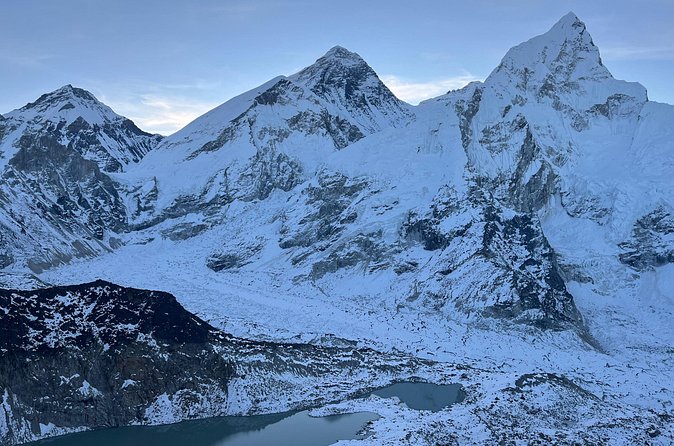
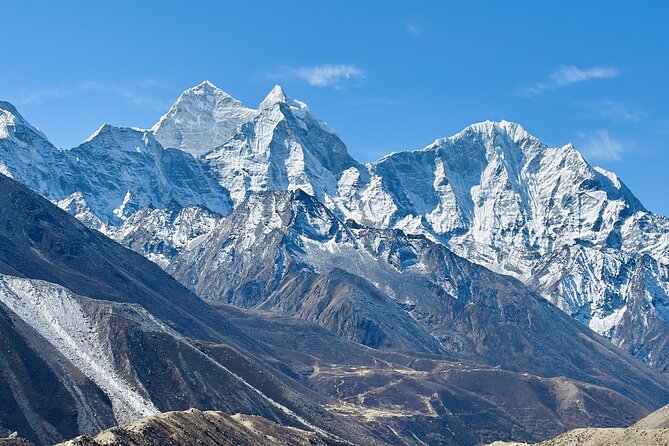
The second Dingboche night is used for acclimatization. You hike to Nagarjun Hill at about 5,100 meters, gaining panoramic views of Makalu, Lhotse, Ama Dablam, and Island Peak, with the Imja Glacier close by.
This is a demanding acclimatization hike. You do not need to race to the top. The point is to spend controlled time at height and return to Dingboche to rest.
The afternoon is free for recovery or a short walk around the village. I would treat this as a rest afternoon, even if you feel strong. Saving energy now is wise because the next stages include rugged terrain, memorials, glaciers, and the highest nights of the trek.
The guide carries a first-aid kit, pulse oximeter, and essential medicines such as paracetamol and Diamox. These supplies do not replace travel insurance or medical advice, but they provide useful on-trail support. You should discuss altitude medication with a qualified medical professional before the trek.
Day 8: Thukla Pass and the memorials for Everest climbers
The route to Lobuche covers about 8 kilometers over rugged high-altitude ground. You pass views of Lobuche, Pumori, and Nuptse before reaching Thukla Pass.
The memorial stupas at Thukla are one of the most moving points on the route. They honor climbers who died attempting Everest and other high peaks. This section gives the journey a quieter, more serious mood. The mountains are beautiful, but they are not harmless.
Lobuche is a high overnight stop, and the accommodation can feel basic after the relative comfort of Kathmandu. Cold, fatigue, and altitude all begin to compete for your attention. Keep your day simple: eat, drink, organize your layers, and sleep when you can.
Day 9: Khumbu Glacier and Everest Base Camp
From Lobuche, you walk to Gorak Shep and then continue beside the Khumbu Glacier toward Everest Base Camp. The trail brings you into the heart of the Everest climbing zone, with views of the Khumbu Icefall and the surrounding peaks.
Reaching Base Camp is the emotional high point for many people. You are standing at the start point for expeditions on the Nepal side, surrounded by a huge field of ice, rock, and mountain walls.
The walk is not a quick photo stop. At this altitude, every kilometer takes effort, and the return to Gorak Shep still lies ahead. Pace yourself and follow your guide’s advice.
Base Camp itself does not offer the broadest view of Everest. The surrounding ridges and icefall dominate the scene. That is why the next morning’s Kala Patthar hike is so important.
Day 10: Kala Patthar delivers the great panorama
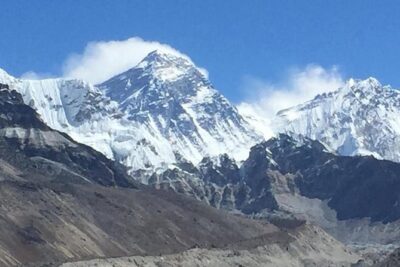
You leave Gorak Shep after breakfast for Kala Patthar, the highest point of the trek at 5,550 meters. The sunrise view is the reward: Everest, Lhotse, Nuptse, Pumori, and other Khumbu peaks catch the changing light.
This is the day that makes many people forget the aching legs. Kala Patthar gives you the wide mountain panorama that Base Camp cannot provide. The climb is steep and the air is thin, so take short steps and keep your pace steady.
After returning to Gorak Shep, you descend toward lower ground. The itinerary then continues toward Pheriche, where the following day begins. This downward movement matters physically. Even a partial loss of altitude can make breathing and sleeping easier.
Days 11 and 12: A long return through Namche to Lukla
The return route passes through Tengboche and then climbs again before reaching Namche Bazaar. You have already seen these places on the way up, but the descent changes the experience. You can walk more freely, recognize landmarks, and enjoy the village atmosphere without the same pressure to gain height.
Day 12 takes you from Namche through local villages and across the Hillary Suspension Bridge before reaching Lukla. It is a full trekking day, and tired knees can make downhill walking harder than expected.
The final Lukla evening is a natural time to celebrate with your crew. The package includes porter service at a ratio of one porter for two trekkers, so remember that your porter has carried the bulk of your main luggage while you focused on the trail.
Tips for guides, porters, and drivers are not included, and tipping is expected. Carry enough local currency for this final stage.
Day 13: Flying back to Kathmandu
The return flight from Lukla takes you back to Kathmandu, followed by a hotel transfer. The afternoon is open for rest or shopping.
Ason Market is suggested for spices, tea, and decorative items. This gives you a more local shopping stop than simply buying everything in the tourist district, though you can also return to Thamel for handicrafts and trekking souvenirs.
The flight back can be affected by the same mountain weather that affects the outbound journey. Do not schedule an important international connection too tightly after the trek.
Guides, porters, and the human side of the trek
The strongest praise connected with this trip focuses on the crew. Guides named Dawa, Gnawang, and Deepak have been praised for support, humor, clear answers, and careful handling of altitude concerns.
One especially useful point is that a guide adjusted plans when a trekker showed signs of altitude sickness. That is the kind of practical decision you want in the Khumbu. A fixed schedule is useful, but health must come first.
The stated guide is English-speaking, government licensed, experienced, and trained in first aid. The maximum group size is 12, which is small enough for more direct contact than a large commercial departure.
You should still ask who your specific guide will be, how many people are joining your departure, and how the team handles delays or illness. Names and group details can change, so treat individual guide praise as a sign of the company’s support style rather than a guarantee of one particular assignment.
Who should book this Everest trek?
This trip suits you if you want the classic Everest route with a guide, porter, meals, domestic flights, park fees, and basic trekking equipment included. It is especially useful for a first Himalayan trekker who wants structure without paying for a luxury expedition.
You need moderate physical fitness and a willingness to walk for many days at increasing altitude. You should be comfortable with simple tea house accommodation, suspension bridges, steep climbs, cold nights, and uncertain flight schedules.
It is not ideal if you need guaranteed transport times, hotel-style comfort throughout, or a relaxed walking holiday. It is also not a good choice without proper travel and medical insurance. The itinerary is fixed enough to guide you, but mountain weather and altitude can force changes.
The 14-day schedule gives you a sensible acclimatization pattern, yet it is still compact for such a high route. If you have more time, ask about adding days for weather, illness, or extra rest. The supplied plan does not include spare Kathmandu nights for early arrival or late departure, so those costs are yours.
Should you book the $1,799 Everest Base Camp Trek?
I would consider this a strong-value choice for a prepared trekker who wants the classic Base Camp and Kala Patthar route with solid logistical support. The included flights, meals, porter, guide, national park fees, sleeping bag, down jacket, and airport transfers make the price easier to justify.
Book it if you value organization, a small group, Sherpa villages, cultural stops, and a guide-led approach. Skip it if you dislike basic lodging or cannot tolerate schedule uncertainty around Lukla flights.
Before paying, confirm the flight departure point, baggage rules, tipping guidance, insurance requirements, and the policy for weather delays. If those details suit you, this trek offers a demanding but well-supported route to one of the world’s great mountain viewpoints.
FAQ
How long is the Everest Base Camp Trek?
The experience lasts approximately 14 days, including arrival and departure days in Nepal, the flight to Lukla, the trek to Everest Base Camp and Kala Patthar, and the return to Kathmandu.
What is the highest point on the trek?
Kala Patthar is the highest point, at approximately 5,550 meters. The itinerary includes a sunrise hike there on Day 10.
Are domestic flights to Lukla included?
Yes. Domestic flights between Ramechhap or Kathmandu and Lukla, then back again, are included according to the operating itinerary.
Is helicopter transport included?
No. A shared helicopter flight between Kathmandu and Lukla is listed as an additional cost of $1,200 per person.
What accommodation is provided?
You receive two nights in a three-star deluxe hotel in Kathmandu with breakfast. During the trek, you stay in the best available clean and comfortable tea houses.
What is the baggage allowance?
The stated baggage allowance is 15 kilograms. Excess baggage costs approximately $1 per additional kilogram. One porter is provided for every two trekkers to carry main luggage.
New in the Kathmandu listings
- Traditional Momo Making Class★ 5.0 · 10 reviews
- Kathmandu: Ancient City Kirtipur & Pharping Monastery Tour★ 5.0 · 2 reviews
- Kathmandu to Pokhara Premium sofa bus ticket★ 4.0 · 17 reviews
- Women Empowerment Project(Nepali cooking class & jewelry workshop★ 5.0 · 15 reviews
- 7-Day Langtang Valley Trek from Kathmandu★ 5.0 · 1 review
- Kathmandu 2 Nights 3 Days Chitwan Jungle Safari Tour★ 5.0 · 9 reviews
- Yoga Experience Day Trip with Private Transfer From Kathmandu★ 4.0 · 2 reviews
- Wildlife Adventure in Chitwan Nepal★ 4.0 · 4 reviews
Everest Base Camp Treks, compared.
Everest Base Camp Trek with Helicopter Return from Gorakshep to Lukla
Read our review →Browse the lists this tour appears in