REVIEW · 7-DAY EXPERIENCES
7 Day Kathmandu Pokhara Tour
Kathmandu opens the door to Nepal. This seven-day trip pairs Kathmandu’s sacred monuments with Pokhara’s lakes and mountain views, while handling airport transfers, hotels, breakfasts, guiding, and the long road between the two cities. I like the clear two-city plan and the small-group format, capped at 14 people, which should make sightseeing easier than arranging every ride yourself. The main caution is that the tour is not fully all-inclusive: entrance fees, most lunches and dinners, optional flights, and paragliding cost extra.
I also like the choice between a deluxe tourist bus and a domestic flight between Kathmandu and Pokhara. The bus takes about six to seven hours each way, but it gives you a closer look at the countryside. The biggest concern is the overnight stay at Sarangkot, where the accommodation may not meet expectations. One past booking required a hotel change, although the operator reimbursed the replacement cost.
In This Review
- Five things to know before booking
- What the $380 price really covers
- Day 1: A simple arrival in Kathmandu
- Day 2: Four major sights around Kathmandu
- Swayambhunath
- Boudhanath Stupa
- Pashupatinath Temple
- Patan Durbar Square
- Day 3: The long road from Kathmandu to Pokhara
- Day 4: Waterfalls, a cave, and Phewa Lake
- Devi’s Fall and Gupteshwor Mahadev Cave
- Phewa Lake and Barahi Temple
- World Peace Pagoda
- Day 5: Sarangkot, sunrise, and optional paragliding
- Day 6: Returning to Kathmandu by bus or flight
- Day 7: Airport transfer and the end of the route
- Hotels, group size, and comfort
- Practical costs and what to pack
- Who should book this Nepal itinerary?
- FAQ
- How long is the Kathmandu and Pokhara tour?
- What is included in the $380 price?
- Are flights between Kathmandu and Pokhara included?
- Is paragliding included?
- Are sightseeing entrance fees included?
- How many people can join the tour?
- What type of accommodation is provided?
- What visa options are available on arrival?
- Can I cancel for a full refund?
Five things to know before booking
- Kathmandu’s four major sights arrive in one busy day: Swayambhunath, Boudhanath, Pashupatinath, and Patan Durbar Square are all included on Day 2.
- The Kathmandu to Pokhara road journey takes six to seven hours: An optional flight saves time but comes with a surcharge.
- Pokhara sightseeing mixes nature and religion: You visit Devi’s Fall, Gupteshwor Mahadev Cave, Phewa Lake, Barahi Temple, and the World Peace Pagoda.
- Sarangkot offers the tour’s big mountain-view moment: The plan includes sunset and sunrise views, with optional paragliding at extra cost.
- The $380 price covers useful basics: Six nights, breakfasts, airport transfers, guiding, local transport, and the Kathmandu to Pokhara bus are included, but many site fees and meals are not.
What the $380 price really covers
At $380 per person, this tour offers a practical package for someone who wants Nepal’s two best-known city bases without arranging each hotel and transfer separately. Six nights of accommodation, six breakfasts, airport pickup and drop-off, hotel transfers, an English-speaking guide, local taxes, and the deluxe tourist bus are included.
The value depends on how much structure you want. If you prefer independent travel, booking your own hotels and buses may give you more control. If you have only a week and want the basic route organized, the package removes several decisions that can become tiring after a long international flight.
The phrase all-inclusive needs a little care here. Entrance tickets are not included at the listed sights. Lunches and dinners are not generally included, apart from a dinner noted among the inclusions. Personal spending, visa costs, and the optional flights also sit outside the base fare.
You should also budget for the Nepal entry visa. The provided information lists about $25 for a 15-day visa or about $40 for a 30-day visa, payable in major foreign currencies at Kathmandu airport. Bring two photos and expect some time in the visa line. Nepali rupees are required during the trek portion, although this itinerary itself is primarily a city and road tour.
A short list of alternatives around Kathmandu
- Everest Base Camp Trek – 14 Days
★ 5.0 · 1,499 reviews - Private Kathmandu Sightseeing Tour | UNESCO World Heritage sites
★ 5.0 · 756 reviews - Everest Base Camp Helicopter Tour landing at Everest View Hotel
★ 5.0 · 668 reviews
Day 1: A simple arrival in Kathmandu
Your first day is deliberately light. A representative meets you at Tribhuvan International Airport and takes you to the hotel. That transfer matters after a long flight, especially if you are arriving early or dealing with Nepal’s airport visa process.
There is no listed sightseeing on Day 1, so you get time to rest and adjust. The meeting information gives a 6:00 am start time, but your arrival transfer is tied to your flight. Confirm the exact pickup details when booking, and make sure the operator has your passport name, number, expiry date, and country of issue.
The accommodation is based on two people sharing a room. If you want a private room, ask about the single supplement before paying. This is a small but important cost to settle in advance.
Day 2: Four major sights around Kathmandu
After morning yoga and breakfast, you set out for a full sightseeing day. The order begins at Swayambhunath, followed by Boudhanath Stupa, Pashupatinath Temple, and Patan Durbar Square.
Swayambhunath
Swayambhunath is often called the Monkey Temple, although the formal name is more useful when asking for directions. The hilltop setting gives the visit a strong opening view over Kathmandu. The schedule allows about two hours, making this the longest stop of the morning.
You should wear comfortable clothing and shoes. The itinerary notes about 1 kilometer of walking during sightseeing, but some visits include steps and uneven surfaces. Admission is not included, so keep Nepali rupees available for site fees.
A completely different way to spend the day:
- Half day cooking class in Thamel kathmandu
★ 5.0 · 607 reviews - Everest Base Camp Trekking
★ 5.0 · 485 reviews - Nagarkot Sunrise View and Day Hiking from Kathmandu
★ 5.0 · 471 reviews - Kathmandu: Full Day 7 UNESCO Tour with Lunch – Private/Group
★ 5.0 · 415 reviews
Boudhanath Stupa
Boudhanath receives about one hour. Its huge circular stupa and surrounding religious area offer a calmer change from the hilltop visit. This is a good place to watch the daily rhythm of worship and movement around the monument rather than rush through for a photograph.
Again, admission is extra. The guide can help you understand how to move around the site respectfully, which is one reason guided visits are useful here.
Pashupatinath Temple
The tour then continues to Pashupatinath, with about one hour scheduled. This is one of Nepal’s most important Hindu religious sites, located along the Bagmati River. Some temple areas may have access rules, so follow the guide’s instructions and dress modestly.
Pashupatinath is an active place of worship, not a museum arranged for sightseeing. Keep your camera use considerate and allow the site to set the tone.
Patan Durbar Square
The final stop is Patan Durbar Square, also scheduled for one hour. Its historic courtyards, temples, and carved details make it a rewarding finish, though one hour can feel short if you want to inspect every building.
Day 2 packs four major places into one route. That is efficient, but it is not leisurely. If you want long café stops, detailed photography, or extended time at each monument, this schedule may feel brisk.
Day 3: The long road from Kathmandu to Pokhara
After breakfast, you travel to Pokhara by air-conditioned tourist coach. The drive takes approximately six to seven hours, and the route ends in the Lakeside area of south Pokhara.
This is the itinerary’s biggest time commitment. The coach is included, while a flight is available for an additional charge. Flying makes sense if you value time more than the road journey, but the base package is designed around the bus.
I would treat this as a transition day, not a day with major sightseeing. Road conditions and traffic can affect the timing, so avoid booking an important independent activity for the same evening. The advantage of the coach is that you do not need to arrange a separate long-distance transfer, and the journey gives you a ground-level view of the route between Nepal’s two main visitor centers.
The hotel area is listed as Gauri Ghat in Lakeside, which puts you near Pokhara’s main lake district. The exact hotel matters, so confirm it before arrival if you have mobility, room, or location needs.
Day 4: Waterfalls, a cave, and Phewa Lake
Pokhara’s main sightseeing day is more varied than Kathmandu’s. You visit Devi’s Fall, Gupteshwor Mahadev Cave, Phewa Lake, Barahi Temple, and the World Peace Pagoda.
Devi’s Fall and Gupteshwor Mahadev Cave
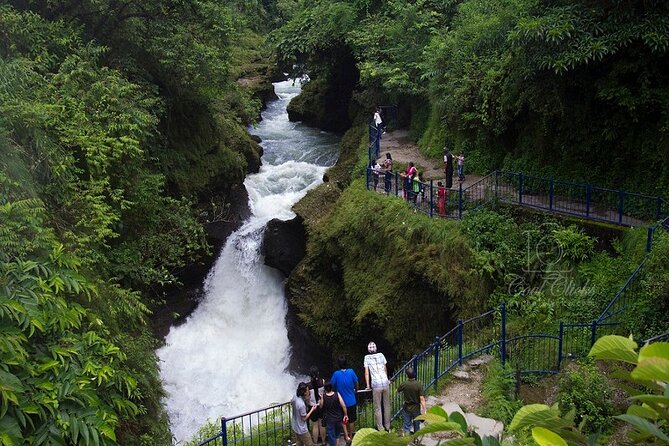
Devi’s Fall, also known locally as Patale Chhango, receives about one hour. Water drops through a striking natural channel, and the site is especially easy to combine with Gupteshwor Mahadev Cave because the cave entrance is directly across from the falls.
The cave visit also lasts about an hour. Gupteshwor Mahadev Cave is a religious site with large chamber-like spaces and a long underground passage. The footing may be uneven, so casual and comfortable clothes are a sensible choice. Admission to both attractions is extra.
Phewa Lake and Barahi Temple
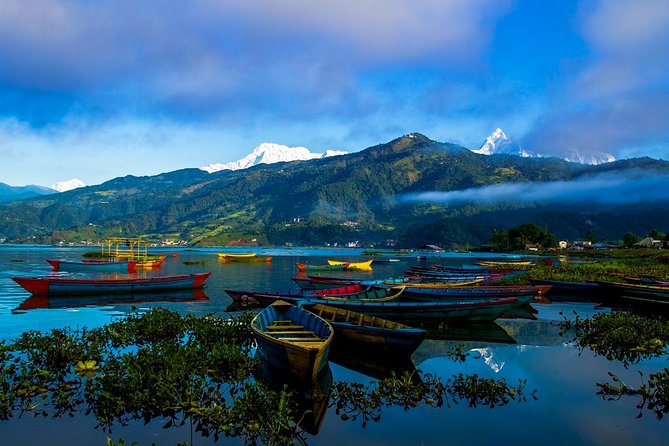
You then spend about two hours at Phewa Lake. At roughly 800 meters above sea level, it is Nepal’s second-largest lake. The schedule allows more time here than at most other stops, which is welcome after the packed Kathmandu day.
Barahi Temple sits on an island in the lake. Reaching it involves the lake setting itself, and the two-story pagoda is dedicated to the goddess Shakti. The visit is allocated about one hour, giving you time to see the temple and enjoy the change from road-based sightseeing.
The itinerary does not specify whether a boat fee is included, so ask before setting out. Since site fees are generally excluded, you should assume that some local charges will be paid separately unless the guide confirms otherwise.
World Peace Pagoda
The day ends at the World Peace Pagoda, also known as Shanti Stupa. Positioned above Phewa Lake, it offers broad views over Pokhara and the surrounding mountains when conditions are clear.
This is one of the trip’s most appealing stops because the view does the work. Clouds can affect what you see, so keep expectations flexible. The pagoda is reached by a route above the lake, and comfortable shoes remain useful.
Day 5: Sarangkot, sunrise, and optional paragliding
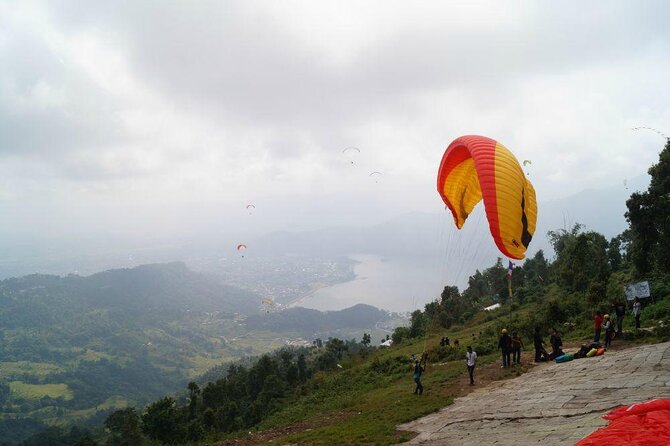
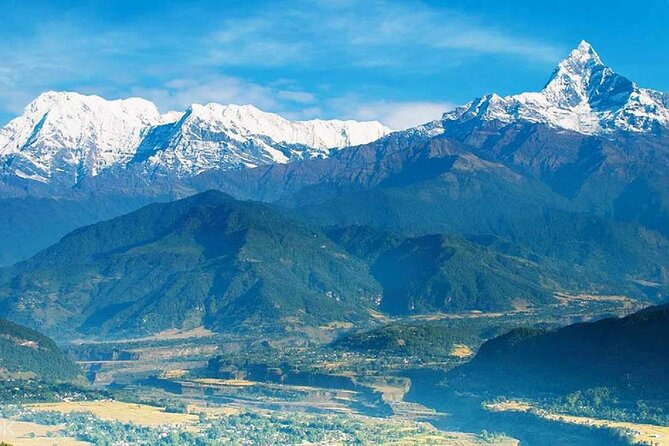
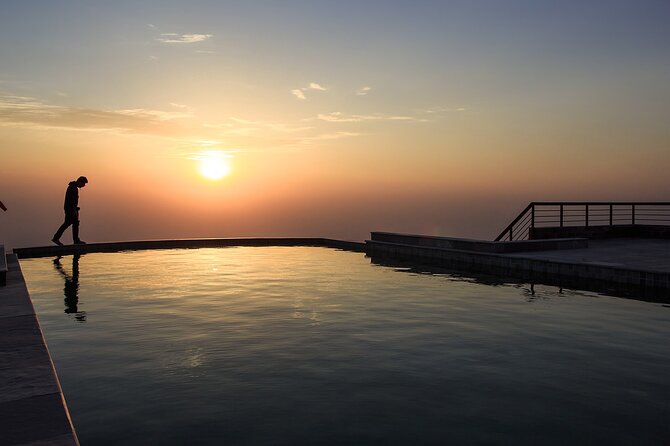
Day 5 focuses on Sarangkot. The schedule says you drive up for sunset and stay for sunrise views the next morning. That gives you the best chance to see the changing light over the mountains, rather than treating Sarangkot as a quick photo stop.
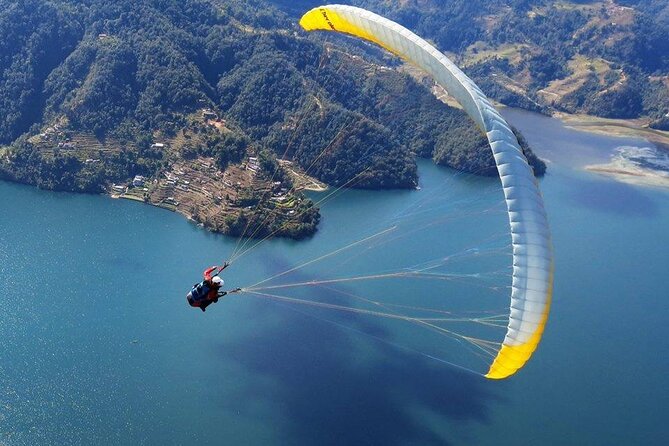
The plan also includes the paragliding landing zone, with the flight available as an optional extra. This is not part of the $380 base fare. Ask for the total price, timing, safety requirements, and what transport is included before adding it.
Sarangkot is where the accommodation issue deserves your attention. One booking found the assigned hotel to be very poor and arranged a different hotel independently. The operator reimbursed the replacement cost, which is encouraging, but you should still confirm the Sarangkot hotel in writing and report problems immediately rather than waiting until departure.
The overnight location can make or break this part of the tour. If the room is comfortable, the early sunrise plan is convenient. If the hotel is not suitable, the lack of a clear alternative can create stress.
Day 6: Returning to Kathmandu by bus or flight
After breakfast, you return to Kathmandu. The drive again takes around six to seven hours, or you can arrange a flight at your own expense.
This is another full transfer day, so the seven-day schedule gives you only a short window in each city. That is the tradeoff for fitting Kathmandu, Pokhara, and Sarangkot into one week. If you choose the bus both ways, two days are largely spent moving between destinations.
The return route ends at the Kathmandu hotel, with the final night included in the six-night accommodation total. If your international flight leaves early on Day 7, confirm how the shared airport transfer will work.
Day 7: Airport transfer and the end of the route
Your final day is open for departure. The round-trip shared airport transfer is included, so the operator takes you to Tribhuvan International Airport.
If your flight is later, you may use spare time to explore Kathmandu independently. No extra guided sightseeing is listed, so do not assume the guide or vehicle will be available for additional touring.
Hotels, group size, and comfort
The trip is described as a small-group guided tour with a maximum of 14 people. That size can work well for city sightseeing, since it is easier to gather the group at busy monuments and keep transfers organized.
At the same time, the booking information also describes the activity as private, with only your group participating. Those descriptions do not fully match, so clarify the arrangement before booking. Ask whether you will share transport and guiding with other bookings or travel only with your own party.
Two people share each room unless you pay a single supplement. Six breakfasts are included, and a company T-shirt is also provided. The tour is aimed at a broad range of participants, with a minimum age listed as one year, though parents should consider the long bus rides, cave visit, stairs, and early Sarangkot schedule for very young children.
Practical costs and what to pack
The tour recommends casual, comfortable clothing. That advice is sound for the road days, temple visits, cave, and sightseeing walks. Modest clothing is particularly sensible at religious sites.
Keep extra money ready for:
- Visa fees at Kathmandu airport
- Entrance fees at the sightseeing sites
- Optional flights between Kathmandu and Pokhara
- Optional Sarangkot paragliding
- Lunches and dinners not specifically included
- Personal expenses
- A single-room supplement, if required
Admission tickets are not included at any of the listed sightseeing stops. The package includes local taxes, but the inclusion details also say all fees and taxes are excluded, which is unclear. Ask the operator to explain exactly which charges are covered before you pay.
The free cancellation rule is straightforward: cancel at least 24 hours before the local start time for a full refund. Changes or cancellations inside that window are not accepted for a refund.
Who should book this Nepal itinerary?
I would choose this tour if you have one week, want both Kathmandu and Pokhara, and prefer having hotels and long-distance transport arranged. It suits first-time visitors who want a guide at the major religious and historic sites without committing to a long trek.
I would be less inclined to choose it if you dislike long bus rides, need fixed hotel standards, or want several free days. The two six-to-seven-hour road journeys take up a large part of the week. Paying for flights can improve the pace, but it raises the total cost.
At $380, the base price is reasonable for the included accommodation, breakfasts, airport transfers, guide, and bus transport. It becomes less of a bargain once you add site admissions, meals, visa fees, and optional activities. Confirm the Sarangkot hotel and the exact group arrangement before booking.
FAQ
How long is the Kathmandu and Pokhara tour?
The tour lasts approximately seven days and includes six nights of accommodation.
What is included in the $380 price?
The price includes six nights of accommodation, six breakfasts, round-trip shared airport transfers, hotel pickup and drop-off, an English-speaking guide, the Kathmandu to Pokhara and return deluxe tourist bus, local taxes, dinner as specified, and a company T-shirt.
Are flights between Kathmandu and Pokhara included?
No. Flights are optional and require a surcharge. The base tour uses a deluxe tourist bus, with each road journey taking about six to seven hours.
Is paragliding included?
No. Paragliding from Sarangkot is optional and costs extra.
Are sightseeing entrance fees included?
No. Admission tickets are not included for the listed stops, including Swayambhunath, Boudhanath Stupa, Pashupatinath Temple, Patan Durbar Square, Devi’s Fall, Gupteshwor Mahadev Cave, Phewa Lake, Barahi Temple, and the World Peace Pagoda.
How many people can join the tour?
The tour is described as a small-group experience capped at 14 people. The booking details also describe it as private, so you should confirm the exact arrangement with Himalayan Social Journey.
What type of accommodation is provided?
Two people share each room for the tour. Private accommodation is available with a single supplement.
What visa options are available on arrival?
A 15-day visa costs approximately $25, and a 30-day visa costs approximately $40. Two photos are required, and you should expect some waiting at the airport. You can also obtain the visa before arrival through a Nepali embassy.
Can I cancel for a full refund?
Yes. You can cancel at least 24 hours before the experience start time for a full refund. Cancellations or changes made less than 24 hours before the start time are not accepted for a refund.
New in the Kathmandu listings
- Traditional Momo Making Class★ 5.0 · 10 reviews
- Kathmandu: Ancient City Kirtipur & Pharping Monastery Tour★ 5.0 · 2 reviews
- Kathmandu to Pokhara Premium sofa bus ticket★ 4.0 · 17 reviews
- Women Empowerment Project(Nepali cooking class & jewelry workshop★ 5.0 · 15 reviews
- 7-Day Langtang Valley Trek from Kathmandu★ 5.0 · 1 review
- Kathmandu 2 Nights 3 Days Chitwan Jungle Safari Tour★ 5.0 · 9 reviews
- Yoga Experience Day Trip with Private Transfer From Kathmandu★ 4.0 · 2 reviews
- Wildlife Adventure in Chitwan Nepal★ 4.0 · 4 reviews
7-Day Experiences, compared.
7-Day Annapurna Base Camp Trek & Natural Hot Spring
Read our review →